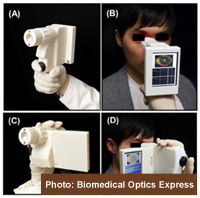
Early Eye Disease Detection Improved with MIT Hand-Held Device

handheld eye scannerCurrently, most eye disease detection equipment is only available in an optometrist’s office. A new handheld optical device could allow general practitioners to quickly screen all patients for eye disease such as glaucoma and macular degeneration. These visually devastating diseases are most easily treated or controlled in their early stages. The new high-speed prototypes were developed at Massachusetts Institute of Technology.

The idea of a handheld, easy-to-use scanner is not new. However, the new device combines ultrahigh-speed Continue reading “Early Eye Disease Detection Improved with MIT Hand-Held Device”
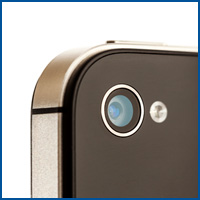
iPhone Photography Used to Diagnose Eye Disease

iphone lens for photographing the eye Their process used an iPhone app called Filmic pro and a few other instruments. Researchers were able to create high-quality fundus images. This method could create a more portable and inexpensive option in eye treatment.

Fundus photography is crucial to eye care. It is used routinely to document eye condition in consultation and operation. However, commercial fundus cameras are very costly. This limits Continue reading “iPhone Photography Used to Diagnose Eye Disease”

Diabetic Retinopathy: New Video Diagnostic Technology


Diabetic retinopathy should be easier to detect with a new video imaging technique being developed in Australia.

At the Asia Pacific Academy of Ophthalmology (APAO) Congress researchers presented on how retinal video recording is as accurate at detecting diabetic retinopathy as the commonly established diagnostic practices – still photography and slit lamp examination.  The initial trial involved 200 eyes at the Royal Perth Hospital.  According to presenter Dr. Daniel Ting, Digital video “is able to image a larger area of retina within a shorter period of time, compared to the conventional retinal still photography.  It also provides a good continuity of retinal information and is less dependent on the cooperation of the patients who may move or lose focus during the process of still photography.”

It is hoped that the technology will allow Australian primary healthcare providers to do in-office screenings rather than current diagnostic practices that require more time and specialized training.

Source: VirtualMedicalCentre

For more information on diabetic retinopathy research, visit our website.


iPhone Good Enough for Eye Doctors to Examine Patients’ Results

Maybe they will start calling it the EyePhone…

At the  American Academy of Ophthalmology (AAO) – Middle East-Africa Council of Ophthalmology (MEACO) Joint Meeting in Chicago researchers described how images on the iPhone are of high enough quality that they can be used by eye doctors who want a portable way to carry around patients’ diagnostic images.

It is common for images of patients’ eyes to be viewed on a computer screen, but researchers at the University of Pittsburg School of Medicine decided to see if they could jump on the portable device wagon.

The study involved the office visits of over 100 patients with diabetic retinopathy.  For some, the examining doctor relied on computer screens to evaluate images of the eyes and for others, the iPhone.  According to Dr. Michael J. Pokabla. “There were no significant differences between evaluations and recommendations using the two different systems, and the doctors rated the iPhone images as excellent. We conclude that mobile devices like the iPhone can be used to evaluate ophthalmic images.”

Source: https://www.medicalnewstoday.com/articles/204895.php