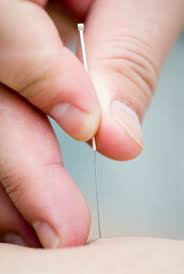
Acupuncture Aids Weight Loss

acupuncture
Image via azacuboard.az.gov

Researchers have just released the results of a new study called “The Effects of Acupuncture on Weight-Loss in Over-Weight and Obese Adults Over 24 Years Old.”

This study has been called “groundbreaking” because it claims that 95% of the participants lost weight over the six week trial.  Even after they stopped receiving acupuncture treatments, 50% of the men and women in the study continued to lose weight.

The study’s subjects lost an average of one to two pounds per week without making any concerted changes to their diet or exercises regimens.

According to one participant, “The study helped with my energy levels and with my appetite. I now sleep soundly and wake up refreshed.” Source: https://www.lef.org/news/LefDailyNews.htm?NewsID=10370&Section=Nutrition

We believe strongly in the power of acupuncture (Natural Eye Care’s founders are both licensed acupuncturists!).  Acupuncture can also help those with allergies and sensitivities as well as diabetes.  Learn more about managing weight loss.
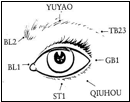
Improve Computer Eye Strain With Acupressure Self Massage

Computer eye strainAcupuncture and acupressure are ancient practices helps the energy flow smoothly through the body, enabling healing and stimulating vitality.

A simple acupressure massage can relieve computer eyestrain and the red eyes, difficulty focusing, and blurred vision that accompany it.

You can perform acupressure massage on yourself Continue reading “Improve Computer Eye Strain With Acupressure Self Massage”

Acupuncture Helps Dry Eye Sufferers

In 2006, researchers reported on a study of the effect of acupuncture on cases of dry eye.  Because acupuncture has proven to help those suffering from dry mouth, scientists, who discussed their findings at the annual meeting of the Association for Research in Vision and Ophthalmology, decided to try to technique for patients exhibiting dry eye.

The small study involved twelve patients, half of whom received needles in the Traditional Chinese Medicine points and half of whom received “sham” acupuncture .  Those who received real acupuncture demonstrated a significant improvement while those who received needles in random places on the body displayed a slight worsening of symptoms.  Source: Medscape

According to ClinicalTrials.gov, researchers are currently recruiting participants for a similar study at Walter Reed Army Medical Center.  The trial is set to run through 2011.

To learn more about treatment options for dry eye syndrome, please visit our website.

The Importance of Acupuncturists’ Table-side Manner

A study out of the University of Texas to be published in September’s Arthritis Care & Research  claims that an acupuncturist’s communication style may influence a patients’ level of pain reduction and satisfaction with a treatment.

Patients with radiologically diagnosed knee osteoarthritis visited acupuncturists for three months.  One group visited practitioners were trained to communicate “high” or “neutral” expectations saying things like “I think this will work for you,” and “I’ve had a lot of success with treating knee pain.” Another group was asked to be more neutral, saying things like  “It may or may not work for you,” and “It really depends on the patient.”  Those who saw more optimistic sounding acupuncturists reported a 50% decrease in pain.

“Placebo effects can be enhanced by expectations of improvement and it is conceivable that patient-provider interactions result in increased benefits if the provider has a confident attitude,” the authors note.

This study also asserts that there was no greater benefit reported when comparing traditional Chinese acupuncture (TCA) with “sham” acupuncture (performed in non-meridian points, with shallow needles and minimal stimulation).

Source: Medscape

We believe strongly in the benefits of acupuncture for a host of health concerns.  For example, learn more about how acupuncture can help relieve allergies at our website.

Acupuncture Proven to Help Low Back Pain Sufferers

A study published in the Archives of Internal Medicine maintains that back pain sufferers who received acupuncture treatment or simulated acupuncture responded better and experienced less pain than those patients who were given conventional treatments alone.

Surprisingly both the patients who received actual needle-employed acupuncture and various simulated forms of acupuncture benefited, without regard to skin penetration or exact needle placement.

The researchers reported that there were few very effective medical remedies for chronic low back pain, and that they, therefore, were happy to discover that treatments that were similar to acupuncture were helpful – even though the benefit raised questions about just why acupuncture works.

Future studies are indicated.

Researchers: Daniel Cherkin, Ph.D., and associates, Group Health Center for Health Studies, Seattle, Washington.

Acupuncture Can Cure Lazy Eye in Children

Researchers have discovered that acupuncture can help children suffering from “lazy eye” or amblyopia.

Researchers at Chinese University of Hong Kong and the International Eye Center of Shantou University have discovered that acupuncture can help children suffering from “lazy eye” or amblyopia.  The children received acupuncture on five points five days a week for 25 weeks.  The treatment provides a 40-60% chance of curing the condition that occurs when a healthy eye does not receive the correct signals from the brain.

Learn more on lazy eye and other binocular conditions.


Acupuncture Can Aid Those Addicted to Opiates

A type of acupuncture that uses skin electrodes to apply electrical stimulation at different points on the body called transcutaneous electric acupoint stimulation (TEAS) may help people suffering from an addiction to opioid drugs.

A type of  acupuncture that uses skin electrodes to apply electrical stimulation at different points on the body called transcutaneous electric acupoint stimulation (TEAS) may help people suffering from an addiction to opioid drugs.  The study, overseen by Harvard Medical School and McLean Hospital near Boston, showed that patients who received acupuncture in combination with their prescribed withdrawal medications were only 29% likely to return to drug use while 2/3 those who did not receive acupuncture took up the habit again.

In addition, patients in the active TEAS group reported they were less bothered by pain and that they experienced greater improvements in overall health.

Source: http://nccam.nih.gov/research/results/spotlight/010410.htm?nav=rss