Eye Screening Tests for Pre-Teens May Not Be Effective

When a middle school student goes in for an eye exam it is likely that the tests will do a fine job of detecting myopia (or nearsightedness), but there is a good chance it will miss other conditions like hyperopia (farsightedness) or astigmatism.

A study published in the Archives of Ophthalmology discusses the results of eye exams of nearly 4500 Australian 7th graders.  They found that the common visual acuity tests given to those adolescents were not able to effectively determine whether they suffered from hyperopia or astigmatism.

It’s never too early to start thinking about your children’s eye health.  It is important to think about eye health at any age. Learn about how to support your entire family’s eye health.
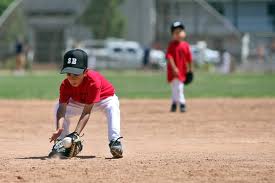
Improving Vision In Athletes – And the Rest of Us

pewee baseball
image via santabarbaraca.gov

A survey of Italian coaches, trainers, and physical education teachers sought to determine attitudes toward vision correction in athletes.  Those interviewed believed it was important to correct vision problems during sports, but they were not likely to recommend that their athletes try contact lenses.  Coaches who wore contacts themselves, however, were more likely to suggest them to sports participants.

The researchers, who published their findings in Contact Lens and Anterior Eye, believe that education is key to helping more athletes find solutions to their vision deficits. Source: ScienceDirect

Another solution besides corrective lenses may be the daily practice of eye exercises. (You don’t even have to be an athlete to do them!)

Learn more about how to prevent and treat myopia (nearsightedness) naturally.

Myopia in Children: Bifocals or Natural Strategies

A study published in Archives of Ophthalmology claims that bifocals may slow the deterioration of vision in children with myopia.

Researchers fitted 135 myopic Chinese Canadian children with standard single vision glasses, traditional executive bifocals, and bifocals with prism lenses. (Prism lenses help to make the two eyes work together and help the eyes focus.) The children wearing prism bifocals experienced the least vision deterioration followed by those wearing the regular bifocals. The outcomes for the bifocal wearers were significantly better than for those wearing standard glasses.

We believe that a diagnosis of myopia does not mean a lifetime of stronger and stronger glasses. Nearsightedness can be improved in a majority of cases through vision therapy, nutrition, and lifestyle changes.

High-Risk Glaucoma Patients: Risk Factors

Damage to Hemifields

Scientists have determined that glaucoma patients who have damage to both hemifields (half of the visual field) of their eye will experience more rapid progression of the disease than patients who have damage to a single hemifield.

The study, published in the September 2009 journal Archives of Ophthalmology, reviews data from 205 patients.  79 were found with an initial superior defect, 61 with an initial inferior defect, and 65 with both hemifields affected.

Analysis showed significantly higher baseline intraocular pressure and thinner central corneal thickness in patients with initial damage to both hemifields.

The study authors concluded that initial damage to both hemifields increases the risk of glaucoma progression, and that doctors should consider more aggressive therapy for these patients.

Source:  Glaucoma With Early Visual Field Loss Affecting Both Hemifields and the Risk of Disease Progression, De Moraes, et al,  Arch Ophthalmol. 2009;127(9):1129-1134.

Race & Glaucoma Risk

Specific gene mutations can be the cause of glaucoma, according to Indian researchers. Almost 4% of glaucoma sufferers exhibit gene mutations.  Scientists are identifying the specific mutations found in glaucoma patients in India and across the world; they have developed a database to make the statistical and clinical information and published it in the journal Bioinformatics. Since 20% of all glaucoma cases affect Indians and people of Indian decent, this research is of specific interest to this country’s researchers.

Source: The Times of India

Glaucoma tends to affect some racial groups more than others.  In the US, African Americans are more than twice as likely to develop the disease than non-Hispanic whites.  It has also been known for some time that Latinos have an elevated risk of glaucoma as well.

A 2011 study published in the journal Ophthalmology shows that Asian Americans also run a higher risk of developing glaucoma than their white American counterparts.  Asian Americans have about a 6.5% chance of getting glaucoma.

The report also offered some specific details by ethnic group as well.  People of Japanese decent are 10 times more likely to develop normal-tension glaucoma (when the intraocular pressure is not elevated; IOP has generally been considered the telltale sign of glaucoma, but you can have the disease without having elevated eye pressure.

Source: Medical News Today

Myopia & Glaucoma Risk

A Chinese study finds that there is a relationship between the biomechanical properties of the cornea and the degree to which an individual suffers from myopia.  Amongst their findings, researchers describe how highly myopic subjects were more likely to have decreased corneal hysteresis (CH).  CH is a measure of viscous damping in the corneal tissue.  The figure indicates the “energy absorption capability” of the cornea – in other words, how it is able to scatter and diffuse light.

Scientists also notes that severe cases of myopia have been associated with an increased risk of glaucoma.

Source: Eye, (6 May 2011)

Learn more about myopia, also known as nearsightedness.

Glaucoma – Myopia Connection Studied

Researchers in Australia are working to unravel the genetic code of glaucoma and myopia.

Teams across the world have been building upon one another’s work to pinpoint the Caveolin that is thought to be responsible for glaucoma.  These same researchers are also working with the results of studies in Europe that show the genes GJD2 and RASGRF1 to be related to the development of myopia.

Both of these discoveries rely on using Twins Eye Study to corroborate the researchers findings.  Twins studies are essential to genetics twins share nearly 100% of their genetic polymorphisms and can help scientists determine whether conditions are causes by inherited or genetic factors.

Source: https://www.news.uwa.edu.au/


Half of U.S. Adults Lack 20/20 Vision

A new study has found that common vision problems known as refractive errors (nearsightedness, farsightedness, and astigmatism) affect half the adult U.S population.

The study authors, led by Susan Vitale of the U.S. National Eye Institute, analyzed data collected by the U.S. Centers for Disease Control and Prevention’s ongoing National Health and Nutrition Examination Survey. With an auto-refractor the researchers  obtained refractive error data on a sample of 12,010 US adults in the between 1999 and 2004.

Of the participants (all aged 20 or older), researchers found:

  • 3.6% had hyperopia (farsightedness),
  • 33.1% had myopia (nearsightedness), and
  • 36.1% had astigmatism (an irregular corneal curve)

Other findings:


  • Nearsightedness was more prevalent in women (39.9%) than in men (32.6%) among 20- to 39-year-old participants. 
  • People 60 years or older were less likely to have nearsightedness and more likely to have farsightedness and/or astigmatism than younger persons. 
  • Nearsightedness was more common in non-Hispanic whites (35.2%) than in non-Hispanic blacks (28.6%) or Mexican Americans (25.1%).


SOURCE: Susan Vitale, PhD, MHS; Leon Ellwein, PhD; Mary Frances Cotch, PhD; Frederick L. Ferris III, MD; Robert Sperduto, MD; Arch Ophthalmol. 2008;126(8):1111-1119.

Breastfeeding May Reduce the Risk of Myopia in Children

Myopia, also called near-sightedness, is a condition in which distant objects appear blurred. Myopia is the leading cause of visual impairment in developed countries, and is present in over 30 million adults in the U.S.

Researchers in Singapore have found that children who are breastfed are less likely to have myopia. Breast milk is the main source of many micronutrients including docosahexaenoic acid (DHA). DHA is important for photoreceptor and cortical neuronal development, which play a major role in whether children become nearsighted.

Researchers studied 797 children aged 10 to 12 as part of the Singapore Cohort Study of the Risk Factors of Myopia, including 418 children who had been exclusively breast-fed, and 379 who had not. They performed cycloplegic autorefraction and diagnosed myopia as spherical equivalent refraction of at least -.05 diopters.

Children who were breastfed had a lower prevalence of myopia (62.0%) than children who were not breastfed (69.1%). This association held even after researchers controlled for factors such as the parents’ nearsightedness, maternal age at delivery and birth weight.

Read more about myopia, including recommended vitamins and other nutritional products.

SOURCE: The Journal of the American Medical Association, Vol. 293 No. 24, June 22/29, 2005