Improve Eyes’ Light Sensitivity with Lutein and Zeaxanthin

Do you find that your eyes are sensitive to bright lights?

A study published in the journal Optometry & Vision Science describes how the carotenoids lutein and zeaxanthin were found to positively effect many visual performance issues (including contrast sensitivity) when one is exposed to glaring light conditions.  Carotenoids are organic pigments that are naturally occurring in plants and some other photosynthetic organisms like algae, some types of fungus and some bacteria.  They are potent antioxidants and play a protective role in preventing many eye conditions.

This study indicated that these compounds, found most commonly in leafy greens, help people deal with bright sunlight outdoors, light from computer monitors, bright car headlights, etc.

For more research studies on light sensitivity, visit our website.

Learn about how you can eat food rich in eye health boosting nutrients.
Macular Degeneration Drug Associated With Cerebral Hemorrhage

eyesThe Wall Street Journal reports that researchers at Johns Hopkins are concerned about potential safety issues with the drug Avastin, which is sometimes proscribed on an off-label basis to macular degeneration patients.  A study comparing Avastin to its leading competition Lucentis (which was formulated specifically for the eye condition) found that those taking Avastin had an 11 percent higher mortality risk and 57 percent higher risk of cerebral hemorrhage.  The study did not take into account other risk factors like smoking, hypertension, or elevated cholesterol levels.  Source: Wall Street Journal

At Natural Eye Care we offer people with macular degeneration options that include nutrition advice, lifestyle recommendations, and natural supplement suggestions.

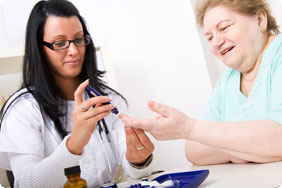
Diabetes Speeds the Aging Process

The American Diabetes Association tells us that 8.3% of Americans have diabetes.  Another 79 million people are thought to be pre-diabetic.  Those numbers are staggering, especially when a new report describes how diabetes contributes to premature aging.

A study published in the Diabetes & AgingJournal of General Internal Medicine describes how diabetics in their 50s are more likely to age before their time.  People with diabetes between the ages of 51 and 70 all exhibit markers associated with aging including cognitive impairment, incontinence, falls, dizziness, vision impairment, and pain before their non-diabetic counterparts.

Researchers credit this all-over increased aging process to the fact that diabetes affect multiple organ systems.
Source: Life Extension Daily News

One of the main organs that feels the effects of diabetes?  The eyes.  Diabetic retinopathy.  One quarter of those with diabetes have compromised vision.

Dry Eye Syndrome Impacts Women the Most

Prevent Blindness America reminds us that women are more likely to suffer from dry eye syndrome than men.

Their organization has designated April as Women’s Eye Health and Safety Awareness month.  They quote Lynn K Gordon, MD, PhD, president of the national organization, Women in Ophthalmology, ““Not only do more women have dry eye, they are also more likely to develop eye diseases such as cataracts and glaucoma.  And, because of increased longevity, women are more likely to develop macular degeneration. It is imperative that women of every age make an appointment with their eye doctor as soon as possible to ensure that they are protecting their vision for the future.”  Source: Prevent Blindness America

So, what can a woman (or a man) who wants to prevent dry eyes do?

  • Make sure to eat lots of green leafy vegetables.
  • Avoid sugar and/or artificial sweeteners: Eating  more than 3-2/3 tablespoons of sugar a day has been connected this condition (note that only one can of soda contains about 3 tablespoons of sugar).  Sugar is included in most refined and or processed such as instant dinners,  cereals, mustard, ketchup, and salad dressings and sauces and other condiments.
  • Avoid toxic fats that are found in commercial red meat and poultry, dairy products, fried foods, and hydrogenated margarine and shortening. These fats have the capacity to interfere with the proper metabolism of essential fatty acids in the body and are indirect causes of dry eye syndrome. Eat organic products whenever possible.
  • Limit coffee and stop smoking.
  • Avoid hydrogenated and transfatty acid containing foods
  • Drink 8-10 glasses of water a day.
  • Avoid any foods to which you may be allergic.
  • Supplement your diet with a good multivitamin and/or an organic green drink daily.
  • Try drops with vitamin A  (see below)

Vitamin A & Dry Eye

A study done at the Catholic University of Korea showed that using eyedrops containing retinal palmitate daily for 4 weeks can effectively relieve the symptoms of dry eyes and improve tear film production.

Department of Ophthalmology and Visual Science, College of Medicine, The Catholic University of Korea, Seoul, Korea

Accepted 11 August 2008. published online 09 October 2008. Inquiries to Choun-Ki Joo, Department of Ophthalmology, KangNam St Mary’s Hospital, #505 Ban-Po Dong, Seocho-Ku, Seoul 137-040, Korea


Diabetic Retinopathy: New Video Diagnostic Technology


Diabetic retinopathy should be easier to detect with a new video imaging technique being developed in Australia.

At the Asia Pacific Academy of Ophthalmology (APAO) Congress researchers presented on how retinal video recording is as accurate at detecting diabetic retinopathy as the commonly established diagnostic practices – still photography and slit lamp examination.  The initial trial involved 200 eyes at the Royal Perth Hospital.  According to presenter Dr. Daniel Ting, Digital video “is able to image a larger area of retina within a shorter period of time, compared to the conventional retinal still photography.  It also provides a good continuity of retinal information and is less dependent on the cooperation of the patients who may move or lose focus during the process of still photography.”

It is hoped that the technology will allow Australian primary healthcare providers to do in-office screenings rather than current diagnostic practices that require more time and specialized training.

Source: VirtualMedicalCentre

For more information on diabetic retinopathy research, visit our website.


Meibomian Gland Dysfunction May Be At the Root of Dry Eye Syndrome

An international team of scientists have published a report that could change the way we look at dry eye syndrome.

There is news from the International Workshop on Meibomian Gland Dysfunction, which has spent two years formulating an evidence-based evaluation of meibomian gland structure and function in health and disease.  According to report authors, MGD is an extremely important condition, conceivably underestimated, and very likely the most frequent cause of dry eye disease.  More than 50 experts from around the globe worked together, mostly using technology to connect across great distances to develop a contemporary understanding of the definition and classification of MGD.

According to the report, researchers now understand that the meibomian gland is a key component in the etiology of dry eye and contributes to the evaporative status of the tear film.

“MGD may well be the leading cause of dry eye disease throughout the world. Although this condition influences the health and well being of millions of people, there has not previously been a global consensus on the definition, classification, diagnosis or therapy of MGD,” explained Dr. David A. Sullivan, PhD, TFOS President.

Sleep and Stress Reduction Encourage Weight Loss

Are you ready to sleep away those extra pounds?

A new study from Kaiser Permanente’s Center for Health Research in Portland describes how high levels of stress and inadequate sleep can keep people from losing weight, even when they are following a diet.

Study authors say that those who get 6-8 hours of sleep and moderate the stress in their lives are most successful when they try to lose weight.

The study included 472 obese adults who both reduced their caloric intake by 500 calories and exercised 3 hours per week.  The researchers found that proper amounts of sleep and healthy stress levels at the beginning of the trials were predictive of optimal weight loss.

“People who are healthy and vital tend to be healthy and vital not because of any one factor, but because of many. And the factors that promote health — eating well, being active, not smoking, sleeping enough, controlling stress, to name a few –promote all aspects of health,” said study author Dr. Charles Elder.  Story via HealthFinder.gov

Reducing stress will positively impact a number of health conditions – everything from blepharospasm (eye twitches) to peptic ulcers.

How Some Diabetes Patients Avoid Diabetic Retinopathy

Diabetes
Image via HealthyPeople.gov

Why do some people with type 1 diabetes remain free of diabetic retinopathy and other complications while others suffer from sight loss as well as kidney and cardiovascular problems?

Researchers publishing in Diabetes Care set out to answer this question by studying individuals who have been living with type 1 diabetes for over 50 years.  It seems that the sample group of 351 people with longterm diabetes diagnoses was mostly good at maintaining stable blood sugar levels, but blood sugar control did not seem to be the determining factor when it came to eye, kidney, and heart problems.

For the most part, scientists say it is still a mystery why 35% of these older type 1 diabetes patients seem free of the issues commonly associated with their disease.  They seem to have some inherent “protective mechanisms” that keep them from developing these conditions.  One factor may be the particular advanced glycation end products (AGEs) present in the subjects.  Some types of AGEs were linked to diabetes complications while others seems to protect the patients from the aforementioned eye, kidney, and heart troubles.  Study authors say that these protective AGEs may  lead to new biomarkers that will help indicate whether people are likely to be susceptible to these accompanying conditions.

As researchers strive to determine what protects certain people from diabetic retinopathy and other problems it is still essential that people with diabetes of both types work to control their blood sugar levels. Learn about natural ways to deal with diabetes.

Source: US News

For more peer reviewed research on diabetic retinopathy, visit our website.

Post Cataract Surgery Dry Eyes May Be More Common Than Usually Reported

If you have been concerned about your chances of experiencing dry eye syndrome post cataracts surgery, your fears may be warranted.

A new study finds that people who have had cataracts surgery are more likely to suffer from dry eyes than is usually reported.  An assessment of 143 people who underwent cataracts surgery showed that while only 22.1% of patients received a dry eye diagnosis, more than 30% reported stinging, burning, dryness and foreign body sensation, while 40% reported itching, sensitivity to light, blurred vision and fatigued eyes. Source: OSNSupersite

Learn more about natural strategies to cope with dry eyes at our website.

Also, read about natural ways we have helped people suffering from cataracts.

Glaucoma Can Compromise Driver Safety

Glaucoma patients are more likely to have auto accidents than drivers without this sight-compromising condition.

At a talk preceding the American Society of Cataract and Refractive Surgery meeting Eydie Miller-Ellis, MD talked about the roles that eye doctors play in determining whether a glaucoma patient’s ability to drive might be compromised.  She says “Physicians do have a responsibility to protect their patients and to protect the public. The law has some vision requirements and restrictions that are meant to protect its citizens. And so, should we report people who we think are dangerous? Certainly, if they do not meet the law, we absolutely should report them.”

There are options for glaucoma sufferers who are daunted by the thought that they might not be considered able to safely operate a vehicle.  Dr. Miller-Ellis recommends that they look into “senior driving courses and/or occupational therapists who can help with safer elderly driving.”

Source: OSNSuperSite

There are natural ways to fight glaucoma.