Product Recall: Hyland’s Teething Tablets

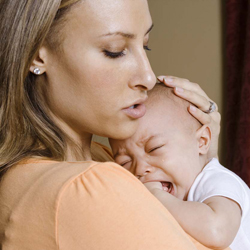
mother comforting crying baby
Image via womenshealth.gov

After an October 23 Food and Drug Administration warning to consumers, the manufacturer of Hyland’s Teething Tablets, the Standard Homeopathic Company, is recalling the supplement.  The FDA recommends that parents stop administering this product and discard it.

The FDA claims that the homeopathic tablets, intended to help babies with the discomfort and irritability associated with cutting their first teeth, have varying amounts of potentially toxic belladonna.  According to the FDA, they have received “reports of serious adverse events in children taking this product that are consistent with belladonna toxicity. An ongoing FDA inspection at the manufacturer indicates substandard control of the manufacturing operation.”

The FDA recommends that consumers contact their health care professional if their child experiences the following symptoms after taking Hyland’s Teething Tablets: a depressed level of consciousness, seizure, difficulty or slowed breathing,  lethargy, sleepiness, muscle weakness, skin flushing, constipation, difficulty urinating, or agitation.


Source:  https://www.fda.gov/ForConsumers/ConsumerUpdates/ucm230762.htm

According to Hyland’s website, though the FDA does state that adverse events have been reported, the government organization does not claim there is a conclusive link between these symptoms and the intake of these teething tablets.  Hyland’s says “After in-depth analysis, a comprehensive review of the company’s adverse event report log, and more than 85 years of safe usage, the company is confident that Hyland’s Teething Tablets are safe for infants and toddlers.”  Hyland’s will be changing its packaging standards, however, since the FDA’s warning also included a note about the possibility of accidental overdose due to lack of childproof packaging.  For more: https://www.hylands.com/news/hylands-teething-recall.php
Improving Vision In Athletes – And the Rest of Us

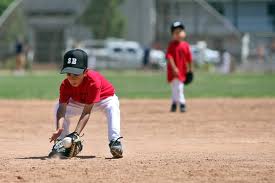
pewee baseball
image via santabarbaraca.gov

A survey of Italian coaches, trainers, and physical education teachers sought to determine attitudes toward vision correction in athletes.  Those interviewed believed it was important to correct vision problems during sports, but they were not likely to recommend that their athletes try contact lenses.  Coaches who wore contacts themselves, however, were more likely to suggest them to sports participants.

The researchers, who published their findings in Contact Lens and Anterior Eye, believe that education is key to helping more athletes find solutions to their vision deficits. Source: ScienceDirect

Another solution besides corrective lenses may be the daily practice of eye exercises. (You don’t even have to be an athlete to do them!)

Learn more about how to prevent and treat myopia (nearsightedness) naturally.

The Effect of Sunlight on Children’s Eyes: The Dangers and Benefits

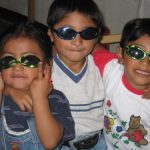
children wearing sunglasses
Image by Aka Kath

According to the Global Attitudes and Perceptions About Vision Care survey by The Vision Care Institute, 85% of the Americans surveyed understand that UV rays can damage the eyes.  Still, only about 65% of those people say they usually wear sunglasses.

When it comes to their kids, 78% of these same American respondents say that they make sure to apply sunblock to their children’s skin, but less than 40% think to have their children wear sunglasses.

“These gaps in vision care attitudes and behavior are of great concern, particularly when it comes to children” Christine W. Sindt, OD, FAAO, Associate Professor of Clinical Ophthalmology, University of Iowa, tells Medical News Today. The article goes on to say “Compared to their parents, children have larger pupils (allowing more light into their eyes), clearer lenses, and are outside without eye protection much more frequently and for longer periods than most adults. It is estimated that 80 percent of lifetime exposure to UV occurs by age 18 and that children’s annual dose of UV radiation is three times that of adults.”

That said, it is important to remember that kids are not just little cataracts patients who need to hide behind dark glasses.  They need some unprotected exposure to sunlight as well.

According to an Australian study, sunlight is essential to keeping children from developing myopia. Exposure to daylight appears to play a critical role in limiting the growth of the eyeball, which is responsible for myopia or short-sightedness.

Fall Babies More Likely To Develop Food Allergies

babies
Image via cdc.gov

Babies due in October or November are twice as likely to have allergies to common foods like milk and eggs.

It’s not necessarily related to their birth dates, however, but rather the time of year when they are at 11 weeks gestation.  The high levels of tree pollen present when babies in utero are just developing their antibodies are thought to be responsible.  Also, it is possible that mothers’ low post-winter vitamin D levels at that crucial point in development could be linked to the development in their children’s higher allergy rates.

Of the children studied, 11% of those whose 11th week of gestation occurred in the springtime developed allergies opposed to the 6% of babies who hit 11 weeks during the winter.

The research was carried out at Oulu University Hospital in Finland.  According to this story’s source, Life Extension Daily News, “rising rates of asthma and allergies affecting children over the last 30 years have been attributed to a range of triggers including excessively-clean lifestyles, diet and early use of antibiotics.”

For more information on causes, prevention, and treatment if allergies and sensitivities, visit our website.

Study of Astigmatism in Children

Genetics seems to be the reason that Hispanic kids are more likely to have astigmatism than African-American kids.  Research shows that  17% of Hispanic children may exhibit astigmatism between the ages of 6 months and 6 years.

The good news is that children from all ethnic groups who show evidence of astigmatism in the first year of life tend to grow out of the condition.  In the case of the Hispanic children in the study, only 5% had significant enough astigmatism to require corrective lenses.

As part of the Multi-Ethnic Pediatric Eye Disease Study, researchers have been tracking trends in vision conditions so that health practitioners have an idea of what to look for in their patients.

Source: Medscape

Low Birth Weight and Heredity Signal Infantile Cataracts Risk

A study of babies born with cataracts found that infantile cataracts in one or both eyes are associated with very low birth weights (babies born at less than 3.3 pounds).

Infantile cataracts also seems to be an inherited condition – nearly fifty percent of babies born with the condition had a first degree relative who was also born with cataracts.

Since early detection is key to providing the most effective treatment, determining potential risk factors for infantile cataracts increases the likelihood of diagnosing the problem quickly.

Researchers mentioned the following factors that might also play a part in the development of cataracts at birth, but deemed them all to be “statistically insignificant”: maternal urinary tract infections,  aspirin use, alcohol consumption, and smoking.

Source: https://www.osnsupersite.com/view.aspx?rid=68191

For more on cataracts, visit our website.

Probiotics Prevent Coughs in Infants

infant
Image courtesy of NIH.gov

Kids get colds.  It’s just part of life, but it’s best to keep babies from experiencing their first cough or cold for as long as possible.

New research out of Finland shows that babies under eight months are a third less likely to develop respiratory illnesses if they are given daily probiotic supplements.

In the study published in the British Journal of Nutrition, 65% infants who received daily Bifidobacterium animalis subsp. lactis BB-12 developed respiratory illnesses.  This is compared to the 94% of children who did not receive the supplements developed respiratory illness.

Source: Nutraingredients

Other reports find that the chances of developing a cold decrease for adults who take probiotics too. 

New Study in the Inherited Nature of Autism

school class
Image by US Dept of Ed

A recent study published in the Archives of General Psychiatry shows first-degree relatives of people with autism shows that family members who do not have the disorder themselves may still have oculomotor impairments.  These family members who were not on the autism spectrum tended to have trouble with eye movement tasks.  They also “demonstrated executive dysfunction on neuropsychological tests, communication abnormalities, and increased rates of obsessive and compulsive behaviors, but these were independent from one another and from oculomotor impairments,” say study authors.

The hope is that finding such evidence within families will help provide more clues that will lead to future therapeutic discoveries as researchers better understand the genetic nature of autism heritability.

Source: Medscape

The Effect of Pesticides on Child Development: New Study

crop dusting
Photo by Ken Hammond (USDA)

Researchers are studying the relationship between the gene paraoxonase 1 (PON1) and the effect of pesticides on the body.  They have already established that a increased level of organophosphate (OP) pesticides in the body are related to poorer mental development in two year olds whose mothers were exposed to the chemical. This study, published in Environmental Health Perspectives is aimed at determining whether scientists can use PON1 as a marker to measure whether child development has been hindered by pesticide exposure.  Additional research is necessary to determine whether this gene is related to the way that pesticides affect pregnant mothers and whether babies are affected in utero.

Pesticides are known to have an especially strong impact on children.  According to the Children’s Environmental Health Centers (part of the EPA): “Research has shown that children are not ‘little adults’  – they have different exposures, different susceptibilities and sensitivities, and different outcomes when exposed to substances in the environment.  Because children are still developing, the timing of an exposure to chemicals such as pesticides in terms of life stage can be critical in determining the effects.  Children also are exposed differently than adults – they are closer to the ground, young children are crawlers and toddlers and tend to pick things up and put them in their mouths.  In addition, children also have a higher surface to volume ratio than adults, so any exposure may affect them proportionately more.

Myopia More Likely to Develop in Kids Who Do “Near Work”

Scientists have been working to determine whether close, detailed work really can “ruin your eyes.”  We do agree that myopia (farsightedness) can be cause or exacerbated by excessive time spent at close-up work such as work on computers, sewing, accounting, jewelry work.

A study out of Turkey compared two groups of twelve year old boys – students engaged in “near-work” and apprentices working as skilled laborers.  Researchers publishing in Vision Research sayThis prospective and controlled study suggested that reading and near work, important environmental factors, might cause refractive myopic shifts in emmetropic (having perfect vision) students.

Source: PubMed

For more on the causes of myopia and ways to prevent it, visit our website.