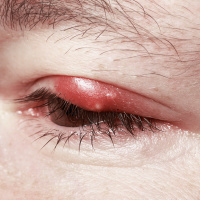
 Most people have heard of styes mainly because they have had one. A chalazion is somewhat similar to a sty, but it is not the same thing. A sty is an acute infection of one of the oil-producing glands of the upper and lower eyelids, called meibomian glands. Each eye has 30-40 meibomian glands.
A chalazion is a clogged meibomian gland. The gland becomes blocked and oil builds up inside it. Eventually, the gland breaks open and leaks excess oil into the surrounding tissue, causing inflammation. While chalazia can hurt like styes do, they are more frequently painless lumps on the upper or lower eyelid. They occur most frequently in persons 30-50 years of age, but children can also get them. Continue reading “Chalazion: Blocked Gland in the Eyelid”
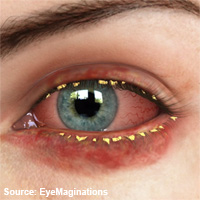
 Eye infections are a result of invasion of any part of the eye by disease-causing microorganisms. These include certain pathogens that can invade the eyelid, the conjunctiva, the cornea and, in severe and serious cases, inner parts of the eye as well.
  In a recent study, hospital patients with higher levels of the vitamin were less likely to develop hospital-acquired bloodstream infection (HABSI).