Smokers’ Life: How Smoking Changes Your Life (Infographic)

From before birth to the end of your life, smoking has a radical, nasty effect on your life: not only your health, but your social and mental life as well.  It impacts every aspect of your life – your vision, your health, your happiness – from the time in the womb until your old age.
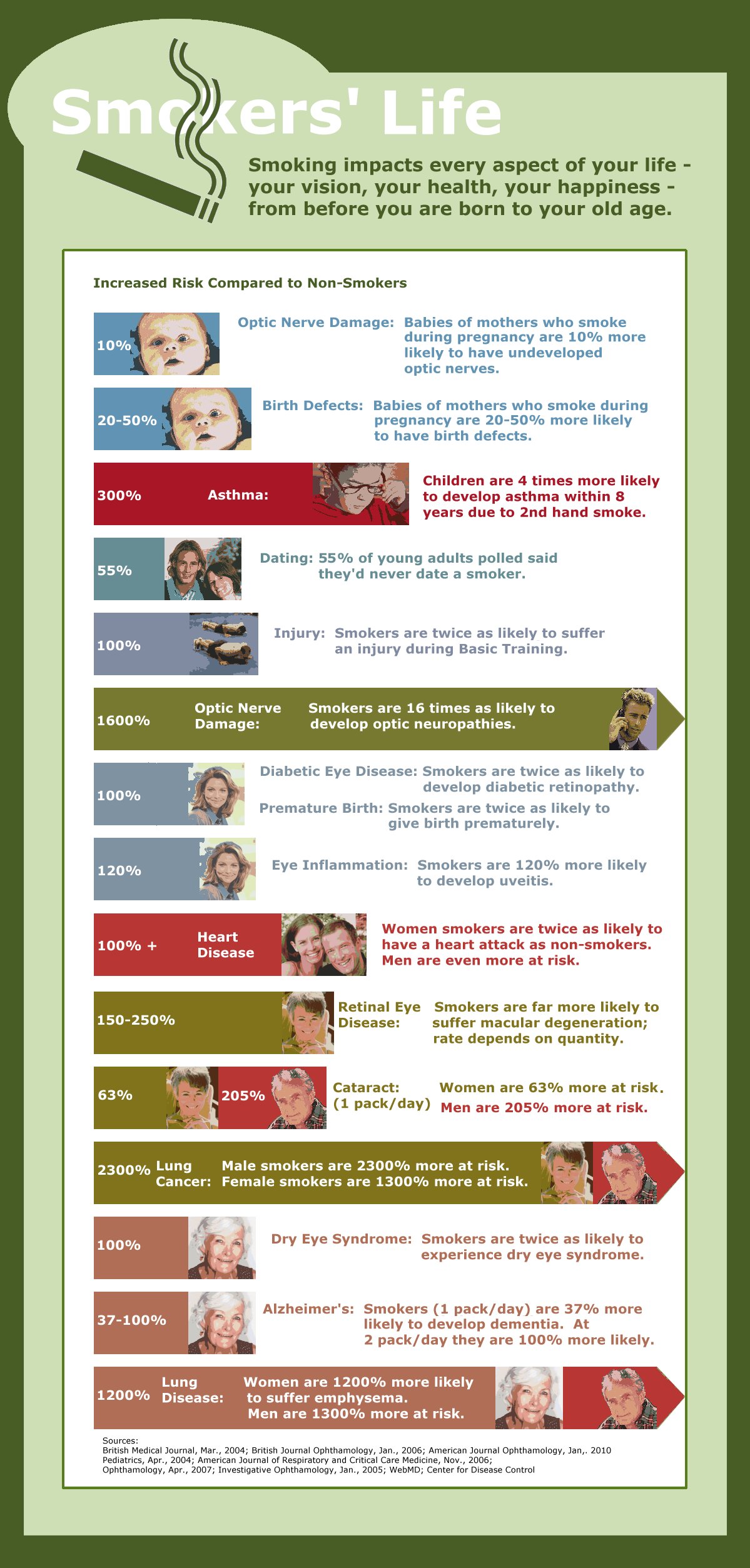
Vision & Smoking

Share this image on your site!

Please include attribution to www.naturaleyecare.com with this graphic.

<p><a href=’https://oldblog.naturaleyecare.com/smokers-life-vision-health-infographic/’><img src=’https://oldblog.naturaleyecare.com/wp-content/uploads/2014/02/smokers-life.jpg’ alt=’Smokers’ Life! (Infographic)’ border=’0′ /></a></p>

 

Reduced Vitamin D Levels and Flu Outbreaks

winter sunDiminished vitamin D levels may be linked to the spread of the flu. Research found that nonpandemic influenzas occur primarily in temperate regions and in winter when the skin’s vitamin D formation due to sun exposure is low. Influenza seasonality is seldom observed in tropical regions.

Although an initial pandemic can start in any season, secondary waves often occur in autumn or winter, and can be more serious. The increased lethality of secondary winter waves can also be explained by decreased vitamin D levels.

Continue reading “Reduced Vitamin D Levels and Flu Outbreaks”

Fireplaces and Wood Stoves Linked to Dry Eyes and Lung Problems

Do you have a fireplace or a wood stove that helps keep you cozy this winter?  A new study published in the journal Chemical Research in Toxicology describes how indoor air pollution caused by wood smoke have been linked to various lung problems.

Researchers describe how inhaling wood smoke particulate matter has been linked to heart disease, asthma, and bronchitis.  It is likely that the inhaled wood smoke is also carcinogenic.

Source: ScienceBlog.com

Indoor fires can also dry up the air, and dry air has been linked to dry eye syndrome. Be sure to run a humidifier in these dry winter months.  Learn more about how to prevent and treat dry eye symptoms.

Inhaled Sterioids Increase Diabetes Risk in COPD Patients

The use inhaled corticosteroids has been linked to a heightened risk of developing type 2 diabetes.

The study published in the American Journal of Medicine indicated that patients with chronic obstructive pulmonary disorder or COPD who use these drugs should pay special attention to this warning.  Drugs include  fluticasone (Flonase, Advair), budesonide (Pulmicort, Rhinocort) and beclometasone (QVAR, Beclovent).  These drugs are also prescribed to people with asthma, but researchers say that their diabetes risk is not nearly as significant as it is for COPD patients.

Source: https://www.foodconsumer.org/newsite/Non-food/Drug/inhaled_steroids_boost_diabetes_mellitus_risk_1311100714.html

Learn about natural treatment options for diabetes at our website.

For information about how other drugs can harm the body and the eyes, click here.