
 DHA is one of the omega-3 fatty acids that nutritionists implore us to eat. Why are grilled salmon and canned tuna part of nearly every diet and nutrition plan? Fatty fish is just one good source of DHA and other crucial nutrients. Find out how omega-3 fatty acids reduce chronic inflammation and help prevent diseases such as macular degeneration (ARMD), glaucoma, and diabetes. Pregnant people need omega-3’s to help the fetus develop. How much omega-3 fatty acids should you eat? And how do you balance them with omega-6 fatty acids, found in refined foods and certain meats? Continue reading “DHA is a Crucial Omega-3 Fatty Acid”
Category: Fetal and Baby Development
Why is the Vagus Nerve Important?
Gut-Brain Access
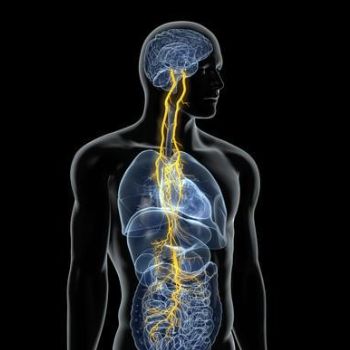 “Mind-body connection”? It is the link between our emotional/mental and physical selves. The link becomes evident as you learn about gut-brain access and the function of the vagus nerve.
Through two-way communication with the brain via the nervous system, endocrine system, and immune system, the gut and central nervous system form a gut-brain axis. They communicate with each other constantly, in both sickness and health.[1. Grenham S, Clarke G, Cryan JF, Dinan TG. (2011). Brain-gut-microbe communication in health and disease. Front Physiol. 2011; 2():94.] The gastrointestinal tract has its own nervous system that includes neurotransmitters, neurons, and electrical signals. Called the enteric nervous system, it is often referred to as the second brain. Researchers have concluded that mechanisms that degenerate the neurons in the brain also degenerate neurons in the enteric nervous system.[2. Wade PR, Cowen T. Neurodegeneration: a key factor in the ageing gut. Neurogastroenterol Motil. 2004 Apr;16 Suppl 1:19-23.] For example, exercise stimulates gut motility. If the vagus nerve is impaired, as in animal models, the gut has limited motility and nutrient absorption is hindered.[3. Wang Y, Kondo T, Suzukamo Y, Oouchidaa Y, Izumi S. (2010). Vagal nerve regulation is essential for the increase in gastric motility in response to mild exercise. Tohoku J Exp Med. 222(2):155-62.] Continue reading “Why is the Vagus Nerve Important?”
Eye Floaters in the Vitreous: A Guide by Natural Eye Care
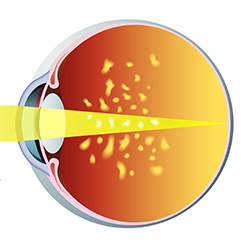 Have you ever noticed specks or clouds in your field of vision? They are most likely eye floaters. Floaters can look like cobwebs, blobs, dots, or little insects that float around. Eye floaters can be semi-transparent or darker. If you have them, they are more noticeable in certain lighting conditions, such as bright sunlight. You might not notice them at all unless you are looking for them. Continue reading “Eye Floaters in the Vitreous: A Guide by Natural Eye Care”
DHA Supports Healthy Fetal Development
DHA (Docosahexaenoic acid) is an omega-3 fatty acid found throughout the body. This essential nutrient supports optimal visual, nervous system and brain development in the fetus. It is important for pregnant women to supplement with a high quality fish oil (or through an algae supplement if vegetarian) as developing infants cannot efficiently produce their own DHA. Babies must obtain this vital nutrient. The fetus gets DHA through the placenta during pregnancy and from breast milk after birth.
Docosahexaenoic acid (C22:6, DHA) is a highly unsaturated omega-3 fatty acid that forms part of the central nervous and visual system structures. DHA is synthesized from its precursor, alfa-linolenic acid, that is also a omega-3 fatty acid and can be obtained from vegetable oils. marine organisms, specially fish, are good nutritional sources of DHA and eicosapentaenoic acid (EPA), another omega-3 fatty acid that has a role in vascular homeostasis.
DHA increases membrane fluidity, improving neurogenesis, synaptogenesis and the activity of retinal photoreceptors. The fetus, specially during the last trimester of pregnancy, has high DHA requirements. It is provided by the mother, since fetal DHA synthesis is negligible in this stage of development. Breast feeding provides DHA to the child, but most replacement artificial formulas do not provide this fatty acid. At the present moment, many products for infant nutrition contain DHA.
Ref: PMID:11775350[PubMed – indexed for MEDLINE]
Editor’s Note: DHA (Docosahexaenoic acid) is an omega-3 fatty acid found throughout the body. This essential nutrient supports optimal visual, nervous system and brain development in the fetus. It is important for pregnant women to supplement with a high quality fish oil (or through an algae supplement if vegetarian) as developing infants cannot efficiently produce their own DHA. Babies must obtain this vital nutrient. The fetus gets DHA through the placenta during pregnancy and from breast milk after birth.
Do Seniors Need to Supplement DHA for Vision Health?
 Docosahexaenoic acid or DHA is a naturally-occurring chemical, so why might seniors need to supplement it? Our bodies create small amounts of this omega-3 fatty acid. DHA from the diet, such as seafood, also counts. Docosahexaenoic acid is crucial to brain development in infants, and it is found in large quantities in the brain and retina. Researchers have found that consuming extra DHA can fight eye disease. How much docosahexaenoic acid do you need to get these effects? Can you get enough through your diet, or do you need to supplement DHA for optimum health? Continue reading “Do Seniors Need to Supplement DHA for Vision Health?”
Could Folate Prevent Glaucoma? (Vitamin B9, Folic Acid)
 The eye disease glaucoma can be devastating to eyesight, so scientists are looking at risk factors such as folate intake. There are few good therapies once the disease sets in. Vitamins could potentially prevent glaucoma. A study in the Journal of the American Medical Association looked at folate intake and the risk of developing open-angle glaucoma, also called “pseudoexfoliation” or “exfoliation syndrome.”
Glaucoma mostly strikes the elderly. In open-angle glaucoma, a part of the eye does not drain correctly. Fluid builds up in the eye, damaging the optic nerve. Fluid pressure builds up in the eye. Glaucoma can Continue reading “Could Folate Prevent Glaucoma? (Vitamin B9, Folic Acid)”
“Smoking Causes Blindness” on Australian Cigarette Packets
Smoking damages the entire body, including the eyes. The Australian government has introduced harsh laws to discourage the addictive habit. Cigarette packaging is plain, featuring gruesome color photos and statements such as “Smoking Causes Blindness.” What are Australia’s anti-smoking laws, and will they work? How does smoking cause blindness?
Smokers have a significantly higher chance of developing heart disease, lung cancer, emphysema, macular degeneration, cataracts, and glaucoma. Smoking during Continue reading ““Smoking Causes Blindness” on Australian Cigarette Packets”
Baby’s Gender May be Tied to Diet, Nutrition.
We came across a perfectly fascinating article about the fact that whether a baby is a boy or girl may be related to the mother’s diet at the time of conception … which is also true in nature.
“A joint study conducted by researchers at the Universities of Oxford and Exeter has turned up the tantalizing evidence that a child’s gender might be determined by mother’s diet around the time of conception.
If this is true, it goes a long way in solving the mystery of why there is a decreasing number of male babies born each year in the industrialized nations of the world, including the United States, Canada, and the UK.” (from Medweb)
Continue reading “Baby’s Gender May be Tied to Diet, Nutrition.”
Smokers’ Life: How Smoking Changes Your Life (Infographic)
From before birth to the end of your life, smoking has a radical, nasty effect on your life: not only your health, but your social and mental life as well. It impacts every aspect of your life – your vision, your health, your happiness – from the time in the womb until your old age.
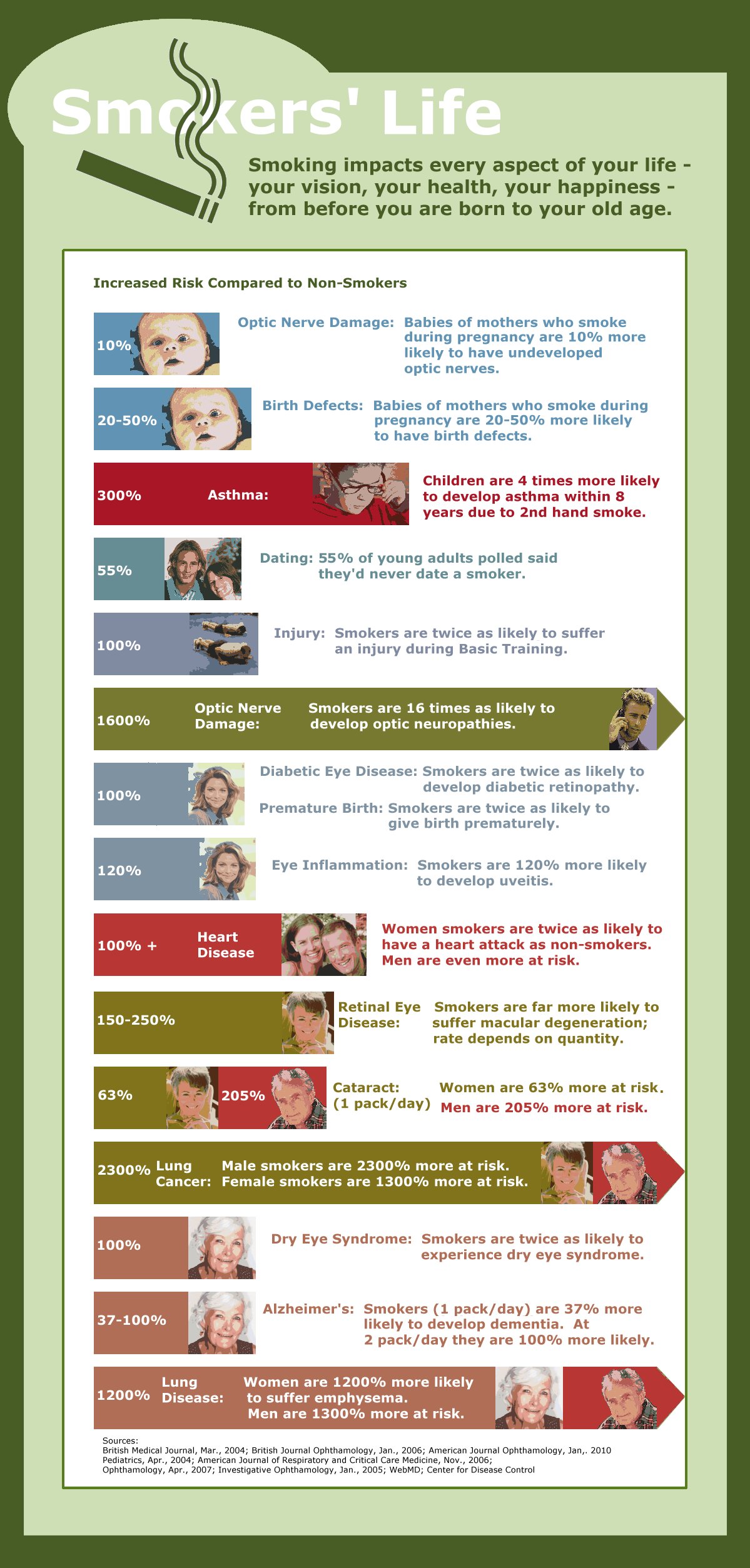
Share this image on your site!
Please include attribution to www.naturaleyecare.com with this graphic.
<p><a href=’https://oldblog.naturaleyecare.com/smokers-life-vision-health-infographic/’><img src=’https://oldblog.naturaleyecare.com/wp-content/uploads/2014/02/smokers-life.jpg’ alt=’Smokers’ Life! (Infographic)’ border=’0′ /></a></p>
Congenital Cataract Can Lead to Lazy Eye (Amblyopia)
 A cataract is defined as a clouding of the lens of the eye that is usually associated with aging. However, approximately 1 in 250 newborns in the US have a cataract on at least one eye at birth, or develop a cataract soon after they are born. While many cases of congenital cataracts are detected and treated quickly, it is estimated that up to 1/3rd of older children diagnosed with a cataract had it at undetected at birth. Early treatment is crucial for the brain to develop normally, and to prevent lazy eye (amblyopia) and other vision problems.
The reasons for congenital cataracts in newborns may include infection (especially measles during pregnancy), genetics, metabolic problems, inflammation, diabetes, trauma or reactions to drugs. Common tetracycline antibiotics taken during pregnancy can cause cataracts in the developing baby. Older children can get pediatric cataracts for reasons comparable to the ones above; eye injuries such as a blow to the eye are more typically the cause, associated with 40% of pediatric cataracts cases.
Continue reading “Congenital Cataract Can Lead to Lazy Eye (Amblyopia)”