Smokers’ Life: How Smoking Changes Your Life (Infographic)

From before birth to the end of your life, smoking has a radical, nasty effect on your life: not only your health, but your social and mental life as well.  It impacts every aspect of your life – your vision, your health, your happiness – from the time in the womb until your old age.
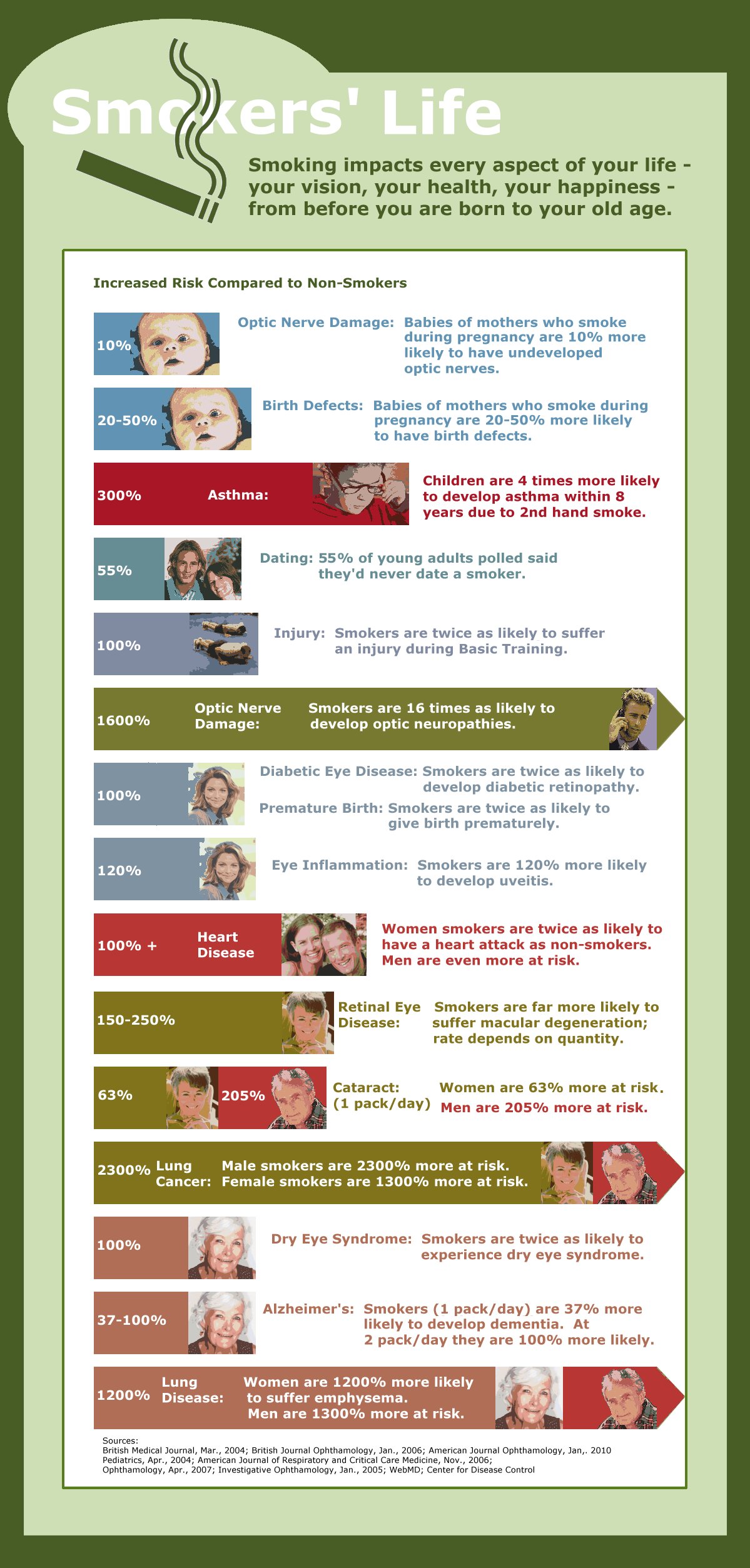
Vision & Smoking

Share this image on your site!

Please include attribution to www.naturaleyecare.com with this graphic.

<p><a href=’https://oldblog.naturaleyecare.com/smokers-life-vision-health-infographic/’><img src=’https://oldblog.naturaleyecare.com/wp-content/uploads/2014/02/smokers-life.jpg’ alt=’Smokers’ Life! (Infographic)’ border=’0′ /></a></p>
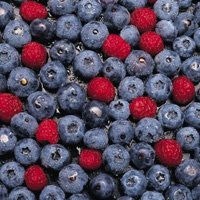
 

Flavonoids in Deeply Colored Berries Protect People From Disease

blueberries and raspberries antioxidantsA fruit cup of mixed berries is a powerful snack: deeply colored fruits are filled with flavonoids and other antioxidants that help protect the body from disease. Antioxidants help prevent free-radical damage, which is believed to be responsible for the onset of eye diseases such as cataracts and macular degeneration.

The colored flavonoids found in berries are called “anthocyanins”. These water-soluble pigments make plants shades of red, purple and blue. Berries also contain flavonoids called “quercetin” and “apigenin”. In the field or in the wild, these flavonoids help protect the plant from pests and insects.

Continue reading “Flavonoids in Deeply Colored Berries Protect People From Disease”

Vitamin D, Curcumin, Soy & Resveratrol Fight Cancer

vitamin D from the sunVitamin D

A recent study in the Proceedings of the National Academy of Sciences found that Vitamin D may have cancer-fighting properties. At the same time, ironically, Vitamin D deficiency is becoming increasing prevalent in the United States due to fear of the harmful effects of sun and poor nutrition.

Excessive sun exposure is a leading cause of skin cancer and cataracts in the eyes. As people slap on sunscreen and cover up to protect themselves from ultra-violet rays, they may be inadvertently missing out on an important nutrient.

Continue reading “Vitamin D, Curcumin, Soy & Resveratrol Fight Cancer”

How Too Much Sun Can Cause Cancer and Harm Eyes

Sunglasses can prevent eye diseaseThe sun represents a potential threat to the eyes. Overexposure to sunlight can cause an increased risk of cataracts, cancer of the lids of the eyes, and even cornea burns. It is important to prevent eye disease and injury caused by UV radiation and sunlight.

Dr. George Cioffi is the chief of ophthalmology at New York-Presbyterian Hospital/Columbia University Medical Center. He points out that people at elevated risk of eye damage from the sun include cataract surgery patients, people with light colored eyes, patients who have disorders of the retina, and patients whose medications cause sensitivity to light.

Continue reading “How Too Much Sun Can Cause Cancer and Harm Eyes”

Forty Percent of Cancers Caused by Lifestyle

Alcohol is a preventable cause of cancerA recent UK research study shows that 40% of all cancers are caused by avoidable lifestyle considerations, such as diet, excess weight, smoking, and/or alcohol consumption. Tobacco use was shown to cause the most cancers.
“Many people believe cancer is down to fate or ‘in the genes’ and that it is the luck of the draw whether they get it,” study author Professor Max Parkin, a Cancer Research UK epidemiologist based at Queen Mary, University of London. The reality is, based on the study, that many cancers can be avoided through lifestyle changes.

The research showed that in Britain:

Too Much Meat, Too Little Fiber Lead to Colorectal Cancer

A new study confirms earlier findings that indicate that consuming red and processed meats increases one’s risk of developing colorectal cancer.  The study also strengthens previous assertions that fiber rich foods help protect people from colorectal cancer.

This evidence underlines the preventable nature of colorectal cancer, since it is so attributable to diet.  According to Elisa Bandera, MD, PhD, who served on the World Cancer Research Fund/American Institute for Cancer Research’s Continuous Update Project (CUP) Expert Panel that authored the report “About 45 percent of colorectal cancer cases could be prevented if we all ate more fiber-rich plant foods and less meat, drank less alcohol, moved more and stayed lean.”

The American Institute for Cancer Research (AICR) suggests that people eat no more than 18 ounces of red meat per week (that includes beef, lamb, and pork) and that all processed meats should be avoided.

A plant-based diet rich in fiber-containing foods like whole grains, fruits, vegetables and beans is more important than ever.  Source: Medical News Today, 23 May 2011

These findings on the prevention of colorectal cancer are very much in line with those that we recommend in The Vision Diet. Learn about how to keep your entire body healthy with these recommendations.

Bladder Cancer Slowed and Destroyed by Mustard Seed

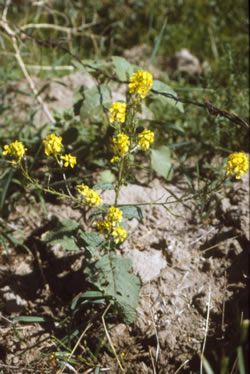
mustard plant
image via www.mda.state.mn.us

Foods really do have the power to fight disease, including cancer.

A study of rats showed that mustard seed powders could successfully stop the growth of cancer and also stop it from spreading.  Supporting the assertion that food has powerful healing potential, it was the food itself that helped these animals, not the purified form of the compound. The cancer in the rats taking mustard seed grew one third slower than the tumors in the rats who did not eat the plant.

Human cancer cells in the laboratory were also neutralized when exposed to the active ingredient in mustard, allyl isothiocyanate.

Study authors did state that all commercially available mustard is not created equally; potency depends on the plant species and the preparation method.

Source: Environment Health News

Learn about how to prevent and treat bladder and urinary tract infections.

Fireplaces and Wood Stoves Linked to Dry Eyes and Lung Problems

Do you have a fireplace or a wood stove that helps keep you cozy this winter?  A new study published in the journal Chemical Research in Toxicology describes how indoor air pollution caused by wood smoke have been linked to various lung problems.

Researchers describe how inhaling wood smoke particulate matter has been linked to heart disease, asthma, and bronchitis.  It is likely that the inhaled wood smoke is also carcinogenic.

Source: ScienceBlog.com

Indoor fires can also dry up the air, and dry air has been linked to dry eye syndrome. Be sure to run a humidifier in these dry winter months.  Learn more about how to prevent and treat dry eye symptoms.

Diabetes Drug Can Cause Bladder Cancer According to FDA

capsules and pills
Image courtesy of Iowa.gov

The U.S. Food and Drug Administration is examining a potential link between the diabetes drug Actos or pioglitazone and an increased risk of bladder cancer.  Patients who have taken this medication to help control their type 2 diabetes for more than two years have an elevated risk of developing cancer of the bladder, but the FDA did not announce how great this risk might be.  They have not gone so far as to tell doctors to stop prescribing it or recommending that patients stop taking it.

Learn more about the symptoms and causes of diabetes mellitus and natural diabetes treatment options.

Cancer Risk Increased For Talcum Powder Users

The jury is still out on the extent of the connection between talcum powder and cancer, but the American Cancer society says “there is some suggestion of an increase in ovarian cancer risk” in talcum powder user.

Talcum powder is produced from talc, a magnesium trisilicate mineral, which in its natural form may contain the carcinogen asbestos, but since 1973.

A study of women using talc containing products showed that 50% to 90% higher risk of developing certain types of ovarian cancer. Another study published in 2000 found no effect on ovarian cancer overall but a 40% increase risk in one type — invasive serous cancers.  In 2003, analysis of 16 studies on the connection found a 33% increase in ovarian risk among talc users.

The American Cancer Society advises that “people who use powder may wish to consider avoiding these products or substituting cornstarch-based powders that contain no talc. There is no evidence at present linking cornstarch powders with any form of cancer.”