
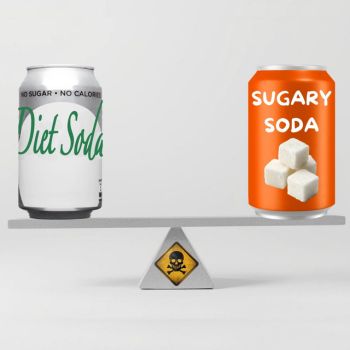
 Artificially sweetened sodas are popular, but research suggests their ingredients may have serious consequences for our health, especially when it comes to fatty liver disease, heart health, and brain function. In this article, we take a closer look at the latest studies on diet sodas, added sugars, and their surprising effects on everything from your gut microbiome to your risk for chronic disease. If you care about long-term wellness or want to make informed choices about what you drink, read on for the evidence and practical alternatives. Continue reading “Fatty Liver Disease and Other Dangers of Diet Soda and Artificial Sweeteners”
Category: Hypertension
Unlocking the Power of Cocoa and Flavanols: Benefits for Heart, Brain, and Vision Health
 Love chocolate? You’re not alone—and science is on your side. Cocoa flavanols and dark chocolate aren’t just delicious treats; they’re packed with natural compounds that can benefit your heart, brain, and even your vision. In this article, we examine the latest research on cocoa flavanols and other plant-based nutrients, revealing how your favorite indulgence may actually support your long-term health. Read on to discover how these everyday foods can make a real difference for your cardiovascular, cognitive, and eye health. Continue reading “Unlocking the Power of Cocoa and Flavanols: Benefits for Heart, Brain, and Vision Health”
Stevia, Monk Fruit and Other Sugar Alternatives for Better Health

Stevia, monk fruit, and other natural sugar substitutes offer sweetness without the health risks of refined sugar or artificial sweeteners. In this article, we will cover the benefits and safety of these alternatives. And, we will talk about why cutting back on refined foods and steering clear of chemical sweeteners can make a real difference for your long-term health. Choosing the right sweetener is not just about calories or taste. Reducing your intake of refined sugars and processed foods can help lower your risk of diabetes, heart disease, and other chronic conditions. At the same time, avoiding artificial sweeteners may support better gut health, metabolism, and overall wellness.
Continue reading “Stevia, Monk Fruit and Other Sugar Alternatives for Better Health”
Nattokinase Supplements for Heart Health Benefits
Did you know that two substances of Asian origin, nattokinase and serrapeptase, have significant health benefits? Scientific studies have revealed some of the reasons why longevity is associated with regular consumption of serrapeptase and nattokinase supplements. Specifically, we will discuss cardiovascular disease, eye issues such as floaters, macular degeneration, and diabetic retinopathy, internal scar tissue from autoimmune disorders, lung disease, sinusitis, neurological disorders, and inflammatory bowel disease. Continue reading “Nattokinase Supplements for Heart Health Benefits”
Green Tea Benefits for Seniors – Antioxidants for the Eyes, Brain, and Body
 Oxidative stress happens everywhere in the body and can create havoc over time. Many eye and brain diseases are triggered or exacerbated by oxidative stress. The body counteracts this stress by producing antioxidants. However, you must also ingest additional antioxidants through healthy food, drinks, and supplements. Green tea, rich in antioxidants, offers protective benefits for eye health by combating oxidative damage.[1. Merin, S. (1991). Inherited cataracts. In Merin S. editor. Inherited Eye Diseases, (pp. 86-120), New York: Mercel Dekker.] At pennies per cup, this convenient and tasty beverage has been studied for its special antioxidant properties. What are the green tea benefits for seniors? Read on to find out. Continue reading “Green Tea Benefits for Seniors – Antioxidants for the Eyes, Brain, and Body”
How Microplastic Pollution Can Damage Your Health
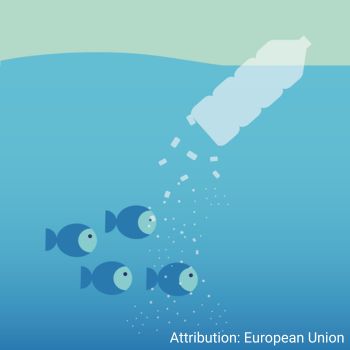 When tiny plastic particles pollute the ecosystem, can they cause harm? If so, can you do anything? At Natural Eye Care, we have mined the research on the effects of microplastics and nanoplastics on human health. Read on to find out what they are, how they affect living organisms, and how to reduce your exposure.
What Are Microplastics?
Microplastics are pieces of plastic measuring less than 5 millimeters (0.2 inches) long. They are usually produced intentionally or generated when large synthetic polymer products, such as plastic packaging, are not properly disposed of or treated. Once formed, microplastics are often exposed to the environment, where they can decompose. Much of the exposure to microplastics starts with the dumping of these MNPs in the ocean, finding their way to fish, plankton, and the shore. Various human activities and products, such as washing, worn tires, city dust, road paint, ships, and cleaning products, have been reported as sources of microplastics. [1. IUCN. IUCN 2017: international union for conservation of nature annual report 2017. accessed on 2023 February 20. Available at: https://portals.iucn.org/library/node/47536] Continue reading “How Microplastic Pollution Can Damage Your Health”
Poor Circulation is Linked to Macular Degeneration, Glaucoma and Diabetic Retinopathy
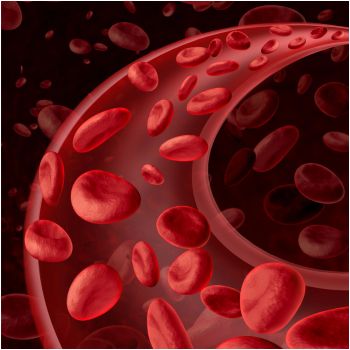 Poor circulation significantly contributes to eye diseases, including macular degeneration, glaucoma, and diabetic retinopathy. Heart disease and diabetes lead to poor circulation. Our eyes and brain require the most oxygen and nutrients, so they need healthy blood circulation. In this article, we will explore the connections between age-related macular degeneration (AMD) and poor circulation. We will also examine the relationship between heart disease and glaucoma. Additionally, we will discuss how diabetes affects circulation and leads to diabetic retinopathy.
Macular Degeneration and Poor Circulation
Age-related macular degeneration (AMD) is the leading cause of severe and irreversible vision loss in developed countries.[1.Klein R Klein BE Tomany SC Cruickshanks KJ . The association of cardiovascular disease with the long-term incidence of age-related maculopathy: The Beaver Dam Eye Study. Ophthalmology. 2003;110:636–643.] [2.Evans J Wormald R . Is the incidence of registrable age-related macular degeneration increasing? Br J Ophthalmol. 1996;80:9–14.].The macula is a tiny spot in the middle of the eye’s retina, where we get our most detailed vision. Heart disease is a major contributing factor. Numerous studies have linked hypertension and atherosclerosis with AMD.[3.Vingerling JR Dielemans I Bots ML Hofman A Grobbee DE de Jong PT . Age-related macular degeneration is associated with atherosclerosis: The Rotterdam Study. Am J Epidemiol. 1995;142:404–409.] [4.Hyman L Schachat AP He Q Leske MC . Hypertension, cardiovascular disease, and age-related macular degeneration. Age-Related Macular Degeneration Risk Factors Study Group. Arch Ophthalmol. 2000;118:351–358.] [5.van Leeuwen R Ikram MK Vingerling JR Witteman JC Hofman A de Jong PT . Blood pressure, atherosclerosis, and the incidence of age-related maculopathy: The Rotterdam Study. Invest Ophthalmol Vis Sci. 2003;44:3771–3777.] [6.Klein R Klein BE Tomany SC Cruickshanks KJ . The association of cardiovascular disease with the long-term incidence of age-related maculopathy: The Beaver Dam Eye Study. Ophthalmology. 2003;110:636–643.] Hundreds of peer-reviewed studies indicate that AMD can be very responsive to diet, exercise, and targeted supplementation.
The choroid is a thin layer of tissue in the eye’s middle wall, rich in blood vessels that supply oxygen and nutrients to the eye. Several cross-sectional studies have shown that blood flow in the choroid and retina is reduced in AMD.[7.Agnes Boltz, Alexandra Luksch, Barbara Wimpissinger, Noemi Maar, Günther Weigert, Sophie Frantal, Werner Brannath, Gerhard Garhöfer, Erdem Ergun, Michael Stur, Leopold Schmetterer; Choroidal Blood Flow and Progression of Age-Related Macular Degeneration in the Fellow Eye in Patients with Unilateral Choroidal Neovascularization. Invest. Ophthalmol. Vis. Sci. 2010;51(8):4220-4225.] [8.M.L. Hibert, Y.I. Chen, N. Ohringer, W.J. Feuer, N.K. Waheed, J.S. Heier, M.W. Calhoun, P.J. Rosenfeld and J.R. Polimeni. Altered Blood Flow in the Ophthalmic and Internal Carotid Arteries in Patients with Age-Related Macular Degeneration Measured Using Noncontrast MR Angiography at 7T. American Journal of Neuroradiology September 2021, 42 (9) 1653-1660]
Poor circulation hurts the body’s ability to provide a healthy blood supply to the retina. This appears to induce ischemia (an inadequate blood supply) and hypoxia (inadequate supply of oxygen to the body’s tissues) in the retina. The retina is essentially starved of oxygen and essential nutrients. In severe cases, dry AMD develops into the more dangerous wet AMD.
Nutrients & Diet for High Blood Pressure
 Did you know that untreated high blood pressure increases the risk, not only of heart attacks and strokes, but eye conditions such as advanced macular degeneration, glaucoma, and macular edema?
Studies support a target blood pressure for most people of 120/80 mm Hg, with an optimal level of 115/75 mm Hg for many people.[1. Hansen TW, Kikuya M, Thijs L, Li Y, Boggia J, et al. (2008). Diagnostic thresholds for ambulatory blood pressure moving lower: a review based on a meta-analysis-clinical implications. J Clin Hypertens (Greenwich). May;10(5):377-81.] Continue reading “Nutrients & Diet for High Blood Pressure”
Hypertension and the Eyes
High Blood Pressure and Vision Health
 Hypertension increases sharply with advancing age; hence older persons are those most affected by its negative consequences.
High blood pressure can damage blood vessels in the retina. The retina is the layer of tissue at the back part of the eye. It changes light and images that enter the eye into nerve signals that are sent to the brain.
Those with high pressure not carefully controlled have a high incidence of heart attacks and strokes, as well as retinal disorders that can result in retinal bleeding, and other eye conditions such as hypertensive retinopathy, Central serous choroidopathy (CSCR), also referred to as central serous retinopathy (CSR) and glaucoma. Continue reading “Hypertension and the Eyes”
How to Minimize Your Glaucoma Risk
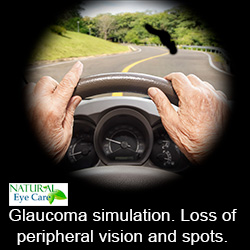 Glaucoma is a serious eye disease with many risk factors. Some risk factors are controllable; other risks are not. The main problems with glaucoma are late detection, permanent damage, and no cure. People who skip going to the eye doctor often notice no symptoms until glaucoma is well-established. Glaucoma is often referred to as the “silent thief.” Typically, are no eye symptoms until the person notices that peripheral vision is reduced. Glaucoma is not curable but with proper treatment often very manageable. Therefore, knowing your glaucoma risks and managing them can help prevent irreversible optic nerve damage. Continue reading “How to Minimize Your Glaucoma Risk”