
 Did you know that periodontal disease and cavities are significant threats to oral health? In children, tooth decay is about five times more prevalent than asthma, and seven times more common than inhaled allergies. Adults lose teeth mostly from untreated periodontal disease. Untreated oral disease has resulted in 15% of people over the age of 65 having all their teeth removed.[1. Centers for Disease Control and Prevention. Oral Health Surveillance Report: Dental Caries, Tooth Retention, and Edentulism, United States, 2017–March 2020. U.S. Dept of Health and Human Services; 2024.] Severe tooth loss resulting in fewer than 8 teeth remaining affects 26% of seniors.[2. Griffin SO, Griffin PM, Li C-H, Bailey WD, Brunson D, Jones JA. Changes in older adults’ oral health and disparities: 1999 to 2004 and 2011 to 2016. J Am Geriatr Soc. 2019;67(6):1152–1157.] Untreated tooth decay in permanent teeth plagues 53 million adults in America.[3. Benjamin RM. Oral health: the silent epidemic. Public Health Rep. 2010 Mar-Apr;125(2):158-9. doi: 10.1177/003335491012500202. PMID: 20297740; PMCID: PMC2821841.] Continue reading “Oral Bacteria Could Lead to a Heart Attack and Eye Disease”
Category: Atherosclerosis
Fatty Liver Disease and Other Dangers of Diet Soda and Artificial Sweeteners
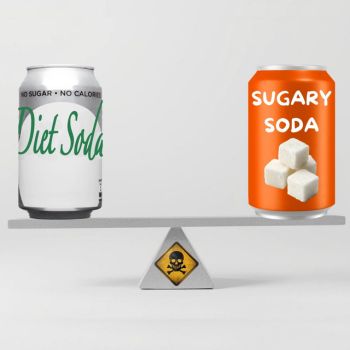 Artificially sweetened sodas are popular, but research suggests their ingredients may have serious consequences for our health, especially when it comes to fatty liver disease, heart health, and brain function. In this article, we take a closer look at the latest studies on diet sodas, added sugars, and their surprising effects on everything from your gut microbiome to your risk for chronic disease. If you care about long-term wellness or want to make informed choices about what you drink, read on for the evidence and practical alternatives. Continue reading “Fatty Liver Disease and Other Dangers of Diet Soda and Artificial Sweeteners”
Unlocking the Power of Cocoa and Flavanols: Benefits for Heart, Brain, and Vision Health
 Love chocolate? You’re not alone—and science is on your side. Cocoa flavanols and dark chocolate aren’t just delicious treats; they’re packed with natural compounds that can benefit your heart, brain, and even your vision. In this article, we examine the latest research on cocoa flavanols and other plant-based nutrients, revealing how your favorite indulgence may actually support your long-term health. Read on to discover how these everyday foods can make a real difference for your cardiovascular, cognitive, and eye health. Continue reading “Unlocking the Power of Cocoa and Flavanols: Benefits for Heart, Brain, and Vision Health”
How Are the Eyes a Window to Brain Health? What Eye Scans Reveal About Alzheimer’s, Parkinson’s, and Dementia

Studies continue to show strong connections between eye health and brain diseases, with the retina offering a “window” to the brain for early detection and monitoring of conditions. Early signs of diseases that can appear in the eyes include Alzheimer’s Disease, Multiple Sclerosis (MS), and Parkinson’s. Changes in retinal nerve fiber, pupil dilation, and even protein deposits in the eye, such as amyloid beta, can mirror changes occurring in the brain, providing potential non-invasive diagnostic tools and insights into disease progression.
The eye is, in many ways, an outpost of the brain. They share similar types of nerve cells, blood vessel patterns, and immune defenses. Uniquely, the eye lets clinicians look directly at living nerve tissue and tiny blood vessels—no incision required. That makes it a powerful early-warning system for health changes. As imaging technology advances, we are spotting signs of disease earlier and with greater precision. And with today’s data-rich eye scans, artificial intelligence is beginning to help identify subtle patterns that humans might miss, potentially improving detection and guiding care sooner. [1. Li, Xinyu, et al. “Computer Vision for Brain Disorders Based Primarily on Ocular Images.” Frontiers in Neurology, vol. 12, 2021, doi:10.3389/fneur.2021.584270.] [2. Zhao, Lei, et al. “Retinal Microvascular Signs and Cognitive Impairment: A Systematic Review.” Frontiers in Neuroscience, vol. 14, 2020, doi:10.3389/fnins.2020.566428.]
Can Atherosclerosis Harm Me? Can Nutrition and Exercise Help?
 Coronary artery disease stands as the leading form of heart disease in the United States, impacting more than 20 million people. Among atherosclerosis’s most serious risks are heart attacks and strokes, both of which can have life-altering consequences. Fortunately, there are powerful steps you can take to protect your heart health. Building a balanced diet, staying active, and using carefully chosen supplements all play an important role in preventing and managing atherosclerosis. In this article, we will discuss how atherosclerosis happens, its effects on the body, and nutrients that support heart health. We also review basic lifestyle choices, such as exercise and remaining smoke-free, that can add years to your life. Continue reading “Can Atherosclerosis Harm Me? Can Nutrition and Exercise Help?”
Retinal Scans Can Detect Diabetes, MS and Dementia Early
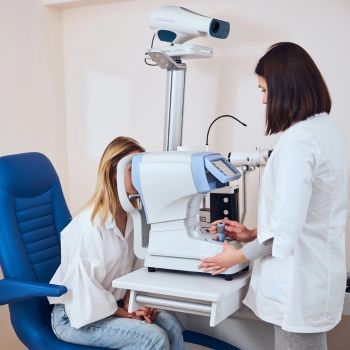 Retinal scans are proving to be an effective way to detect early signs of diseases like diabetes, multiple sclerosis, and dementia. They can sometimes detect disease before symptoms appear. The best news about retinal scans is that they are painless and non-invasive. You may have looked into machines that scan the retina at your optometrist or eye surgeon’s office. Why are retinal scans helpful for detecting diseases that are not, technically, eye diseases? How is the retina connected to the brain and brain health? Continue reading “Retinal Scans Can Detect Diabetes, MS and Dementia Early”
Poor Circulation is Linked to Macular Degeneration, Glaucoma and Diabetic Retinopathy
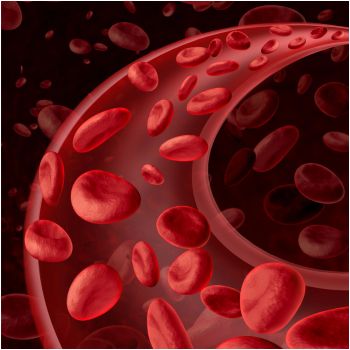 Poor circulation significantly contributes to eye diseases, including macular degeneration, glaucoma, and diabetic retinopathy. Heart disease and diabetes lead to poor circulation. Our eyes and brain require the most oxygen and nutrients, so they need healthy blood circulation. In this article, we will explore the connections between age-related macular degeneration (AMD) and poor circulation. We will also examine the relationship between heart disease and glaucoma. Additionally, we will discuss how diabetes affects circulation and leads to diabetic retinopathy.
Macular Degeneration and Poor Circulation
Age-related macular degeneration (AMD) is the leading cause of severe and irreversible vision loss in developed countries.[1.Klein R Klein BE Tomany SC Cruickshanks KJ . The association of cardiovascular disease with the long-term incidence of age-related maculopathy: The Beaver Dam Eye Study. Ophthalmology. 2003;110:636–643.] [2.Evans J Wormald R . Is the incidence of registrable age-related macular degeneration increasing? Br J Ophthalmol. 1996;80:9–14.].The macula is a tiny spot in the middle of the eye’s retina, where we get our most detailed vision. Heart disease is a major contributing factor. Numerous studies have linked hypertension and atherosclerosis with AMD.[3.Vingerling JR Dielemans I Bots ML Hofman A Grobbee DE de Jong PT . Age-related macular degeneration is associated with atherosclerosis: The Rotterdam Study. Am J Epidemiol. 1995;142:404–409.] [4.Hyman L Schachat AP He Q Leske MC . Hypertension, cardiovascular disease, and age-related macular degeneration. Age-Related Macular Degeneration Risk Factors Study Group. Arch Ophthalmol. 2000;118:351–358.] [5.van Leeuwen R Ikram MK Vingerling JR Witteman JC Hofman A de Jong PT . Blood pressure, atherosclerosis, and the incidence of age-related maculopathy: The Rotterdam Study. Invest Ophthalmol Vis Sci. 2003;44:3771–3777.] [6.Klein R Klein BE Tomany SC Cruickshanks KJ . The association of cardiovascular disease with the long-term incidence of age-related maculopathy: The Beaver Dam Eye Study. Ophthalmology. 2003;110:636–643.] Hundreds of peer-reviewed studies indicate that AMD can be very responsive to diet, exercise, and targeted supplementation.
The choroid is a thin layer of tissue in the eye’s middle wall, rich in blood vessels that supply oxygen and nutrients to the eye. Several cross-sectional studies have shown that blood flow in the choroid and retina is reduced in AMD.[7.Agnes Boltz, Alexandra Luksch, Barbara Wimpissinger, Noemi Maar, Günther Weigert, Sophie Frantal, Werner Brannath, Gerhard Garhöfer, Erdem Ergun, Michael Stur, Leopold Schmetterer; Choroidal Blood Flow and Progression of Age-Related Macular Degeneration in the Fellow Eye in Patients with Unilateral Choroidal Neovascularization. Invest. Ophthalmol. Vis. Sci. 2010;51(8):4220-4225.] [8.M.L. Hibert, Y.I. Chen, N. Ohringer, W.J. Feuer, N.K. Waheed, J.S. Heier, M.W. Calhoun, P.J. Rosenfeld and J.R. Polimeni. Altered Blood Flow in the Ophthalmic and Internal Carotid Arteries in Patients with Age-Related Macular Degeneration Measured Using Noncontrast MR Angiography at 7T. American Journal of Neuroradiology September 2021, 42 (9) 1653-1660]
Poor circulation hurts the body’s ability to provide a healthy blood supply to the retina. This appears to induce ischemia (an inadequate blood supply) and hypoxia (inadequate supply of oxygen to the body’s tissues) in the retina. The retina is essentially starved of oxygen and essential nutrients. In severe cases, dry AMD develops into the more dangerous wet AMD.
Could a Japanese Food Reverse Heart Disease? Nattokinase, Natto and Atherosclerosis
 Researchers are finding that food and supplements containing nattokinase may reverse atherosclerosis. Current treatments for hardening of the arteries slow down the progression of heart disease. Effectively reversing atherosclerotic lesions would be a dream come true for drug manufacturers. Nattokinase is the most active ingredient in natto. Natto is a traditional Japanese food made from fermented soybeans. Could we increase our longevity by consuming natto or nattokinase supplements? Continue reading “Could a Japanese Food Reverse Heart Disease? Nattokinase, Natto and Atherosclerosis”
French Maritime Pine Bark Supports Healthy Cardiac Function and Eye Health
 You may have heard that French Maritime pine bark extract, or Pinus pinaster, can reduce atherosclerosis. Hardening of the arteries is a leading cause of heart attacks and stroke. The middle-aged and seniors are vulnerable to high cholesterol, high blood pressure, and high blood sugar. Diet, exercise, and weight management are important for controlling metabolic syndrome. Additionally, this extract has been shown to alter fat metabolism and inflammation that are factors in atherosclerosis. How does French Maritime Pine bark extract address plaque build-up in the arteries? Continue reading “French Maritime Pine Bark Supports Healthy Cardiac Function and Eye Health”
Antioxidants, Eye Disease and Oxidative Stress
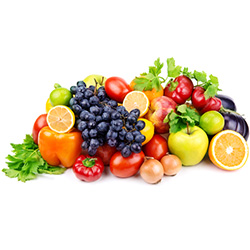 The links between antioxidants and vision health are strong. Antioxidants are the antidote to oxidization. Normal metabolism creates free radicals. These are atoms that lack an electron. Free radicals roam about the body, scavenging electrons and stealing electrons from healthy cells. This results in permanent damage to these afflicted cells which ultimately can result in disease. Significant research has shown that antioxidants protect against this cellular damage and are essential for maintaining health. The eye is especially vulnerable to free radical damage. Therefore, providing the body with sufficient antioxidants Continue reading “Antioxidants, Eye Disease and Oxidative Stress”