
 Did you know that periodontal disease and cavities are significant threats to oral health? In children, tooth decay is about five times more prevalent than asthma, and seven times more common than inhaled allergies. Adults lose teeth mostly from untreated periodontal disease. Untreated oral disease has resulted in 15% of people over the age of 65 having all their teeth removed.[1. Centers for Disease Control and Prevention. Oral Health Surveillance Report: Dental Caries, Tooth Retention, and Edentulism, United States, 2017–March 2020. U.S. Dept of Health and Human Services; 2024.] Severe tooth loss resulting in fewer than 8 teeth remaining affects 26% of seniors.[2. Griffin SO, Griffin PM, Li C-H, Bailey WD, Brunson D, Jones JA. Changes in older adults’ oral health and disparities: 1999 to 2004 and 2011 to 2016. J Am Geriatr Soc. 2019;67(6):1152–1157.] Untreated tooth decay in permanent teeth plagues 53 million adults in America.[3. Benjamin RM. Oral health: the silent epidemic. Public Health Rep. 2010 Mar-Apr;125(2):158-9. doi: 10.1177/003335491012500202. PMID: 20297740; PMCID: PMC2821841.] Continue reading “Oral Bacteria Could Lead to a Heart Attack and Eye Disease”
Category: Arthritis
Anti-Inflammatory Vision Diet for the Holidays
 Inflammation is a factor in many eye diseases, and what you eat affects inflammation. Whenever major holidays comes along, we are tempted to eat special foods. Many of these treats are high in calories and sugar, which contribute to inflammation. While you don’t want to spoil anyone’s fun, you can choose to eat foods that are anti-inflammatory. At the end of this article, you will find tips for limiting the damage while still enjoying the holiday. Continue reading “Anti-Inflammatory Vision Diet for the Holidays”
Natural Curcumin Beats Drug for Rheumatoid Arthritis in Study
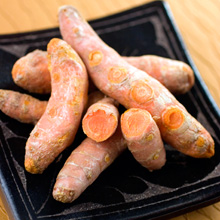 A pilot study published in Phytotherapy Research compared curcumin – derived from natural turmeric – with the drug diclofenac for treating rheumatoid arthritis (RA). Natural curcumin actually reduced RA symptoms even better than the RA drug diclofenac: a 44% reduction in symptoms on the Disease Activity Score and the American College of Rheumatology criteria for reduction of swelling and tenderness of joins. Patients receiving diclofenac had a 42% reduction.
This is good news because curcumin has no known side-effects. Using anti-inflammatory medications over the long term sometimes has side effects that can result in stomach ulcers and damage to the kidneys. The extremely popular non-steroidal anti-inflammatory medication Vioxx (Rofecoxib – $2.5 billion in sales in 2003) was removed from the market in 2004 due to increased risk of heart attacks and stroke.
Continue reading “Natural Curcumin Beats Drug for Rheumatoid Arthritis in Study”
Depression Increases Arthritis Pain
There is more evidence supporting the power of the mind-body connection.
A new study finds that depression can cause an increase in the pain associated with arthritis of the knee.
A study in South Korea of 660 men and women over age 65 suffering from osteoarthritis of the knees were evaluated using X-rays. They were also screened for depression. Those with joint damage were more likely to report high levels of pain, which one would expect. Researchers also discovered, however, that people with depression who seemed to have mild cases of arthritis based on the X-rays had much higher levels of reported pain.
Study author Dr. Tae Kyun Kim says “The relationship between pain and depression suggests that both should be considered by physicians when treating patients with knee osteoarthritis, particularly in those with X-rays not indicating severe damage to the joint.”
The study appeared in Journal of Bone and Joint Surgery. Source: https://www.healthfinder.gov
Learn more about natural treatment options for osteoarthritis at our website.
Zinc, inflammation & oxidative stress
An article published in the June, 2010 issue of the American Journal of Clinical Nutrition describes a clinical trial involving older men and women which found reductions in markers of oxidative stress and inflammation among those who supplemented with zinc.
A 2010 clinical trial looked at indicators of oxidative stress and inflammation in elders which found reductions among the subjects who supplemented with zinc. These two factors – oxidative stress caused by free radicals and inflammation – are considered risk factors for coronary artery disease. Zinc deficiencies have been noted for this condition as well as for rheumatoid arthritis, diabetes, and various cancers.
Editor’s note: There are a range of essential nutrients that reduce oxidative stress in the body and can help reduce inflammation including glutathione, superoxide dismutase (SOD) and alpha lipoic acid for example. Green leafy vegetables contain a great range of antioxidants that have excellent anti-inflammatory properties. as well.
When supplementing with zinc, copper should also be taken. The proper ratio of zinc:copper is 15:1.
Published: June, 2010, American Journal of Clinical Nutrition