
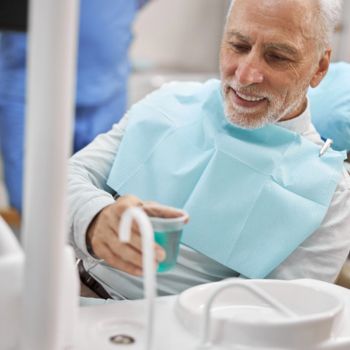
 Did you know that periodontal disease and cavities are significant threats to oral health? In children, tooth decay is about five times more prevalent than asthma, and seven times more common than inhaled allergies. Adults lose teeth mostly from untreated periodontal disease. Untreated oral disease has resulted in 15% of people over the age of 65 having all their teeth removed.[1. Centers for Disease Control and Prevention. Oral Health Surveillance Report: Dental Caries, Tooth Retention, and Edentulism, United States, 2017–March 2020. U.S. Dept of Health and Human Services; 2024.] Severe tooth loss resulting in fewer than 8 teeth remaining affects 26% of seniors.[2. Griffin SO, Griffin PM, Li C-H, Bailey WD, Brunson D, Jones JA. Changes in older adults’ oral health and disparities: 1999 to 2004 and 2011 to 2016. J Am Geriatr Soc. 2019;67(6):1152–1157.] Untreated tooth decay in permanent teeth plagues 53 million adults in America.[3. Benjamin RM. Oral health: the silent epidemic. Public Health Rep. 2010 Mar-Apr;125(2):158-9. doi: 10.1177/003335491012500202. PMID: 20297740; PMCID: PMC2821841.] Continue reading “Oral Bacteria Could Lead to a Heart Attack and Eye Disease”
Category: Respiratory Tract Inflammation
How Microplastic Pollution Can Damage Your Health
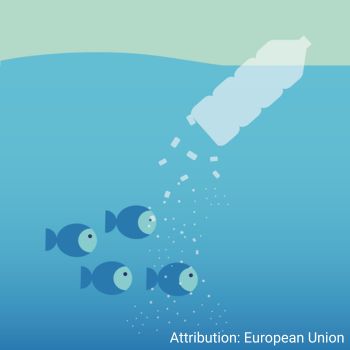 When tiny plastic particles pollute the ecosystem, can they cause harm? If so, can you do anything? At Natural Eye Care, we have mined the research on the effects of microplastics and nanoplastics on human health. Read on to find out what they are, how they affect living organisms, and how to reduce your exposure.
What Are Microplastics?
Microplastics are pieces of plastic measuring less than 5 millimeters (0.2 inches) long. They are usually produced intentionally or generated when large synthetic polymer products, such as plastic packaging, are not properly disposed of or treated. Once formed, microplastics are often exposed to the environment, where they can decompose. Much of the exposure to microplastics starts with the dumping of these MNPs in the ocean, finding their way to fish, plankton, and the shore. Various human activities and products, such as washing, worn tires, city dust, road paint, ships, and cleaning products, have been reported as sources of microplastics. [1. IUCN. IUCN 2017: international union for conservation of nature annual report 2017. accessed on 2023 February 20. Available at: https://portals.iucn.org/library/node/47536] Continue reading “How Microplastic Pollution Can Damage Your Health”
Statins Don’t Lower Pneumonia Risk
Taking popular cholesterol-lowering statin drugs does not lower the risk of pneumonia, according to a study published the British Medical Journal.
Taking popular cholesterol-lowering statin drugs does not lower the risk of pneumonia, according to a study published the British Medical Journal.
There was some hope that statins could help prevent certain infections. But the study, which involved 65- to 94-year-olds with intact immune systems, found that pneumonia risk was, if anything, slightly higher in people using a statin than in those not using any.
Researchers emphasized that statins work well for what they were designed to do, such as lower cholesterol and the risk of heart disease and stroke.
Published 16 June 2009, doi:10.1136/bmj.b2137
Cite this as: BMJ 2009;338:b2137
Editor’s Note: New research continues to show that other factors are greater indicators of heart disease and stroke such as C-reactive protein levels and homocysteine levels.