
 Did you know that periodontal disease and cavities are significant threats to oral health? In children, tooth decay is about five times more prevalent than asthma, and seven times more common than inhaled allergies. Adults lose teeth mostly from untreated periodontal disease. Untreated oral disease has resulted in 15% of people over the age of 65 having all their teeth removed.[1. Centers for Disease Control and Prevention. Oral Health Surveillance Report: Dental Caries, Tooth Retention, and Edentulism, United States, 2017–March 2020. U.S. Dept of Health and Human Services; 2024.] Severe tooth loss resulting in fewer than 8 teeth remaining affects 26% of seniors.[2. Griffin SO, Griffin PM, Li C-H, Bailey WD, Brunson D, Jones JA. Changes in older adults’ oral health and disparities: 1999 to 2004 and 2011 to 2016. J Am Geriatr Soc. 2019;67(6):1152–1157.] Untreated tooth decay in permanent teeth plagues 53 million adults in America.[3. Benjamin RM. Oral health: the silent epidemic. Public Health Rep. 2010 Mar-Apr;125(2):158-9. doi: 10.1177/003335491012500202. PMID: 20297740; PMCID: PMC2821841.] Continue reading “Oral Bacteria Could Lead to a Heart Attack and Eye Disease”
Category: Cardiovascular Disease
Fatty Liver Disease and Other Dangers of Diet Soda and Artificial Sweeteners
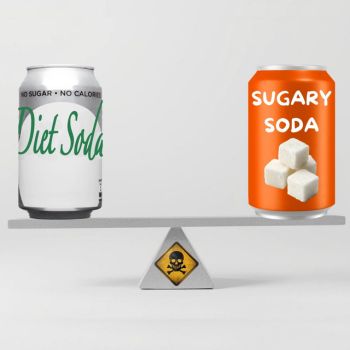 Artificially sweetened sodas are popular, but research suggests their ingredients may have serious consequences for our health, especially when it comes to fatty liver disease, heart health, and brain function. In this article, we take a closer look at the latest studies on diet sodas, added sugars, and their surprising effects on everything from your gut microbiome to your risk for chronic disease. If you care about long-term wellness or want to make informed choices about what you drink, read on for the evidence and practical alternatives. Continue reading “Fatty Liver Disease and Other Dangers of Diet Soda and Artificial Sweeteners”
Unlocking the Power of Cocoa and Flavanols: Benefits for Heart, Brain, and Vision Health
 Love chocolate? You’re not alone—and science is on your side. Cocoa flavanols and dark chocolate aren’t just delicious treats; they’re packed with natural compounds that can benefit your heart, brain, and even your vision. In this article, we examine the latest research on cocoa flavanols and other plant-based nutrients, revealing how your favorite indulgence may actually support your long-term health. Read on to discover how these everyday foods can make a real difference for your cardiovascular, cognitive, and eye health. Continue reading “Unlocking the Power of Cocoa and Flavanols: Benefits for Heart, Brain, and Vision Health”
How Are the Eyes a Window to Brain Health? What Eye Scans Reveal About Alzheimer’s, Parkinson’s, and Dementia

Studies continue to show strong connections between eye health and brain diseases, with the retina offering a “window” to the brain for early detection and monitoring of conditions. Early signs of diseases that can appear in the eyes include Alzheimer’s Disease, Multiple Sclerosis (MS), and Parkinson’s. Changes in retinal nerve fiber, pupil dilation, and even protein deposits in the eye, such as amyloid beta, can mirror changes occurring in the brain, providing potential non-invasive diagnostic tools and insights into disease progression.
The eye is, in many ways, an outpost of the brain. They share similar types of nerve cells, blood vessel patterns, and immune defenses. Uniquely, the eye lets clinicians look directly at living nerve tissue and tiny blood vessels—no incision required. That makes it a powerful early-warning system for health changes. As imaging technology advances, we are spotting signs of disease earlier and with greater precision. And with today’s data-rich eye scans, artificial intelligence is beginning to help identify subtle patterns that humans might miss, potentially improving detection and guiding care sooner. [1. Li, Xinyu, et al. “Computer Vision for Brain Disorders Based Primarily on Ocular Images.” Frontiers in Neurology, vol. 12, 2021, doi:10.3389/fneur.2021.584270.] [2. Zhao, Lei, et al. “Retinal Microvascular Signs and Cognitive Impairment: A Systematic Review.” Frontiers in Neuroscience, vol. 14, 2020, doi:10.3389/fnins.2020.566428.]
What Are Ultra-Processed Foods? Effect on Vision and Health
 Ultra-processed foods are industrial formulations that undergo extensive processing and typically contain multiple ingredients not usually found in home cooking. Typically, these foods are lower in nutrients and fiber and higher in sugar, fat, and salt compared to unprocessed or minimally processed foods. Ultra-processed foods include soda, packaged cookies, chips, frozen meals, flavored nuts, flavored yogurt, hot dogs, distilled alcoholic beverages, and fast foods. Even many packaged breads, including those high in nutritious whole grains, qualify as ultra-processed because of the additives and preservatives they contain. Continue reading “What Are Ultra-Processed Foods? Effect on Vision and Health”
Vascular Disease, Brain Disease and Eye Health Are Connected
 A new study has found a link between vascular diseases, specifically high blood pressure, diabetes, and increased risk for dementia. Vascular risk factors were higher in both female and Black participants, as well as non-carriers of the APOE ε4 gene, which is linked with an increased risk of Alzheimer’s.[1. https://jamanetwork.com/journals/jamaneurology/article-abstract/2834600]
The statistical results of this cohort study suggest that between 22% and 44% of incident dementia cases by 80 years old were attributed to midlife and late-life vascular risk factors.
Continue reading “Vascular Disease, Brain Disease and Eye Health Are Connected”
Caffeine, Coffee and Eye Health
 What are the connections between caffeine, coffee and eye health? Do the negatives outweigh the positives? This is a tricky question, given the contradictory research on this popular beverage. Coffee is high in antioxidants that have broad health benefits. However, coffee is typically acidic, which can cause stomach symptoms. The caffeine in coffee is a stimulant that increases alertness, but it can also cause energy crashes. Caffeine research has not yet pinpointed the ideal amount of caffeine for better health. According to Traditional Chinese Medicine, coffee can be helpful or harmful, depending on the constitution of the drinker. Continue reading “Caffeine, Coffee and Eye Health”
Cardiovascular Disease and Eye Health
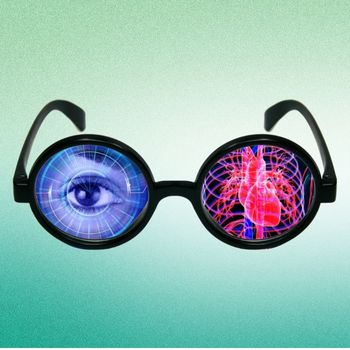 The link between cardiovascular disease and eye health may not be obvious. However, the eyes are made from nutrients. A large body of research shows how important nutrition is for eye health. Maintaining healthy vision depends on whether the eyes and visual system are properly nourished. Cardiovascular disease, including high blood pressure and atherosclerosis, can affect the flow of essential nutrients and oxygen to the eyes. Poor circulation to the eyes can cause damage to the retina’s tiny blood vessels, with potentially sight-threatening consequences. Cardiovascular disease can often be identified through retinal scans well before the disease is detectable through traditional tests. Continue reading “Cardiovascular Disease and Eye Health”
Nattokinase Supplements for Heart Health Benefits
Did you know that two substances of Asian origin, nattokinase and serrapeptase, have significant health benefits? Scientific studies have revealed some of the reasons why longevity is associated with regular consumption of serrapeptase and nattokinase supplements. Specifically, we will discuss cardiovascular disease, eye issues such as floaters, macular degeneration, and diabetic retinopathy, internal scar tissue from autoimmune disorders, lung disease, sinusitis, neurological disorders, and inflammatory bowel disease. Continue reading “Nattokinase Supplements for Heart Health Benefits”
Retinal Scans Can Detect Diabetes, MS and Dementia Early
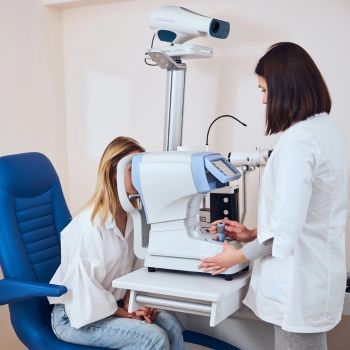 Retinal scans are proving to be an effective way to detect early signs of diseases like diabetes, multiple sclerosis, and dementia. They can sometimes detect disease before symptoms appear. The best news about retinal scans is that they are painless and non-invasive. You may have looked into machines that scan the retina at your optometrist or eye surgeon’s office. Why are retinal scans helpful for detecting diseases that are not, technically, eye diseases? How is the retina connected to the brain and brain health? Continue reading “Retinal Scans Can Detect Diabetes, MS and Dementia Early”