
Studies continue to show strong connections between eye health and brain diseases, with the retina offering a “window” to the brain for early detection and monitoring of conditions. Early signs of diseases that can appear in the eyes include Alzheimer’s Disease, Multiple Sclerosis (MS), and Parkinson’s. Changes in retinal nerve fiber, pupil dilation, and even protein deposits in the eye, such as amyloid beta, can mirror changes occurring in the brain, providing potential non-invasive diagnostic tools and insights into disease progression.
The eye is, in many ways, an outpost of the brain. They share similar types of nerve cells, blood vessel patterns, and immune defenses. Uniquely, the eye lets clinicians look directly at living nerve tissue and tiny blood vessels—no incision required. That makes it a powerful early-warning system for health changes. As imaging technology advances, we are spotting signs of disease earlier and with greater precision. And with today’s data-rich eye scans, artificial intelligence is beginning to help identify subtle patterns that humans might miss, potentially improving detection and guiding care sooner. [1. Li, Xinyu, et al. “Computer Vision for Brain Disorders Based Primarily on Ocular Images.” Frontiers in Neurology, vol. 12, 2021, doi:10.3389/fneur.2021.584270.] [2. Zhao, Lei, et al. “Retinal Microvascular Signs and Cognitive Impairment: A Systematic Review.” Frontiers in Neuroscience, vol. 14, 2020, doi:10.3389/fnins.2020.566428.]
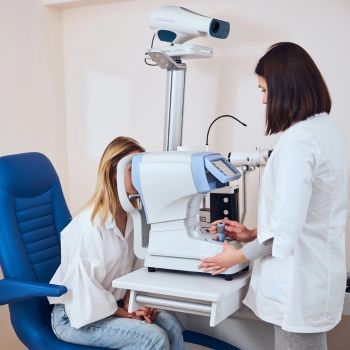 Retinal scans are proving to be an effective way to detect early signs of diseases like diabetes, multiple sclerosis, and dementia. They can sometimes detect disease before symptoms appear. The best news about retinal scans is that they are painless and non-invasive. You may have looked into machines that scan the retina at your optometrist or eye surgeon’s office. Why are retinal scans helpful for detecting diseases that are not, technically, eye diseases? How is the retina connected to the brain and brain health?
 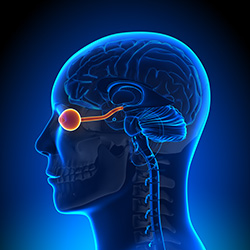 Several nutrients and vitamins such as bilberry and taurine help protect the optic nerve from damage. Glaucoma causes optic nerve damage. Optic neuritis and optic nerve atrophy are serious conditions that harm the optic nerve. Since the optic nerve sends electrical signals from the eye to the brain, any interruption damages vision. How does the optic nerve work? Which diseases damage the optic nerve? What does the research show about how nutrients, foods, and vitamins protect the optic nerve? Taurine, gingko biloba, a fruit called bilberry, Vitamin C, and Vitamin B12 among others have demonstrated their usefulness.