

Studies continue to show strong connections between eye health and brain diseases, with the retina offering a “window” to the brain for early detection and monitoring of conditions. Early signs of diseases that can appear in the eyes include Alzheimer’s Disease, Multiple Sclerosis (MS), and Parkinson’s. Changes in retinal nerve fiber, pupil dilation, and even protein deposits in the eye, such as amyloid beta, can mirror changes occurring in the brain, providing potential non-invasive diagnostic tools and insights into disease progression.
The eye is, in many ways, an outpost of the brain. They share similar types of nerve cells, blood vessel patterns, and immune defenses. Uniquely, the eye lets clinicians look directly at living nerve tissue and tiny blood vessels—no incision required. That makes it a powerful early-warning system for health changes. As imaging technology advances, we are spotting signs of disease earlier and with greater precision. And with today’s data-rich eye scans, artificial intelligence is beginning to help identify subtle patterns that humans might miss, potentially improving detection and guiding care sooner. [1. Li, Xinyu, et al. “Computer Vision for Brain Disorders Based Primarily on Ocular Images.” Frontiers in Neurology, vol. 12, 2021, doi:10.3389/fneur.2021.584270.] [2. Zhao, Lei, et al. “Retinal Microvascular Signs and Cognitive Impairment: A Systematic Review.” Frontiers in Neuroscience, vol. 14, 2020, doi:10.3389/fnins.2020.566428.]
 A new study has found a link between vascular diseases, specifically high blood pressure, diabetes, and increased risk for dementia. Vascular risk factors were higher in both female and Black participants, as well as non-carriers of the APOE ε4 gene, which is linked with an increased risk of Alzheimer’s.[1. https://jamanetwork.com/journals/jamaneurology/article-abstract/2834600]
 The brain and visual system rely on a significant portion of the nutrients you consume to maintain optimal health and function. Supporting the connections between the body, mind, and eyes is key to promoting healthy vision, preserving brain health, and reducing the risk of age-related eye and brain diseases. This includes macular degeneration, glaucoma, and cataracts, plus dementia and Parkinson’s Disease.
 Diabetic retinopathy is a leading cause of blindness among adults. Poor blood sugar balance can damage nerves, so nerve support is crucial for people with diabetes.
 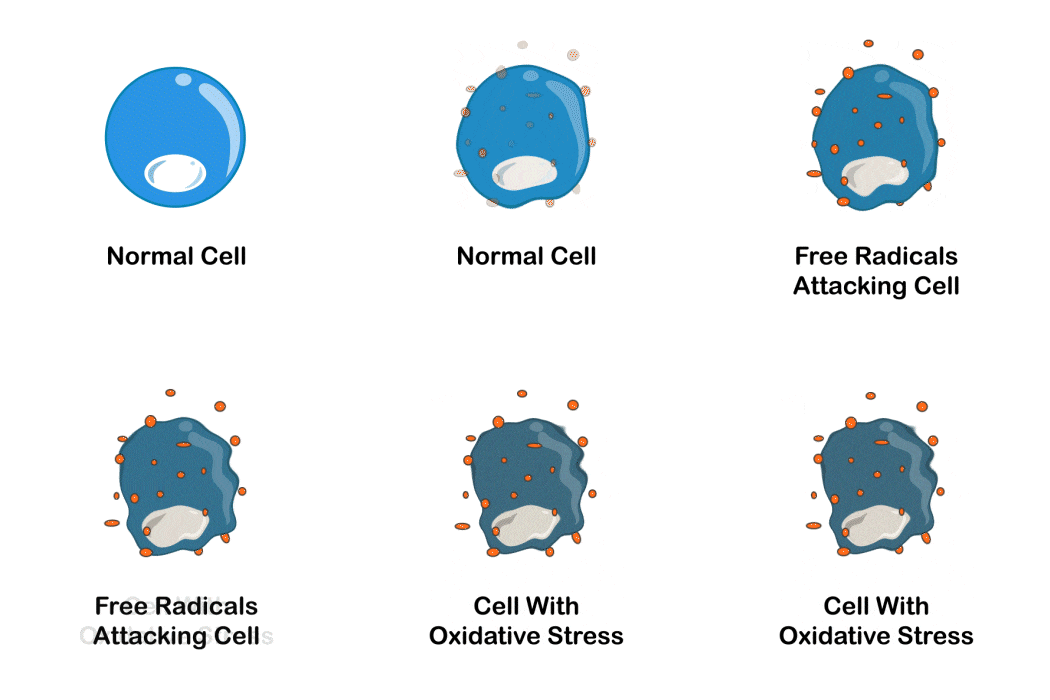 Oxidative stress significantly affects health and vision. It is a process in which free radicals are produced, leading to potential harm as these unstable molecules steal electrons from healthy cells. This oxidative damage can manifest visibly as aging skin and ocular changes, such as cataract formation. However, oxidation is not the only factor contributing to accelerated aging and eye conditions; poor circulation and insufficient essential nutrients also play important roles.
 The “battery” of the cell, the mitochondria, is crucial to good health. However, when mitochondrial function is compromised, it can lead to a host of health issues, ranging from neurodegenerative disorders to cardiovascular diseases. Understanding the intricate relationship between mitochondrial health and overall well-being is essential, particularly when it comes to brain and eye health. What roles do mitochondria play in memory, cognition, and the pathogenesis of Alzheimer’s Disease? How do chronic stress and oxidative stress impact mitochondrial function? Do certain nutrients and dietary habits support these vital organelles? Can exercises help to maintain optimal mitochondrial health and, therefore, overall health?
  Chronic stress is a common problem in modern living. Work, finances, relationships, and general anxiety are just a few causes. Over time, stress can harm your health. Vision problems and brain diseases can be caused or aggravated by stress. How does stress tie in with free radical damage and antioxidants? What can you do to reduce the effects of stress?
  The relationship between health, longevity, emotions, and aging is of enormous interest these days. With the fast past of life, technological advances, and changes in how humans communicate, the pressure is on.
 Our bodies are designed to handle stressful situations, referred to as the “flight or fight” mode, wherein when we need to quickly react, the body goes into action and produces hormones that stimulate the adrenal system, raise cortisol levels, and gets our muscles instantly ready to go. Once that situation is resolved, our body has the remarkable ability to return back to homeostasis or normal balance quickly.
 According to a small study published in the Journal of Glaucoma, a short course of mindfulness meditation reduced intraocular pressure (IOP) in patients with primary open angle glaucoma (POAG). The practice also normalized stress biomarkers and positively modified gene expression. Mindfulness meditation may be a therapeutic resource to reduce IOP and help glaucoma patients.