
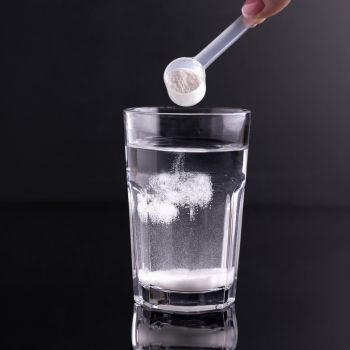
 Collagen can help reduce the risk of eye conditions such as glaucoma, cataracts, and macular degeneration. Connective tissue is made up primarily of collagen. This scaffolding provides elasticity and strength to the tendons, bones, ligaments, and skin. The eyes depend on collagen to function properly. As we age, we produce less collagen. This causes wrinkles in the skin. Losing collagen leads to an eye condition in middle age called “presbyopia” – a longer focal distance. Adding collagen may improve the elasticity of the eye. This article explores the research on collagen and glaucoma. Continue reading “Can Collagen Reduce Glaucoma Risk?”
Category: Cataract prevention
Staying Hydrated for Better Health and Wellness
 Staying hydrated is an essential part of maintaining health. Drinking healthy fluids throughout the day helps the body detoxify and is critical in maintaining temperature control and proper blood viscosity. Seniors, in particular, generally do not drink enough water.
Why are we told to stay hydrated for our health? At Natural Eye Care, we care about the eyes and the body. Thus, keeping the body’s fluid balance is part of maintaining vision health. While 60% of the human body is composed of water, the eye is 98% water. Dehydration impairs the functioning of all systems in the body. Overhydration is also dangerous. In this article, we discuss the benefits of hydration, the deleterious effects of chronic dehydration, and how much water you need to drink. Continue reading “Staying Hydrated for Better Health and Wellness”
Diabetic Retinopathy, Sugar Balance and Retinal Support
 Diabetic retinopathy is a leading cause of blindness among adults. Poor blood sugar balance can damage nerves, so nerve support is crucial for people with diabetes. Diabetic retinopathy is a serious eye condition stemming primarily from imbalances in blood sugar levels. When blood sugar is not properly managed, the body’s delicate nerve tissues, including the retina, can be injured.
At Natural Eye Care, we have examined the research on nutrients that help protect the eye, including the retina and blood flow to the eye. Research has identified oxidative stress and inflammation as key contributors to the onset and development of numerous eye conditions.[1.Levkovitch-Verbin, H. (2015). Retinal ganglion cell apoptotic pathway in glaucoma: Initiating and downstream mechanisms. Prog. Brain Res, 220:37–57.] [2.Kowluru, R.A., Mishra, M. (2015). Oxidative stress, mitochondrial damage and diabetic retinopathy. Biochem. Biophys. Acta. 1852:2474–2483.] [3.Dib, B., Lin, H., Maidana, D.E., Tian, B., Miller, J.B., et al. (2015). Mitochondrial DNA has a pro-inflammatory role in AMD. Biochem Biophys Acta, 1853:2897–2906.] These conditions include macular degeneration, glaucoma, cataracts, macular edema, and diabetic retinopathy. Without intervention, these eye diseases can result in a gradual decline in vision, potentially leading to blindness. Studies suggest that incorporating specific antioxidant and anti-inflammatory nutrients may be beneficial in preventing and managing these eye disorders.[4.Rhone, M., Basu, A. (2008). Phytochemicals and age-related eye diseases. Nutr Rev, 66:465–472.]
Continue reading “Diabetic Retinopathy, Sugar Balance and Retinal Support”
Eating Habits Can Impair Circulation, Increasing the Risk of Glaucoma, Retinal Vascular Occlusions, Dry Eyes, Macular Degeneration
 We might not connect our eating habits to eye disease, but poor nutrition impairs circulation. Reduced circulation can contribute to eye diseases, including cataracts, glaucoma, retinal vascular occlusions, ischemic optic neuropathy (ION), dry eyes, macular degeneration, and diabetic retinopathy. Instead of being a “victim” of eye diseases in your senior years, you can take charge of your health today!
At Natural Eye Care, we believe that the visual system uses approximately 25% of the nutrients we take into the body. Only the brain needs more. Therefore, a nutrient-rich diet helps keep your eyes healthy. Anything that impairs the free flow of blood, oxygen, and nutrients can significantly increase the risk of eye disease. Over time, you could experience vision loss, making you less independent in your senior years.
Macular Degeneration: Natural Approaches To Enhance Eye Wellness
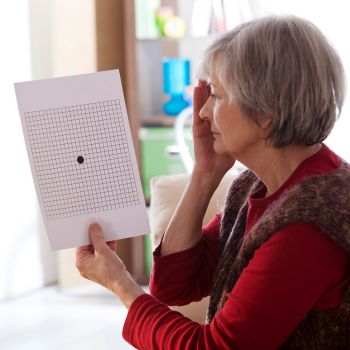 Macular degeneration is also known as AMD, which is an acronym for “Age-Related Macular Degeneration.” It is the leading cause of irreversible blindness. Limited conventional treatments are available. However, natural remedies can go a long way toward reducing the risk of AMD onset. They can help prevent AMD from progressing to the point of vision loss. And, in many cases, lifestyle considerations and targeted supplementation can improve vision loss from AMD.
What is Macular Degeneration?
AMD involves the gradual breakdown of cells in the macula, a small yellowish spot located near the center of the retina, which is crucial for sharp vision. This condition impacts central vision, affecting activities like reading, writing, driving, and recognizing faces. People with AMD may notice that straight lines appear distorted, clear shapes become fuzzy, lines look wavy, and a hazy area forms in the center of their vision. Typically, peripheral vision remains unaffected, except in severe cases where it can eventually lead to blindness.
Continue reading “Macular Degeneration: Natural Approaches To Enhance Eye Wellness”
Cataracts and Antioxidants
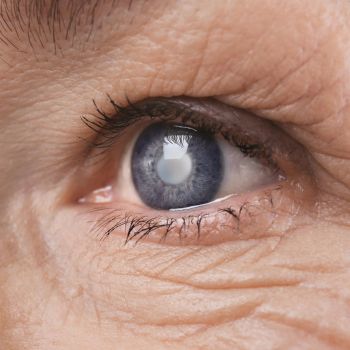 Cataracts are a condition where the lens of the eye becomes cloudy. They are common among seniors. Symptoms include:
- cloudy, blurry, foggy, or filmy vision
- difficulty seeing at night, especially when driving
- bright sunlight, headlights, and lights may cause a glare or halo
- colors may appear faded, muted, or yellowed
Cataracts in seniors are often caused by a lifetime of exposure to free radicals. Long-term exposure to sunlight accelerates, which is called glycation, which is the binding of sugar and protein molecules. Over time, glycation breaks down the structure of the lens. Continue reading “Cataracts and Antioxidants”
New Homeopathic Eye Drops: Dryness, Redness, and Digital Eye Strain
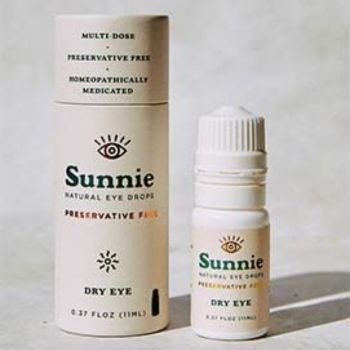 Homeopathic eye drops are in high demand among people experiencing dry eye, redness, and digital eye strain. At Natural Eye Care, we are excited to announce that our website offers a new line of homeopathic eye drops from Sunnie. Several of our flagship eye drops for these issues are no longer available, but Sunnie has stepped in with these safe remedies.
Homeopathy is a natural form of medicine that uses highly diluted substances to stimulate the body’s healing processes. It’s based on the principle that ‘like treats like.’ These innovative products are a testament to our commitment to providing natural and effective solutions for your eye care needs. Continue reading “New Homeopathic Eye Drops: Dryness, Redness, and Digital Eye Strain”
Eye Studies Reveal Natural Eye Care Effectiveness
 At Natural Eye Care, we view vision health from a whole-body perspective. Eye studies can reveal how to manage the visual system. However, the health of the eyes is connected to overall health. The visual system requires as much as 25% of the nutrients we take into our bodies. The brain needs even more. How we take care of ourselves goes a long way in helping to preserve healthy vision. Personal care includes emotional balance, and lifestyle considerations such as eating a healthy diet, exercising regularly, and targeted supplementation. Continue reading “Eye Studies Reveal Natural Eye Care Effectiveness”
Why Avoid Myopia? How to Reduce the Risk of Nearsightedness
 Myopia is one of the main reasons people start wearing glasses when they are young. Far objects are blurry, and close-up objects are clear when you are nearsighted or myopic. Did you know that lifestyle and daily habits can have a big impact on the development of myopia? Reducing the risk of myopia in children and teens is essential because this eye condition can lead to more serious eye problems. For example, it increases the risk of retinal detachment, glaucoma, and cataracts. Myopia can also strike adults. Avoiding corrective lenses entirely should be enough motivation to head off the problem. What can you do to help yourself and your family? Continue reading “Why Avoid Myopia? How to Reduce the Risk of Nearsightedness”
Blue Light & Your Vision (and more!)
 We have written extensively about how excess exposure to blue light can, over time, negatively affect vision. Not only does it affect our vision and ability to fall asleep, but it can also harm skin health, and neural pathways in the brain are affected in various ways. Continue reading “Blue Light & Your Vision (and more!)”