
 Diabetic retinopathy is a leading cause of blindness among adults. Poor blood sugar balance can damage nerves, so nerve support is crucial for people with diabetes. Diabetic retinopathy is a serious eye condition stemming primarily from imbalances in blood sugar levels. When blood sugar is not properly managed, the body’s delicate nerve tissues, including the retina, can be injured.
At Natural Eye Care, we have examined the research on nutrients that help protect the eye, including the retina and blood flow to the eye. Research has identified oxidative stress and inflammation as key contributors to the onset and development of numerous eye conditions.[1.Levkovitch-Verbin, H. (2015). Retinal ganglion cell apoptotic pathway in glaucoma: Initiating and downstream mechanisms. Prog. Brain Res, 220:37–57.] [2.Kowluru, R.A., Mishra, M. (2015). Oxidative stress, mitochondrial damage and diabetic retinopathy. Biochem. Biophys. Acta. 1852:2474–2483.] [3.Dib, B., Lin, H., Maidana, D.E., Tian, B., Miller, J.B., et al. (2015). Mitochondrial DNA has a pro-inflammatory role in AMD. Biochem Biophys Acta, 1853:2897–2906.] These conditions include macular degeneration, glaucoma, cataracts, macular edema, and diabetic retinopathy. Without intervention, these eye diseases can result in a gradual decline in vision, potentially leading to blindness. Studies suggest that incorporating specific antioxidant and anti-inflammatory nutrients may be beneficial in preventing and managing these eye disorders.[4.Rhone, M., Basu, A. (2008). Phytochemicals and age-related eye diseases. Nutr Rev, 66:465–472.]
Continue reading “Diabetic Retinopathy, Sugar Balance and Retinal Support”
 This month, we’re focusing on understanding macular degeneration and the importance of early detection. We will explore natural approaches to manage this eye disease and support healthy vision.
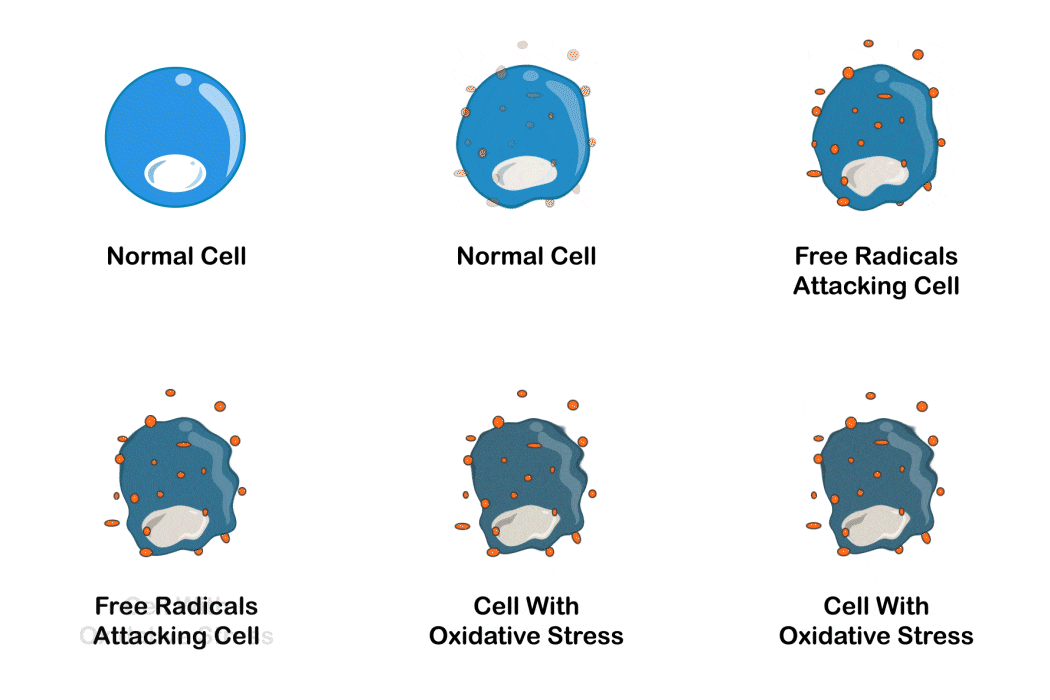 Oxidative stress significantly affects health and vision. It is a process in which free radicals are produced, leading to potential harm as these unstable molecules steal electrons from healthy cells. This oxidative damage can manifest visibly as aging skin and ocular changes, such as cataract formation. However, oxidation is not the only factor contributing to accelerated aging and eye conditions; poor circulation and insufficient essential nutrients also play important roles.
 Did you know that your daily habits affect your eyes and brain? As our population ages, more effort is needed to support seniors’ eyes, brains, and overall health. Research shows that a balanced diet, regular exercise, meaningful social interactions, and targeted supplements can have a significant impact. Remember, your retina and optic nerves are essentially brain tissue, meaning the nutrients that nourish your brain also bolster your vision. Read on to discover some of the latest research in this field.