
 Researchers at Rice University have designed a new smartphone-connected system called “mobileVision” that lets optometrists view the retina without using dilating drops. This device promises to avoid the inconvenience associated with dilating drops and make diagnostic eye exams easier in third-world countries. This could allow eye doctors to detect eye disease in its early stages, when treatment is most effective.
Described as a “reverse microscope,” mobileVision builds on technology used in astronomy to view stars from the Continue reading “Dilating Drops Not Necessary with New Diagnostic Smartphone Eye Device”
 With cataracts affecting nearly 22 million Americans, it’s not surprising that most of us know people who have had cataract surgery. We may even be contemplating cataract surgery for ourselves. Since cataracts are almost never a medical emergency, you should feel entirely comfortable taking the time to learn more about cataracts and explore all your options.
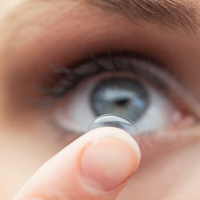 A biodegradable contact lens is being developed that would administer glaucoma medication and then disappear. The problem with eye drops is that they slip out of the eye and much of the medication is lost. This contact lens, designed by Mridula P. Menon in India, uses a nano-carrier loaded with the glaucoma drug acetazolamide that is dissolved in a transparent vinyl polymer.
 According to market research by Persistence Market Research, the global market for ophthalmic devices is predicted to increase significantly by 2020. The prediction is based on information from a number of geographic locations, including the United States and countries in Europe and Asia. Increasing prevalence of eye disease contributes to the ophthalmic devices market, which includes vision care, diagnostic, and surgery devices.
 Technology for restoring vision to the blind continues to improve with devices like the Argus II, a system of special glasses and electrodes implanted directly in the retina. While only six people in the U.S. are using the Argus II, more and more similar means of achieving “bionic eyes” are becoming available. These systems allow patients who have lost sight due to certain eye diseases to regain basic recognition of light and shapes.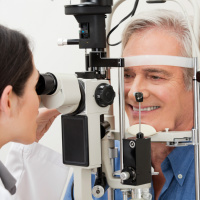
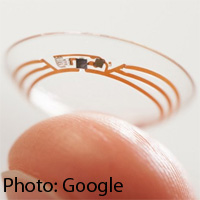 Google has announced plans to build a contact lens that can monitor blood sugar levels. The device that may come replete with miniature, flexible electronics, sensors and antennae. The lens would keep track of blood sugar levels via human tears. Google’s contact lens would be able to alert wearers when their blood sugar levels are too high or too low. For diabetics, this could theoretically free them from the need for frequent finger pricks to check blood sugar. It could also give them tools to better manage their blood sugar. Diabetes can lead to
 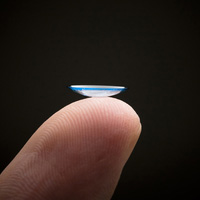 An increase in the use of contact lenses may be making ulcers of the cornea twice as common. A study of over a million Californians showed that people who wore contact lenses were 9 times more likely to suffer from corneal ulcers. Many people do not follow basic contact lens safety principles.
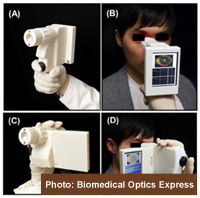 Currently, most eye disease detection equipment is only available in an optometrist’s office. A new handheld optical device could allow general practitioners to quickly screen all patients for eye disease such as glaucoma and macular degeneration. These visually devastating diseases are most easily treated or controlled in their early stages. The new high-speed prototypes were developed at Massachusetts Institute of Technology.