
 Visual detox refers to purifying the eyes of debris, toxins, and the effects of bad visual habits. Debris build-up can affect vision health and contribute to the onset of eye disease. These diseases can include eye irritation, effects on lacrimation related to dry eyes, glaucoma, and macular degeneration (AMD). Focusing too much on close-up computer screens leads to computer eye strain symptoms and reduces the free flow of energy to the eyes. As the eyes’ health is directly connected to whole-body well-being, we must look at detoxification from a whole-body perspective.
Other symptoms of toxin build-up can include ocular burning, watering, pain, and photophobia [1. Dwivedi et al., 1985], conjunctivitis and corneal opacity.[2. Maskati, 1986]
Whole-body toxicity symptoms can include: Continue reading “Visual Detox – A Whole-Body Connection”
 People with vision loss due to retinal disease may be able to use a bionic system to improve sight in the near future. Pixium Vision is running a feasibility study on is PRIMA System, and they got better-than-expected results. The study is on patients with dry Age-Related Macular Degeneration. Currently, medical science cannot restore vision in those with retinal dystrophies. The PRIMA System may lead to vision restoration for patients with Macular Degeneration, Retinitis Pigmentosa and other retinal diseases.
 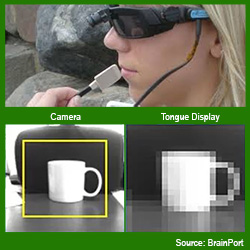 Visually impaired people can now detect their surroundings using a camera and a small device held on the tongue. Wicab Technology’s BrainPort converts visual data into tiny electrical signals. The tongue is sensitive enough to detect the patterns on an electrode array. With training, the brain learns to process the data in both the somatosensory cortex and the visual cortex. This sensory substitution device represents hope for the visually impaired. Visual impairment can be
  Age-Related Macular Denegation is a significant cause of vision loss that can often be managed and even improved through targeted nutritional support. It affects mostly people over age 50. While the precise cause of ARMD is not clear, oxidative damage is suspected as being a major factor. It strikes the elderly possibly due to poor diet and nutritional intake over a lifetime, less efficient absorption of nutrients and poor circulation as the body ages. The care needed by vision-impaired elderly could become overwhelming. Let’s take a look at some of the newest research in preventing macular degeneration, as well as treatment and support options.
 With cataracts affecting nearly 22 million Americans, it’s not surprising that most of us know people who have had cataract surgery. We may even be contemplating cataract surgery for ourselves. Since cataracts are almost never a medical emergency, you should feel entirely comfortable taking the time to learn more about cataracts and explore all your options.
 According to market research by Persistence Market Research, the global market for ophthalmic devices is predicted to increase significantly by 2020. The prediction is based on information from a number of geographic locations, including the United States and countries in Europe and Asia. Increasing prevalence of eye disease contributes to the ophthalmic devices market, which includes vision care, diagnostic, and surgery devices.
 Technology for restoring vision to the blind continues to improve with devices like the Argus II, a system of special glasses and electrodes implanted directly in the retina. While only six people in the U.S. are using the Argus II, more and more similar means of achieving “bionic eyes” are becoming available. These systems allow patients who have lost sight due to certain eye diseases to regain basic recognition of light and shapes.
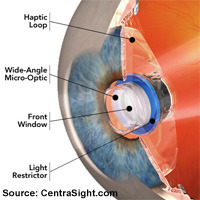 Approval to distribute the Alpha IMS wireless implant for retinitis pigmentosa (RP) has been granted in Europe to Retina Implant AG, based in Reutlingen, Germany. Thirty-six patients have received the subretinal implant, designed to restore useful vision to people legally blinded by RP.
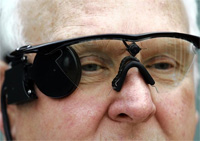 The first implanted device for adults with retinitis pigmentosa has been approved by the U.S. Food and Drug Administration. Called the Argus II Retinal Prosthesis System, the device includes a tiny video camera, a transmitter (on a pair of glasses), and a video processing unit. The patient’s retina is replaced with a prosthesis. The camera wirelessly transmits visual information to the retinal prosthesis to improve vision.
 Breakthrough research into vision restoration may result in a new type of prosthetic for people suffering from vision loss due to retinal degenerative diseases such as macular degeneration and retinitis pigmentosa.