
 People with vision loss due to retinal disease may be able to use a bionic system to improve sight in the near future. Pixium Vision is running a feasibility study on is PRIMA System, and they got better-than-expected results. The study is on patients with dry Age-Related Macular Degeneration. Currently, medical science cannot restore vision in those with retinal dystrophies. The PRIMA System may lead to vision restoration for patients with Macular Degeneration, Retinitis Pigmentosa and other retinal diseases. Continue reading “Macular Degeneration Glasses May Restore Vision: Pixium Vision’s Bionic PRIMA System Sees Improvements”
Category: Microchips
Alpha IMS Wireless Implant for Retinitis Pigmentosa (RP) Approved
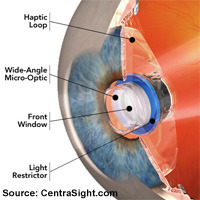 Approval to distribute the Alpha IMS wireless implant for retinitis pigmentosa (RP) has been granted in Europe to Retina Implant AG, based in Reutlingen, Germany. Thirty-six patients have received the subretinal implant, designed to restore useful vision to people legally blinded by RP.
Retinitis pigmentosa is a generative eye disease that begins in young people and may be inherited. RP patients may be able to Continue reading “Alpha IMS Wireless Implant for Retinitis Pigmentosa (RP) Approved”
High-tech Goggles Plus Surgical Implant May Help Restore Sight to Blind
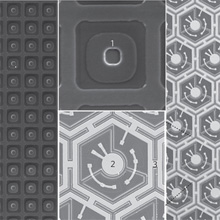 Experimental research at Stanford University school of medicine may result in the restoration of vision for people whose sight has been lost due to Age-Related Macular Degeneration (ARMD), Retinitis Pigmentosa and other diseases of the retina. Surgeons plan to implant small solar panel-like cells under the retina. When the patient wears a special type of goggles, a camera and small computer will allow them to see the world around them again.
The goggles will have a tiny camera and a small computer. The computer will process data from the camera and display images on an LCD (liquid crystal micro-display) on the goggles. The images on the LCD are beamed using laser pulses of IR-A (near-infrared) light to tiny photovoltaic silicon chips implanted under the retina. The electrical currents from the chips’ photodiodes would trigger signals in the retina. From the retina, the message would flow to the brain, giving the patient the ability to see.
Continue reading “High-tech Goggles Plus Surgical Implant May Help Restore Sight to Blind”
Experimental Electronic Retinas Implanted in Two Patients
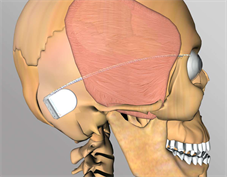 Two men blinded by retinitis pigmentosa have had their sight partially restored by receiving electronic retinal implants at King’s College Hospital in England.
The surgery involves implanting a 3×3 mm2 microchip with 1,500 electrodes below the retina. A thin cable is run to a special sub-dermal control unit that is implanted behind the ear. When light reaches the eye, pixels in the chip are stimulated, sending electronic signals to the optic nerve and then to the brain. An external power unit can be connected to the chip using a magnetic disk implanted on the scalp. This allows the chip’s sensitivity to be altered.
Clinical trials began more than 6 years ago. The technology is improving over time, with the more recent patients reporting better visual acuity.
Continue reading “Experimental Electronic Retinas Implanted in Two Patients”
Breakthrough: Microchip Implant Restores Partial Sight
For the first time, scientists have restored the ability of previously blind patients to recognize letters, fruit and other items using light-sensitive microchips implanted in the inner surface of the eye.
For the first time, scientists have restored the ability of previously blind patients to recognize letters, fruit and other items using light-sensitive microchips implanted in the inner surface of the eye.
The microchip is only approximately 3 millimeters by 3 millimeters in size, but is loaded with 1,500 light detectors that send a grid of electrical impulses through a patient’s nerves to generate a 1,500-pixel image. The device is implanted under the retina, the inner lining of the eye unlike other implants that sit outside the retina and require users to wear an external camera. Since the chip requires a sharp image, the patients wear reading glasses.
For information on natural eye care, go to www.naturaleyecare.com
In a paper published in The Procedings of the Royal Society B researchers describe how three patients suffering from hereditary retinal dystrophy regained the ability to identify objects and people and even read words printed in large letters. The technology involves that natural projection of images through the eye’s lens onto a chip placed under the transparent retina.
Source: http://rspb.royalsocietypublishing.org/content/early/2010/11/01/rspb.2010.1747.abstract
Microchip Implants May Help Restore Lost Vision
Scientists at MIT and other research organizations are testing chip technologies that could help bring eyesight to individuals with conditions like age-related macular degeneration and retinitis pigmentosa.
Scientists at MIT and other research organizations are testing chip technologies that could help bring eyesight to individuals with conditions like age-related macular degeneration and retinitis pigmentosa.
Microchips place onto or inside the eyeball are assisted by a pair of electronic glasses the patient wears. Results vary, but many subjects report significant improvement in orientation and mobility. MIT hopes to have a device within two years so that they can get FDA approval from for use on chronic patients.
See information on macular degeneration, nutrition and health.