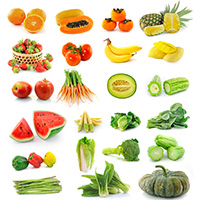
 Stargardt’s Disease and Retinitis Pigmentosa are genetic eye diseases that involve the metabolism of vitamin A. However vitamin A has a different impact on the course of each disease. A recent study[1. BMC Ophthalmol. 2016; 16: 13. “Dietary profile of patients with Stargardt’s disease and Retinitis Pigmentosa: is there a role for a nutritional approach?” by Francesco Sofi et. al.] examined the total intake of vitamin A in both types of patients. It found that:
- Stargardt’s patients with high A intake had low visual acuity
- Stargardt’s patients with low A intake had better visual acuity.
- Retinitis Pigmentosa patients with low A intake had low visual acuity.
- Retinitis Pigmentosa patients with high A intake had better visual acuity
Continue reading “Opposite Vitamin A Recommendations for Stargardt’s Disease vs Retinitis Pigmentosa”
 Blue light is emitted from all handheld electronic devices as well as desktop and laptop computers and televisions. It is the shortest wave length light in the visible spectrum and causes significant damage to many parts of the eye seriously impacting present and future vision capacity. Damage from blue light from smartphones is particularly important because smartphones are often used in dim light and are used close to the eyes. Unlike ordinary computer vision fatigue, damage from blue light is serious, cumulative and irreversible.
  Future treatments for macular degeneration (AMD), Stargardt’s disease, and retinitis pigmentosa may include bone marrow stem cell injections, if a new line of eye research pans out. A preliminary pilot study on six subjects with one of several ischemic eye diseases found that most patients had vision improvement after receiving injections of their own bone marrow.
 The potential is great for these stem cells to aid in healing damaged and diseased tissues. Not to mention most adults wouldn’t mind giving up a little extra fat for something that could save lives.
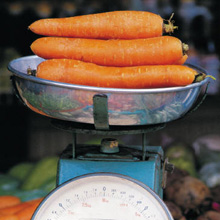 Should you take extra Vitamin A if you have Stargardt’s Disease? Vitamin A supplementation is frequently recommended for certain eye diseases (AMD and Retinitis Pigmentosa, for example). This nutrient is crucial for rebuilding photoreceptors cells and proper retinal functioning. However, a study on mice published in “Investigative Ophthalmology and Visual Science” indicated that Stargardt’s Disease patients may be damaged by taking Vitamin A.
 A new study in the journal Free Radical Biology & Medicine compared the effects of lutein to grapes on the eyes. Grapes won out, providing more protection against oxidative damage to the retina than the nutrient lutein.