
 Poor night vision or night blindness can be a life-limiting symptom. Night blindness can be caused by either an inherited or acquired reason. Poor night vision disorders (night blindness, impaired dark adaptation, etc.) include the experience of reduced vision in dimly lit environments, including at night. They include partial or complete impairment in ability of the eyes to adapt from brightness to darkness. It is not a disease in itself, but rather a symptom of an underlying problem, usually located in the retina. It is common for patients who are myopic (nearsighted) to have some difficulties with night vision, but this is due to optical issues rather than to a retinal condition. Symptoms include difficulty driving at night, tripping over objects when walking in the dark, and slow response when light conditions change (such as entering a dark movie theater). Photoreceptor cells in the retina allow you to see in dim lighting. When they malfunction, vision in dark conditions becomes difficult.
The photoreceptors called “rod cells” are mainly responsible for night vision. Rods can detect single photons and transmit that data to rod bipolar cells. This makes dim light information more usable to the brain. Continue reading “Poor Night Vision: What Can You Do?”
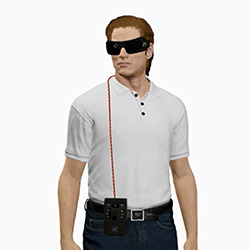 People with vision loss due to retinal disease may be able to use a bionic system to improve sight in the near future. Pixium Vision is running a feasibility study on is PRIMA System, and they got better-than-expected results. The study is on patients with dry Age-Related Macular Degeneration. Currently, medical science cannot restore vision in those with retinal dystrophies. The PRIMA System may lead to vision restoration for patients with Macular Degeneration, Retinitis Pigmentosa and other retinal diseases.