Watermelon Helps Fight Heart Disease, Diabetes, and Eye Disease

watermelon
Image via USDA.gov

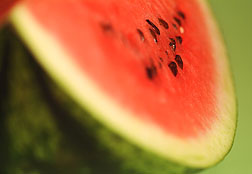
File this heart healthy fact away for next summer’s barbecue season: watermelon can help fight hypertension.

Florida State University gave nine prehypertensive study participants the amino acid L-citrulline/L-arginine from watermelon extract for six weeks and all of them exhibited improved arterial function and lower aortic blood pressure.

Watermelon is also a source of vitamins A, B6, C, fiber, potassium and the antioxidant lycopene.  Antioxidants are vital to eye health and help to fight the free radical oxidation damage that causes eye diseases like macular degeneration.

Study author Arturo Figueroa highlights another condition that could benefit from daily watermelon intake: diabetes.  “Individuals with increased blood pressure and arterial stiffness especially those who are older and those with chronic diseases such as type 2 diabetes would benefit from L-citrulline in either the synthetic or natural (watermelon) form,” he said. “The optimal dose appears to be four to six grams a day.”

Diabetes can lead to the eye condition diabetic retinopathy.

Learn more about nutrients in food that can treat and prevent disease.

Source: https://www.medicalnewstoday.com/articles/204527.php
Antioxidants & L-Arginine Help Pregnant Mothers with Pre-Eclampsia


Pregnant woman
image via www.nationalchildrensstudy.gov

Antioxidants have been found to successfully treat yet another medical condition: pre-eclampsia, a condition experienced by 5% of pregnant women that is marked by abnormally high blood pressure.


According to a study published in the British Medical Journal, taking a dietary supplement containing an amino acid and antioxidant vitamins significantly reduced pregnant women’s chances of developing pre-eclampsia.

A trial involving 228 women at high risk of pre-eclampsia were given either a food bar containing the amino acid L-arginine and antioxidant vitamins or a bar containing only vitamins or a placebo food bar.  Results showed that only 12.7% of women taking the amino acid-antioxidant supplements developed pre-eclampsia.  This was compared to 22.5% who received antioxidants and 30.2% who received the placebo.

Researchers are now wondering how L-arginine and antioxidants work together and whether there are any contraindications to this natural therapy.

Source: Science Daily