
 Docosahexaenoic acid or DHA is a naturally-occurring chemical, so why might seniors need to supplement it? Our bodies create small amounts of this omega-3 fatty acid. DHA from the diet, such as seafood, also counts. Docosahexaenoic acid is crucial to brain development in infants, and it is found in large quantities in the brain and retina. Researchers have found that consuming extra DHA can fight eye disease. How much docosahexaenoic acid do you need to get these effects? Can you get enough through your diet, or do you need to supplement DHA for optimum health? Continue reading “Do Seniors Need to Supplement DHA for Vision Health?”
Category: Brain function
Aerobic Exercise Changes the Brain
 A recent study found that aerobic exercise had a larger positive effect on the brain than stretching alone.[1. Radiological Society of America Press Release, November 30, 2016. “Aerobic Exercise Preserves Brain Volume and Improves Cognitive Function.” Suzanne Craft, Ph.D., Youngkyoo Jung, Ph.D., and Christopher T. Whitlow, M.D., Ph.D.] The volume of the brain increased, according to MRIs. Also, the aerobic exercise group had a significant improvement on executive brain functioning tests. The researchers are hoping to find ways to head off or reduce the impact of Alzheimer’s Disease in seniors.
The study subjects all had mild cognitive impairment (MCI). MCI is a risk Continue reading “Aerobic Exercise Changes the Brain”
Nerve Cells Adapt to Changing Images
Study could lead to new therapies to help improve sight following trauma or stroke
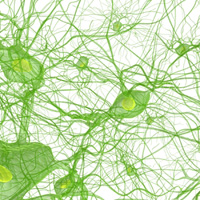 University of Texas neuroscientists having been looking at how nerve cells in the visual cortex of the brain handle and adapt to images as they change.
Researchers evaluated the results of stimulating the visual cortex upon optic neurons whose electrical activity was measured at the same time in lab animals. With the animal viewing movies they monitored the behavior of visual cortex neurons as the images changed.
Results showed that short exposure or adaptation to a fixed visual stimulus caused changes in how much individual neurons cooperated with each other and in so doing improved the efficiency of the cells to encode information for interpretation by the brain.
The authors of the study wrote that how we see our environment depends upon the ability of the neural networks of our brain and body to adapt very quickly to changes in what we perceive. Scientists are increasingly realizing that how our neural networks are structured and how they communicate is itself an adaptive process – our nerve cells change how they respond appropriately depending on what is in our sensory environment – converting ” electrical impulses in the brain into thoughts, memories and decisions”.
Source: “Populations Of Brain Cells Adapt To Changing Images,” Dragoi, et al., Nature 452, 220-224 (13 March 2008).