 Have you been feeling forgetful, confused, unmotivated, irritable, anxious? These may be symptoms of “brain fog,” a general term for decreased cognitive ability.
Top descriptors of brain fog are ‘forgetful,’ ‘cloudy,’ and ‘difficulty focusing, thinking, and communicating’.[1. Ross AJ, Medow MS, Rowe PC, Stewart JM. (2013). What is brain fog? An evaluation of the symptom in postural tachycardia syndrome. Clin Auton Res. Dec;23(6):305-11.] Symptoms of brain fog can include: slow or hazy thinking, difficulty focusing, confusion, lack of concentration, low motivation, trouble remembering things, irritability, anxiety, headaches, insomnia, and lack of incentive to exercise.
Causes or Contributing Factors
Metabolic Factors
-
- Hormonal changes. Changes to the three primary hormones dopamine, serotonin, and cortisol, determine your mood, energy, and focus. Cortisol helps keep you awake and alert and is often called the body’s primary ‘stress hormone.’ Dopamine and serotonin help keep you joyful, motivated, and calm. Hormonal changes that occur with menopause can also cause brain fog as can imbalances in thyroid output.[2. Martin S, Chen K, Harris N, Vera-Llonch M, Krasner A. (2019). Development of a Patient-Reported Outcome Measuring Chronic Hypoparathyroidism. Adv Ther. Jun 10.]
- Chronic fatigue syndrome is a clinically defined set of symptoms of unknown etiology most notable for persistent fatigue lasting greater than six months, is of new onset, not related to exertion or improved with rest, and is debilitating to a person’s lifestyle.[3. Fukuda K, Straus SE, Hickie I, Sharpe MC, Dobbins JG, Komaroff A. (1994). Chronic fatigue syndrome: a comprehensive approach to its definition and study. Ann Intern Med. Dec 15; 121(12):953-9.]

 What are phytochemicals?
 Parkinson’s disease is a multi-neurological disease. Currently, most Parkinson’s treatments focus on increasing dopamine production and reducing motor symptoms and tremors through medication. However, this disease has many causative or contributing factors that cause changes in healthy brain function. Many of these factors are also relevant for dementia, Alzheimer’s, Huntington’s, and Wilson’s diseases as well. Which factors impact brain functioning and the development of brain disease? Are there natural approaches to preventing and slowing the progress of such devastating diseases? This article offers a brief overview, based on the new book, Natural Parkinson’s Support: Your Guide to Preventing and Managing Parkinson’s.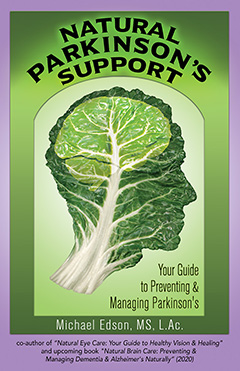
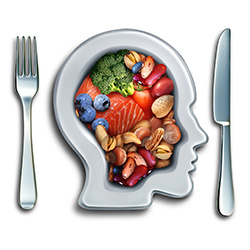 Brain health is especially important in seniors. Seniors are susceptible to dementia, Alzheimer’s disease, memory problems, and cognitive decline. Which foods boost brain power the most? At Natural Eye Care, we have picked eleven common foods that have brain-saving properties. Scientists have been studying the nutrients in foods for decades. They have isolated specific nutrients that cross the blood-brain barrier. These types of nutrients get direct access to the brain and even the retina. The retina is made from neural tissue. Researchers find that many of the nutrients helpful for the brain also stave off eye diseases such as macular degeneration and glaucoma.
 Three time-tested supplements stand out as champions for eye and brain health: garlic, ginseng, and ginkgo. Research on these supplements backs up why they have been used for thousands of years. Garlic plays an important role in all three major traditional medicines–Traditional European Herbal Medicine, Ayurveda, and Traditional Chinese Medicine. Ginseng and ginkgo are crucial herbs in Traditional Chinese Medicine. Do these supplements work? Are they beneficial for aging brains and eyes? What does the research show?
  As we age, how can we prevent or support dementia, Alzheimer’s Disease, and other age-related brain diseases? Looking at the scientific research, much emphasis is on curing neurological disease after it is well-established. Reacting to a crisis is logical, though, after many years of research and money spent, there is still no cure. However, preventing a crisis is even better. Why wait for possible brain deterioration to affect your quality-of-life?