Beef Recalled in Ten States Due to E. Coli Contamination

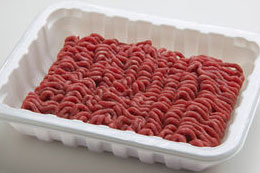
ground beef
Image via CDC.gov

Another round of beef recalls due to potential E. coli contamination has made the news today.  Over 14,000 pounds of contaminated ground beef may sit on supermarket shelves in 10 states.

The meat is available under various brand names in Arizona, California, Georgia, Indiana, Iowa, Missouri, North Carolina, Ohio, Pennsylvania, and Washington.

E. coli related infections can cause bloody diarrhea, dehydration, and, in severe cases, kidney failure and most seriously affects the very young, the very old, and those with compromised immune systems.  Source: WebMD

This outbreak may cause you to think about cutting back on the meat you consume and considering the benefits of a vegetarian diet.  Studies show that moving to an exclusively plant based diet can reverse atherosclerosis (hardening of the arteries), a condition that contributes directly to heart attacks.

Since this is the American Dietetic Association’s National Nutrition Month and the focus is on eating well based the color of your foods (and that means red fruits and veggies, not red meat), why not have a look at their site and think about enhancing your dietary palette (and palate!).

Learn more about how to prevent and treat atherosclerosis naturally.

 

Americans Less Healthy Than British Peers, Diabetes, Weight

Overall Health

Americans of all ages are less healthy than people in Britain, according to an extensive new research project.

A study of health surveys of 40,000 U.S. residents and 70,000 individuals in the U.K. showed that Americans had more chronic diseases than their British counterparts.  Poor health was measured in rates of obesity, elevated cholesterol, heightened inflammation factors, diabetes, and asthma.

Published: MedlinePlus

Diabetes & Diabetic Retinopathy

The figures from the Centers for Disease Control on diabetes are staggering.  The CDC estimates in 2011 that 26 million Americans have diabetes.

Their report also estimates that one in three American adults is pre-diabetic with higher than normal blood sugar levels although not yet diagnosed has having diabetes.  They project that if current trends continue that 1 in 3 American adults could have diabetes by 2050.

Type II diabetes, or adult onset diabetes constitutes 90-95% of all diabetes incidences. The risk factors for the condition are aging, being over-weight, leading a sedentary lifestyle, as well as genetic factors.  Patients with a family history of diabetes and African-Americans, American Indians, Hispanics, Alaska Native Americans, and some Asian Americans are vulnerable.

Of these patients at risk for developing diabetes, 1/4 of those over 40 with a diabetes diagnosis develop diabetic retinopathy resulting in badly damaged vision.

Weight & Diabetic Retinopathy

A new study out of the University of Washington tells us that not only does obesity make one more likely to develop diabetes, but gaining weight in your 50s and after age 65 can double your risk of diabetes later in life.  Holding on to belly fat increases the likelihood that a person will develop type 2 diabetes.  The study also indicates that losing weight after the age 65 will not reduce the risk of diabetes in the way that losing weight when you are younger.

See more information on diabetes and treatment options.

Source: CNN

Bladder Cancer Slowed and Destroyed by Mustard Seed

mustard plant
image via www.mda.state.mn.us

Foods really do have the power to fight disease, including cancer.

A study of rats showed that mustard seed powders could successfully stop the growth of cancer and also stop it from spreading.  Supporting the assertion that food has powerful healing potential, it was the food itself that helped these animals, not the purified form of the compound. The cancer in the rats taking mustard seed grew one third slower than the tumors in the rats who did not eat the plant.

Human cancer cells in the laboratory were also neutralized when exposed to the active ingredient in mustard, allyl isothiocyanate.

Study authors did state that all commercially available mustard is not created equally; potency depends on the plant species and the preparation method.

Source: Environment Health News

Learn about how to prevent and treat bladder and urinary tract infections.

Acupressure Helps Patients with Traumatic Brain Injuries

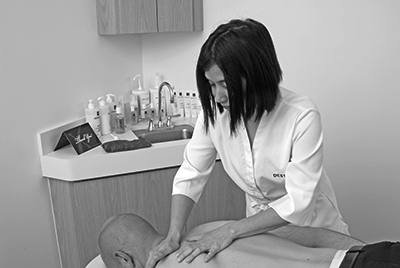
acupressure Acupressure – using the fingers to stimulate acupuncture points along the body’s energy meridian system – has been found to improve brain activity in those suffering from mild traumatic brain injuries.

The study, published in the Journal of Neurotrauma, involved the Jin Sin style of acupressure.  Of the 38 subjects in the trial, some experienced treatments involving real acupuncture points while the rest of the participants received touch on other parts of the body.  Those who received acupressure scored higher on memory and cognition tests.

According to lead study author Theresa Hernandez, “We would like to see if the Jin Shin treatment is useful to military veterans returning home with traumatic brain injury, a signature wound prevalent in the wars in Iraq and Afghanistan,” said Hernandez. The Jin Shin acupressure treatment can be taught to family and friends of those with TBI and can even be used as a self-treatment, which could allow for more independence, she said.  Source: Science Daily

Stimulating acupressure points around the eyes can be an effective way to soothe strained eyes.  This video offers an example of how a simple massage involving acupuncture points can soothe tired eyes.


Infantile Glaucoma Linked to Maternal Opioid Painkiller Intake

Pregnant women who take opioid pain killers are more likely to give birth to babies with birth defects, including infantile glaucoma.

The study, published in the American Journal of Obstetrics and Gynecology, describes how women who took drugs like codeine or hydrocodone were twice as likely to have babies with severe heart problems. In addition to heart defects and glaucoma, when mothers-to-be took opioid drugs their children were more likely to have spina bifida, hydrocephaly, and gastroschisis.

It is very important to note that these birth defects were not only related to drugs mothers took while pregnant – researchers have connected maternal opiod intake and these conditions in children born to mothers who took these prescription medications three months before they were pregnant.

Source: Modern Medicine


Cataract Surgery Can Lower Eye Pressure

In addition to removing a cataract, cataract surgery can also lower eye pressure.  Eye pressure or intraocular pressure is often (but not always) associated with the development of glaucoma.

A study presented at the American Glaucoma Society meeting explains how patients who had ocular hypertension before cataracts surgery exhibited a marked decrease in eye pressure after the procedure. Their pressure readings decreased by 18%.  They were not taking any medication to lower their eye pressure.

Source: OSN Super Site

It is possible to avoid what has become the most common surgery in the US – cataract removal – through a combination of nutrition, exercise, and lifestyle changes.  Fighting free radicals by boosting your antioxidant intake is a great place to start.


Eat Right With Color: Blue Foods Are Great Eye Foods

March is the American Dietetic Association’s National Nutrition Month.

This year, the theme is “Eat Right with Color.”  That seems particularly fitting since seeing color is one of the things we value most about our eyes.  The colors of the foods we eat – we are specifically talking about fruits and vegetables here – are often indicative of the nutrients they will deliver.

Check out the ADA’s guide for what colors indicate what great health benefits.

What’s an optometrist’s favorite color?  Blue.

Bilberry (a cousin of the blueberry) is the ultimate eye food, mainly because it contains carotenoids, which are powerful antioxidants.  Getting your does of blue foods will help anyone concerned about Poor Night Vision, Glaucoma, Myopia, Macular Degeneration, Diabetic Retinopathy, Cataracts, or Computer Eye Syndrome.

Learn about how to prevent and treat diabetes naturally at our website.

Also, get the facts about the related condition, diabetic retinopathy.

Cataracts Linked to Radiation Exposure

Cataracts & Radiation ExposureMany years after the release of radiation disaster at Chernobyl, Russia, cataract have appeared  as one of the health issues changing the lives of those people who were exposed to radiation when the reactor exploded.  This has been reported by  the United Nations Scientific Committee on the Effects of Atomic Radiation, UNSCEAR.

Researchers publishing in the journal Radiation looked at the eyes of 8,607 Chernobyl clean-up workers 12 and 14 years after they were exposed.  Only 3.9% had nuclear cataracts, but 25% had posterior subcapsular or cortical cataracts from radiation exposure. Finding the prevalence of this other type of cataract leads scientists to believe that the exposure limits set for clean up workers by the International Commission on Radiological Protection (ICRP) were in fact too high.  An article at EyeWorld.com states, “Thus,  conventional wisdom regarding acceptable doses of radiation to the eye for space activities are actually not acceptable, according to this study.”

Hopefully, the world will never see another Chernobyl, but this information is important for people who are exposed to radiation in other ways.  Bone marrow transplant patients, for example, are treated with a course of radiation and often develop cataracts many years later.

Sources: Radiation, Eye World

Astronauts, Space Radiation & Cataracts

Cross-sectional data analysis revealed a small deleterious effect of space radiation for cortical cataracts and possibly for PSC cataracts. These results suggest increased cataract risks at smaller radiation doses than have been reported previously.

SOURCE: Chylack LT Jr, Peterson LE, Feiveson AH, et al. NASA study of cataract in astronauts (NASCA). Report 1: Cross-sectional study of the relationship of exposure to space radiation and risk of lens opacity. Radiat Res 2009;172(1):10-20.

For more information, go to Natural Eye Care for Cataract Treatment and Prevention.

Retinopathy of Prematurity Is Not Caused By Low Birth Weight

Retinopathy of prematurity (ROP) is abnormal blood vessel development in the retina of the eye in a premature infant.  It is a condition most often associated with babies born at less than 30 weeks weighing less than 3 pounds.

A study appearing in the March 4, 2011 online version of the journal Eye sought to determine the link between retinopathy of prematurity and birth weight.  Researchers found that though lower birth weight babies were more likely to have ROP than other babies, birth weight and the amount of weight that these babies gain in the first 4 to 6 weeks of life was not in itself a direct cause of the condition.  Source: http://www.nature.com/eye/

The good news is that most babies born with ROP will grow up free of vision problems.  About 1 in 10 may develop more severe retinal diseases.

Dry Eye Syndrome Triggered By Low Temperatures

Dry Eye Syndrome - temperatures
Image by Imelenchon

Spring will probably be a relief for all of us in northern climates, but especially those who suffer from dry eye syndrome.

A study published in the journal Investigative Ophthalmology & Visual Science describes how dry eye syndrome can be worse when temperatures sink below 30 degrees Celcius[1. D. Borchman, et al, Human meibum lipid conformation and thermodynamic changes with meibomian-gland dysfunction, Investigative and Visual Science, June, 2011],[2. 5. I.A. Butovich, J.C. Arciniega, et al, Meibomian Lipid Films and the Impact of Temperature, Investigations in Ophthalmology and Visual Science, November, 2010].  Since that is about 86 degrees Fahrenheit, any time you are out in (especially windy, dry weather) you may have the dry eye burning and tearing experience.  Not until the hot weather of summer will weather related relief for your dry eye symptoms arrive.  Luckily, there are other effective strategies that you can try to prevent and treat your dry eye symptoms.

Meibomian Layer

According to the study, temperature affects the function of the meibomian layer of the eye, which produces the oily substance that protects the outer layer of the tear film.  The meibomian layer can become stiff and thick and not spread evenly over the surface of the tear film to protect it from evaporation.  And when the tear film evaporates too quickly you have the burning, tearing dry eye symptom.

Being out in the wind can also greatly exacerbate dry eye symptoms as well as living and working in the dry air so common in the heated spaces in which most of us spend our winters.

The solution:  Be sure to blink when you are outdoors to keep spreading the tear film across your cornea.  Pay attention to whether your eyes feel the slightest bit of burning so that you might be able to avert the tearing that will result.