Diabetic Retinopathy: Declining Vision Tied to Lower Quality of Life

Diabetic retinopathy
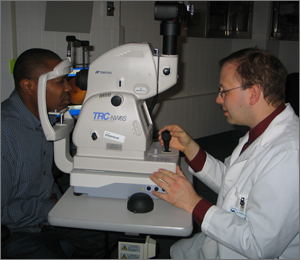
Image via VA.gov

A new study confirms what might sound like common sense: the more severe one’s case of diabetic retinopathy, the more likely one’s quality of life is to deteriorate.

Published in the journal Ophthalmology (Issue 118, 2011), research suggests that individuals’ quality of life declines more rapidly when their sight loss due to diabetic retinopathy becomes more severe.  The study involved over 1,000 type 2 diabetes patients taking part in the Los Angeles Latino Eye Study.

Authors indicate that quality of life markers related to dependency, mental health, and  tasks that required visual skills, dependence were most significantly impacted by worsening cases of diabetic retinopathy.

Source: OSN Supersite

Link Between Erectile Dysfunction & Diabetic Retinopathy

Not surprisingly, another study finds new information about the link between erectile dysfunction and diabetic retinopathy in men with diabetes.

Published in the journal Urology, this research included men with type 2 diabetes of an average age of 64 years, some of whom exhibited proliferative diabetic retinopathy (PDR) and some of whom were diagnosed severe nonproliferative diabetic retinopathy (NPDR).

Researchers found that there is an association between erectile dysfunction and diabetic retinopathy, regardless of age, time since diabetes diagnosis, and cardiovascular risk factors.

Source: Urology, 4 January 2011

Computer Vision Syndrome Impacts Quality of Life

Computer Eye Strain
image by Marinela

Research shows that Computer Vision Syndrome results in quantifiable physical symptoms and impacts quality of life.

In a study of 1000 university employees, it was found that people were negatively affected by their time at the computer, regardless of age and gender.  According to researchers at Ohio State University, ergonomics, hours at the computer, and exercise had a great deal to do with the degree to which individuals were bothered by computer eyestrain and other related symptoms such as back and neck pain.  Source: Optometry & Vision Science (August 2007 – Volume 84 – Issue 8.)

Learn how to prevent computer eyestrain with tips on computer set ups, exercises, and supplements at our website.

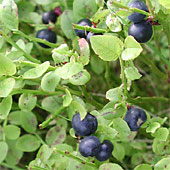
Bilberry & Pine Bark Supplement Mitrogenol Lowers IOP

Glaucoma
Image via nccam.nih.gov

A nutritional supplement comprised of a patented blend of bilberry and pine bark is marketed as Mitrogenol.  A study published in Clinical Opthamology describes a study of 79 people with raised eye pressure levels.  The intraocular pressure (IOP) of participants who took Mitrogenol decreased by 24%.  Those who took the pharmaceutical eye drop Latanoprost experienced a 28% drop in IOP.  A third group that took a combination of both remedies watched their levels go down by 40%

Researchers found that taking these products together helped lower IOP and resulted in better retinal blood flow.  It is noted that Latanoprost has been noted to cause dry eyes, eye color changes, and eyelid irritation.

Elevated IOP is often related to the onset of glaucoma.

Source: https://www.naturaleyecare.com/study.asp?num=294

An earlier pilot study also found that supplementing with bilberry and pine bark can helps lower intraocular pressure (IOP).

In this small study 20 patients who have high IOP received  bilberry and French maritime pine bark  and 18 patients were the control group.

Vision sharpness, IOP and blood flow in the eye were measured 2, 3 & 6 months later.  The researchers reported that the mean IOP was reduced and ocular blood flow improved after 2 months.  These results may constitute a safe complementary treatment for glaucoma or have preventative value.

Bilberry Purity

The compounds found in bilberries, blueberries, and huckleberries are key to preventing and treating not only Glaucoma but poor night visionmyopia macular degeneration diabetic retinopathy cataracts , and computer eye syndrome.

National Institute of Standards and Technology (NIST) is now certifying the amount organic acids available in dietary supplements formulated with Vaccinium berries, including blueberries and bilberries.   These new standards can help consumers buy products made of the berries that they advertise, rather than diluting them with less expensive juices.  Source: www.sciencedaily.com

Substantiates Earlier Research

The above research substantiates earlier Italian research looking at supplementation with bilberry and pine bark. Researchers in Italy reported that nutritional supplements of bilberry and French maritime pine bark can help reduce intra-ocular pressure (IOP).

Authors of the study from the University of Chieti-Pescara in Italy studied thirty-eight subjects with intraocular hypertension. Twenty subjects were given bilberry and French maritime pine bark; eighteen subjects were not treated. The visual acuity, IOP, and ocular blood flow were measured at two, three, and six months. After two months, the group taking the supplements showed a decrease in the mean IOP. No side effects were observed and ocular blood flow improved.

Having reviewed the results, these researchers believe that food supplements of bilberry and pine bark may represent a safe preventative intervention for lowering the risk of developing glaucoma by supporting a healthier pressure in the eyes.

SOURCE: “Effects of Mirtogenol on ocular blood flow and intraocular hypertension in asymptomatic subjects”, Robert Steigerwalt Jr., et al, Molecular Vision 2008; 14:1288-1292.

Cataracts Linked to Diet and Lifestyle Choices

Are cataracts just an inevitable part of getting older?  There is a lot of scientific research that indicates your diet and lifestyle choices actually have a lot to do with your risk of developing cataracts.

Smoking

Another study points to cigarettes as being a major cause of cataracts.  In fact, smoking is implicated as the cause 20% of all cataracts cases.  Men who smoke more than a pack a day increase their risk for cataracts by 205%!  For female smokers, that risk increases a still substantial 63%.

Diet

Vegetarians are less likely to get cataracts, according to British researchers. Because we know that cataract formation is often related to nutrition, scientists decided to study whether eating meat was related to whether one develops cataracts. A study of nearly 28,000 non-diabetic people over age forty determined that one’s risk of cataracts could be tracked based on diet.  Meat eaters were most likely to develop the eye condition followed by those who ate fish but not meat, and then vegetarians.  Vegans were the least likely to develop cataracts.  Source:  American Journal of Clinical Nutrition

Vitamin & Mineral Rich Diet

Researchers have determined that  women who eat a healthy vitamin- and mineral-rich diet may have a lower risk of developing  “nuclear” cataract – cataracts that affect the central part of the lens.  This is most prevalent type of cataract in the United States.  Risk of developing this type is greater as we age. They found in almost 2000 women that 41% had cataracts or had cataracts removed – that the women with no cataracts had a better overall diet than those who did have a cataract history. Published: June, 2010, Archives of Ophthalmology.

Glutathione

One important nutritional compound to lower the risk cataracts is glutathione which helps prevent the free radical damage that can lead to cataract formation. Glutathione is essential to the creation of tissue enzymes and is crucial to the prevention of free radical damage. Studies have shown that people who have cataracts have 80% less glutathione in their eyes than they need. Natural sources of glutathione include eggs, broccoli, avocados, garlic, onions

Sugar

One study indicates that sugar of all kinds can impinge upon the eye’s ability to keep the lens clear.

Cataracts Surgery Can Involve Increased Risk for Patient With Diabetes

People who have diabetes often suffer from cataracts as well; in fact, they are more likely than the general population to develop cataracts.  Diabetics considering cataracts surgery need to consider their increased risk factors before they chose to undergo the procedure.

It is very important that patients’ blood sugar is well-controlled before surgery to increase their post-surgical healing ability.  It is especially important that patients’ inflammation levels are monitored and kept as low as possible during and after surgery.

According to Rupert Menapace, MD, of OSN Supersite, “We need atraumatic surgery to minimize the inflammatory response and avoid induction or exacerbation of diabetic retinopathy and macular edema. Even in uneventful cataract surgery, the risk of developing macular edema is high in diabetic patients, up to 10%.”  Macular edema is swelling of the macula, the small area of the retina responsible for central vision, of which the central 5% of the retina is most critical to vision.

Source: “Cataract surgery with comorbidities requires careful surgical management” at www.osnsupersite.com.

Electrical Stimulation Therapy Can Help Retinitis Pigmentosa Patients

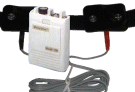
electrical stim machineA new study of how electrical stimulation therapy (EST) can potentially help retinitis pigmentosa patients has recently been presented.

The study, performed by Okuvision GmbH and published in Investigative Ophthalmology & Visual Science, involves stimulating the eye’s retina with small amounts of electrical current.  According to the source of this story, Medical News Today, “the findings from this study emphasize that electrical stimulation of the retina liberates growth factors which may be able to delay retinal degeneration.” Source: https://www.medicalnewstoday.com/articles/224224.php

For more research on treatments for retinitis pigmentosa, please visit our research pages.

We offer a microcurrent stimulation device that many patients have found improves eye conditions including macular degeneration by stimulating energy production (ATP) in the retina, improving circulation and reducing waste build-up.

Nanotechnology Could Bring Sight Back to Macular Degeneration Patients

person using microscopeFlowers could help people who have lost their vision to conditions like macular degeneration to see again.
A researcher named Richard Taylor out of the University of Oregon is experimenting with the cultivation of nanoflowers which grow from nano-sized particles of metal that will assemble themselves in a natural process called diffusion limited aggregation.  These particles will form fractals that can be implanted into the eye and actually communicate with the neurons in the eye and essentially repair the body’s damaged circuitry.

According to an article published in Physics World, Taylor is capitalizing on the remarkable similarities he finds between the eye and a digital camera.

Source: Medical News Today

Caffeine in Coffee May Offer Antioxidant Benefits

The antioxidants found in beverages and foods that contain caffeine seem to protect people against the development of Alzheimer’s disease and heart disease.

In a study published in The Journal of Physical Chemistry B researchers describe how coffee can be on the greatest sources of antioxidants in the modern diet.  Scientists do not know exactly how coffee helps to fight the free radicals that can be destructive to eye health and overall health.  At this point, they are speculating that caffeine is the agent responsible for coffee antioxidant properties.

These findings are actually in direct opposition to our usual recommendations for people who suffer from eye conditions related to the presence of free radicals including macular degeneration and glaucoma.  More research is necessary to determine whether the benefits of caffeine outweigh its negative effects.

Source: sciencedaily.com

But, Too Much Coffee …

Five or more cups of coffee per day may cause an individual to hallucinate.

A study out of Australia’s La Trobe University looked at the roles that caffeine and stress play on instances of auditory hallucinations.  Participants who were under stress and under the effect of high levels of caffeine listened to white noise and were asked to indicate when they heard Bing Crosby sing “White Christmas.”  Those reporting highest stress and caffeine levels were much more likely to report hearing the song (which was never played) than were those with low stress and caffeine levels.

‘It is apparent that the health risks of excessive caffeine use must be addressed and caution should be raised with regards to the exacerbating use of this stimulant,’ says Professor Simon Crowe.

We caution clients and patients against consuming coffee and other sources of caffeine if they are concerned about eye conditions including diabetic retinopathy, glaucoma, and dry eyes.

Lutein and Zeaxanthin Support Healthy Eyes and Fight Macular Degeneration

Macular xanthophylls | Lutein & Zeaxanthin | Zeaxanthin  Lutein Absorption | Role of Antioxidants

Macular xanthophylls

Macular xanthophylls, perhaps better known as lutein and zeaxanthin, are well known for their role as protectors against age related macular degeneration (AMD). Research at the University of Georgia is also finding that lutein and zeaxanthin supplementation can help people with healthy vision. Taking dietary supplements high in lutein and zeaxanthin will boost one’s  ability to deal with glare and helps people recover more quickly from blinding flash of light. One more reason to boost your intake of these great little compounds? They have been linked to improved cognitive health in older adults.
Source: Oral supplementation with lutein and zeaxanthin with coantioxidants may improve vision at 36 months for those at high risk for progression to late age-related macular degeneration (AMD).

Lutein, Zeaxanthin, C, E & Zinc

This study examined the results of increasing blood levels of lutein and zeaxanthin by supplementing with  lutein and zeaxanthin in addition to vitamins C and E and zinc for visual acuity for 433 AMD patients in the UK with early and late stage macular degeneration. The patients’ results were assessed  12, 18, 24, 30, and 36 months later.  While there was no statistically significant difference was seen in best corrected distance visual acuity (BC DVA) at 12 months, such significance was seen after 36 months. The conclusion of this study (Carotenoids and Co-Antioxidants in Age-Related Maculopathy) was that supplementing with lutein and zeaxanthin  has a better effect  in patients with early AMD.  The researchers also found that higher levels lutein blood levels show a slower progression from early AMD to late AMD.

Lutein & Zeaxanthin from Food Sources

In patients with the highest levels of consumption of lutein and zeaxanthin from leafy greens, eggs, red and yellow peppers, the risk of Macular Degeneration (AMD) was 35% of the risk in people who did not eat abundant leafy greens.  Zinc was also protective.

Source:  J.S. Tan, et al. in Opthalmology, February 2008.

Lutein & Zeaxanthin in Diet

Another study in Australia studied the dietary and supplement intakes of antioxidants and the long-term risk of incident age-related macular degeneration. The results of the study showed those with higher levels of dietary lutein and zeaxanthin in their diets had a reduced risk of macular degeneration.

Source: Centre for Vision Research, University of Sydney, Australia, 2008

Lutein Absorption Enhanced by Vitamin C

Yet another study has determined that the valuable benefits of lutein are enhanced by supplementation of vitamin C in fighting macular degeneration. In order to consume the levels of lutein discussed in the above studies which are recommended for good eye health supplementation is often helpful.  Results from a study published in the Journal of the American Dietetic Association suggest that it may be beneficial to take supplements of lutein along with vitamin C. Researchers from the University of Wisconsin gave young healthy men and women supplements of lutein alone, or supplements of lutein combined with vitamins C or E.  It was noted that absorption of lutein varied greatly among individuals, regardless of whether they had taken lutein alone or with vitamins C or E.  However, it was determined that lutein was absorbed significantly faster when given simultaneously with vitamin C. Learn about lutein and vitamin C supplements, as well as food sources for nutrients essential to good eye health.

Source:  “Lutein absorption is facilitated with co-supplementation of ascorbic acid in young adults”, Tanumihardjo, et al, J Am Dietetic Assoc 105:114-18, 2005.

Zeaxanthin

Another study shows that supplementing with zeaxanthin can raises macula pigment optical density (MP) and has unique visual benefits for patients with atrophic early AMD having visual symptoms. Zeaxanthin can be found in dark, leafy greens (like turnip greens, collard greens, kale, spinach and romaine lettuce). Orange peppers are the highest source of zeaxanthin.

The Zeaxanthin and Visual Function Study in Atrophic Age Related Macular Degeneration (ZVF-FDA IND #78,973) – MP and Foveal Shape Discrimination: S.P. Richer1, W. Stiles1, M. Lavin, K. Graham1, C. Thomas1, D. Park3. J. Nyland1, J Wrobel

Why Antioxidants Fight Macular Degeneration

A study from Cornell and Brigham Young Universities shows why eating a diet rich in antioxidants can help hold off macular degeneration’s damage to central vision. Researchers determined that two processes in the retina, combined, contribute to a higher risk of developing macular degeneration. They found that a compound labeled A2E accumulates and damages the mitochondria of cells – the part of the cell which converts nutrients to energy.  A2E is a byproduct of cell activity which is not naturally broken down or removed through the body’s natural elimination processes. The combination of accumulated A2E and free radicals which have accumulated due to exposure to sunlight the work of mitochondria is disrupted.   This means that the cell has less energy available for the normal processes of removing toxins, maintaining health of retina, macula, photoreceptor and other cells of the eye.  This in turn results in even greater A2E accumulation. The role of antioxidants is that they disrupt the destructive cycle and support  the health of, and consequently, the lifetime of cells in the eye which cannot be replaced. “The implication is that people at risk of macular degeneration could help prevent the disease by consuming antioxidants,” said BYU chemist Heidi Vollmer-Snarr. Researchers: Brigham Young University and Weill Medical College of Cornell University Published: Journal of Biological Chemistry, September, 2008

Macular xanthophylls | Lutein & Zeaxanthin |  Lutein Absorption | Role of Antioxidants  

Other sources:

Women’s Health Study. Archives of Ophthalmology (Arch. Ophthalmol. 2008;126:102-9)

Moeller SM et al. Age-Related Macular Degeneration and Lutein and Zeaxanthin in the Carotenoids in Age-Related Eye Disease Study (CAREDS). Archives of Ophthalmology 124:1151-1162, 2006.

Lutein & Glare

A new study indicates that the carotenoids lutein and zeaxanthin may help improve vision under glare conditions such as bright sunlight or the beams of car headlights.

Scientists at the Vision Science Laboratory at the University of Georgia recently studied the relationship of lutein and zeaxanthin on macular pigment (MP), glare disability, and photostress recovery.

The macula helps filter damaging light rays. When the concentration of lutein and zeaxanthin in the macula is higher, the higher density of macular pigment enables the macula to absorb the light rays more efficiently.

Researchers studied forty healthy subjects (average age of 23.9) for six months, giving assessments at baseline, 1, 2, 4, and 6 months. Subjects were given 12mg daily of lutein and zeaxanthin supplements.

After 6 months, the lutein and zeaxanthin supplementation was shown to significantly reduce the negative effects of glare for both the visual performance tasks assessed for most of the subjects.

SOURCE: “Macular pigment and visual performance under glare conditions”, Stringham and Hammond, Optom Vis Sci., 2008 Feb;85(2):82-8

Vitamin D Linked to Lower Macular Degeneration Risk

Women under 75Annual Survey | Vitamin D3 D Sources

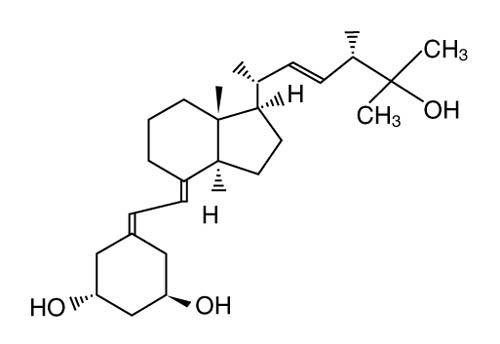
molecular structure
Image via dailymed.nlm.nih.gov

Vitamin D – and the fact that so many people are deficient in this vital compound – has been in the news a lot lately.  A lack of vitamin D has been linked to asthma in children, the development of cancers, cognitive impairment, and increased risk of cardiovascular diseases.

Vitamin D impacts the health of the eyes as well.
A number of  studies show that low vitamin D3 levels correspond to an increase in the incidence of age related macular degeneration.

Editor’s Note: Vitamin D3 is one of the super nutrients that should be part of everyone’s diet, and should be added as a supplement particularly for people who do not get much exposure daily to the sun.  Vitamin D3 has also been tied to helping prevent cancer, improve immune function and bone health, regulate insulin and blood pressure, and more. (Researchers: Parekh N, et al.)

Women Under 75 & Vitamin D

A new study published in The Archives of Ophthalmology finds that women under age 75 can reduce their risk of developing age-related macular degeneration (AMD) by increasing their intake of vitamin D.  A study of over 1300 women found that eating foods rich in vitamin D and taking dietary supplements, but not necessarily time spent in direct sunlight (often considered the best way to get vitamin D), was linked to decreased chances of AMD.  Compared to those who consumed the least vitamin D, those who consumed the most vitamin D were 59% less likely to show signs of AMD.

Those consuming the highest amount (on average about 600 IU) daily had a 59% lower risk of AMD compared to those getting the least amount of 300 IU on average.

Ref: Millen AE, et al. Vitamin D status and early age-related macular degeneration in postmenopausal women. Arch Ophthalmol 129:481-89, 2011.

Note: Research shows that the destructive effects of inflammation on the retina’s blood supply (choroid) and the pigment-containing cells of the retina may play a major role in the development of macular degeneration. Vitamin D may help due to its natural anti-inflammatory properties, as well as strong antioxidant benefits.

Another study  shows that high doses of vitamin D may help women under age 75 fight off macular degeneration (AMD).

Because of its abilities to fight inflammation and support immune health, vitamin D may help suppress the cascade of destructive inflammation  that happens during the early stages of AMD.

Women between age 50 and 79 in the Carotenoids in Age-Related Eye Disease Study were evaluated to determine protective effects of vitamin D intake in the forms of food, nutritional supplements, and sunlight.  Taking vitamin D in supplement form proved to be more helpful in preventing the onset of macular degeneration than exposure to sunlight.  Source: OSN Supersite

This study substantiates two earlier studies:

Annual National Survey

Researchers using data from the Third National Health and Nutrition Examination Survey (1988 through 1994) have found evidence that consuming vitamin D may help ward off age-related macular degeneration (AMD).

In this study, 7752 individuals (including 11% with AMD) were given retinal photographs, dietary intake questionnaires, and blood tests to calculate blood vitamin D (25-hydroxyvitamin D) levels.  Based on these vitamin D blood levels, participants were divided into 5 groups.   Participants in the group with the highest vitamin D levels showed 40% lower risk of developing early AMD than those in the lowest group.

Analysis was also conducted to evaluate associations with important food and supplemental sources of vitamin D.

  • People who drank milk daily decreased their risk of developing AMD, as did those who took supplemental vitamin D consistently but didn’t drink milk daily.
  • Fish consumption was also linked with a lower risk of advanced AMD.

Vitamin D3 Levels

A 2007 study showed the low levels of Vitamin D3 is linked to an increase in the prevalence of macular degeneration.

Source: Parekh N, Chappell RJ, Millen AE, Albert DM, Mares JA. Association Between Vitamin D and Age-Related Macular Degeneration in the Third National Health and Nutrition Examination Survey, 1988 Through 1994. Arch Ophthalmol. May 2007;125: 661-669.

Vitamin D Sources

What are good sources of vitamin D?  Consider fish — it’s naturally rich in vitamin D.  Milk and breakfast cereals are generally fortified with vitamin D as well.  If you are taking supplemental D, vitamin D3 is the most readily absorbable form of D.