Electrical Stimulation Therapy Can Help Retinitis Pigmentosa Patients

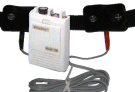
electrical stim machineA new study of how electrical stimulation therapy (EST) can potentially help retinitis pigmentosa patients has recently been presented.

The study, performed by Okuvision GmbH and published in Investigative Ophthalmology & Visual Science, involves stimulating the eye’s retina with small amounts of electrical current.  According to the source of this story, Medical News Today, “the findings from this study emphasize that electrical stimulation of the retina liberates growth factors which may be able to delay retinal degeneration.” Source: https://www.medicalnewstoday.com/articles/224224.php

For more research on treatments for retinitis pigmentosa, please visit our research pages.

We offer a microcurrent stimulation device that many patients have found improves eye conditions including macular degeneration by stimulating energy production (ATP) in the retina, improving circulation and reducing waste build-up.
Retinitis Pigmentosa: Benefits of Vitamin A, Drawbacks of Vitamin E

“Take your vitamins” is almost always a good recommendation, but if you have retinitis pigmentosa (RP), you need to be a little choosy about which vitamins you take.

A 1993 study showed that taking 15,000 IU of vitamin A each day was very helpful for RP sufferers.  Taking any more vitamin A than this recommended dose did not appear to be beneficial.

On the other hand, taking vitamin E (the study focused on intake of 400 IU per day) can actually accelerate the course of the disease and cause vision to deteriorate at a faster rate.

For more information on this and other scientific studies related to the treatment and prevention of retinitis pigmentosa, visit our research index.

Retinitis Pigmentosa Responds to Acupuncture

acupuncture
Image via healthfinder.gov

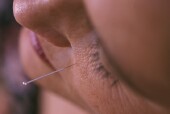
Acupuncture is an effective treatment for the potentially blinding condition retinitis pigmentosa.


An article in the Journal of Clinical Acupuncture and Moxibustion describes how acupuncture treatments alleviate stress on the retinal and optic nerves by relieving intraocular pressure.

Another study, this one published in Chinese Journal of Integrated Traditional and Western Medicine discusses how Traditional Chinese Medicine is able to improve retinitis pigmentosa patients’ retinal cone activity.

Scientist involved with this study say, “TCM (Traditional Chinese Medicine) treatment could also enhance the bioactivity of (the) nerve network and therefore have a definite significance in retarding the progression of disease and keeping the central vision.”

Source: https://www.healthcmi.com

At Natural Eye Care, we believe strongly in the power of acupuncture and TCM when it comes to healing the eyes.  In fact, we wrote the book on it.

Artificial Retina Bringing Sight Back to Retinitis Pigmentosa Patients

CBS News is reporting that a implanted artificial retina has been approved by European health officials.

The device is offering partial sight to people who have become blind due to the condition retinitis pigmentosa.

The report describes how a man who had lost his sight completely at age 35 is now able to make out shapes and outlines.  As described by CBS: “The device starts with a tiny video camera mounted in a pair of glasses. A transmitter in the glasses sends the images to chip implanted on the back of the damaged eye. There, 60 electrodes send the image along the optic nerve straight to the brain.”

Other Artificial Retina News

Scientists through the US Department of Energy are testing artificial retinas that they hope can restore partial sight to people who’ve lost their vision to the most common causes of blindness.

The Sylmar, Calif., company produced the devices for the U.S. Energy Department’s Artificial Retina Project. The department has been engaged in biological research since the atomic bomb tests of the 1950s raised fears of radiation poisoning.

The current version is being tested on 17 blind people in the U.S. and Europe, and more patients are being enrolled. At a retina conference in October, patients reported improvements in orientation and mobility. They were able to find a door from 20 feet away and to follow a line on the floor for 20 feet.

Meanwhile, researchers in the Energy Department’s National Laboratories are creating a third-generation artificial retina. Much smaller than its predecessors, the device will contain 200 or more electrodes on a thin, flexible film that curves to fit the shape of the retina. Human tests are scheduled to begin in 2011.

For more information, go to https://artificialretina.energy.gov/index.shtml


Advances in Retinal Implants May Help Macular Degeneration Patients

Scientists are developing new technologies that will make retinal implants better.  When diseases like macular degeneration or retinitis pigmentosa become so advanced, some people may choose to turn to surgically implanted artificial retinal devices.

Existing technology has made it possible for a signal sent from a video camera attached to a pair of glasses to transmit images to device placed on a person’s retina.

New advances at the Italian Institute of Technology show how using organic polymer semiconductor can improve the quality of the images and prevent retinal scarring. They are actually developing ways for this special semiconductor to communicate with the neurons in the brain.  Researchers are hoping these new techniques will eventually allow people with the implants to see more clearly and also see in color, not just black and white.

Source: https://www.technologyreview.com/

Retinal implants are not for everyone.  It is possible to slow the progression of degenerative eye diseases without surgery. Learn more about how to slow, stop, or even reverse the progression of diseases like macular degeneration and retinitis pigmentosa on our complementary treatment pages.

Omega Fatty Acids Treat Macular Degeneration, Retinitis Pigmentosa, Diabetic Retinopathy

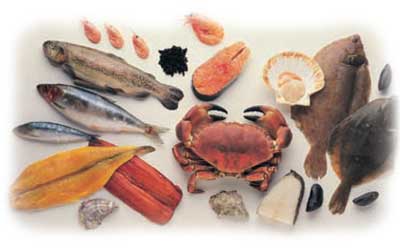
seafood
image via FDA

Scientists are continually evaluating the powerful compounds found in omega-3 fatty acids to determine further ways they can be used to make us healthier.

A study published in the Journal of the American Medical Association sought to find out whether taking omega-3 supplements could help those who suffer from atrial fibrillation (irregular heartbeats caused by the upper chambers of the heart beating out of sync with the upper potentially leading to a stroke).  In this case, the researchers did not find that taking omega-3 supplements over six months helped decrease instances of atrial fibrillation.  Source: https://jama.ama-assn.org/cgi/content/short/304/21/2363?rss=1

But, there have been numerous other studies that have shown how omega fatty acids can be very beneficial, specifically to those suffering from macular degeneration, retinitis pigmentosa, and diabetic retinopathy.

For more research on the eye and overall health conditions that you are most concerned about, visit our research index.

Blueberries Reduce Blood Pressure and Improve Eye Health

blueberries
image via USDA

A new study of rats has found that daily intake of blueberries helps reduce blood pressure in hypertensive animals.  The study, published in the Journal of Agricultural and Food Chemistry is unique in that they studied the results of eating the berry itself, not isolated compounds derived from the fruit. Source: https://mobile.nutraingredients-usa.com/Research/Blueberries-linked-to-improved-blood-vessel-health-Rat-study.

Blueberries, and their cousins bilberries and huckleberries have been found to help those with retinitis pigmentosa and diabetic retinopathy.


Breakthrough: Microchip Implant Restores Partial Sight

For the first time, scientists have restored the ability of previously blind patients to recognize letters, fruit and other items using light-sensitive microchips implanted in the inner surface of the eye.

For the first time, scientists have restored the ability of previously blind patients to recognize letters, fruit and other items using light-sensitive microchips implanted in the inner surface of the eye.

The microchip is only approximately 3 millimeters by 3 millimeters in size, but is loaded with 1,500 light detectors that send a grid of electrical impulses through a patient’s nerves to generate a 1,500-pixel image. The device is implanted under the retina, the inner lining of the eye unlike other implants that sit outside the retina and require users to wear an external camera. Since the chip requires a sharp image, the patients wear reading glasses.

For information on natural eye care, go to www.naturaleyecare.com

In a paper published in The Procedings of the Royal Society B researchers describe how three patients suffering from hereditary retinal dystrophy regained the ability to identify objects and people and even read words printed in large letters.  The technology involves that natural projection of images through the eye’s lens onto a chip placed under the transparent retina.

Source: http://rspb.royalsocietypublishing.org/content/early/2010/11/01/rspb.2010.1747.abstract

Retinitis Pigmentosa Patients Helped By Beta Carotene

Sometimes those bits of wisdom that “everybody knows” just have to be true.  In this case, yes, carrots really are good for your eyes.

A report at the recent American Academy of Ophthalmology (AAO) – Middle East-Africa Council of Ophthalmology (MEACO) Joint Meeting described how beta carotene can help people with retinitis pigmentosa.

Retinitis pigmentosa is a hereditary disease most often marked by the onset of night blindness during childhood that eventually leads to a loss of peripheral and eventually in many cases blindness.  Previous research has shown beta carotene, 9-cis, can help treat night blindness.  In this study, one third of the retinitis pigmentosa patients under observation showed improved visual function after taking a beta carotene supplement for 90 days. Source: https://www.medicalnewstoday.com/articles/204979.php


Regeneration of Human Cells Could Reverse Macular Degeneration and Retinitis Pigmentosa

Image by tico24

Shakespeare’s fictional witches made a potion with eye of newt, but now some very real researchers are looking to the regenerative powers of newt to save human sight.

Scientists at the University of California, San Diego have been awarded a National Institutes of Health grant to study regenerative potential of retinal cells with hopes of finding treatments for macular degeneration and retinitis pigmentosa.

Inspired by goldfish and newts who have the ability to regenerate a lost limb or eye, researchers are hoping to make it possible for humans to do the same thing for retinal cells.  The team at UCSD is specifically looking at Muller cells, which fish use to regenerate nerve cells after eye injuries and which are also present in the nervous system of humans.  The human genome is close enough to those of others in the animal kingdom to find these cell commonalities.  It is hoped that these Muller cells can be turned into photoreceptors in the eye.  When photoreceptors die off, people lose visual function to diseases like macular degeneration and retinitis pigmentosa.

Source: https://www.eurekalert.org/pub_releases/2010-09/uoc–urn092810.php

Scientists at UC Irvine have created an early stage retina from human embryonic stem cells.  It is the first three-dimensional tissue structure to be made from stem cells and bring us closer to the development of transplant-ready retinas to treat eye disorders such as retinitis pigmentosa and macular degeneration that affect millions.  Researchers managed to employ a technique that allowed them to create the multiple cell types necessary for the retina.

Source: Journal of Neuroscience Methods, 4-24-10.