
 The FDA’s approval of aducanumab as a treatment for Alzheimer Disease in June, 2021 was controversial. There were a number of known side effects and new information from clinical trials reveals possible serious consequences. Acucanumab was developed by Biogen and is being sold by Acumen as a $56,000-a-year treatment for Alzheimer’s. Continue reading “Aducanumab’s Serious Side Effects”
Category: Health Conditions
The Sun and Your Eyes: Enemy or Friend?
 Does Sunlight Danger Outweigh the Benefits?
Many studies demonstrate that exposure to sunlight provides protection to diseases such as hypertension, diabetes, multiple sclerosis, and a variety of cancers, and avoiding sunlight may influence their progression.[1. Razzaque MS. (2018). Sunlight exposure: Do health benefits outweigh harm? J Steroid Biochem Mol Biol. Jan;175:44-48.] It has been thought that these protections are due only to vitamin D, whose creation requires sunlight, but researchers are now reporting that circadian clock influencing, immune response modification, and nitric oxide, melatonin, and serotonin formation are involved as well.[2. Van der Rhee HJ, de Vries E, Coebergh JW. (2016). Regular sun exposure benefits health. Med Hypotheses. Dec;97:34-37.] In fact, researchers are finding that the risk of skin cancer increases with irregular patterns of sun exposure, while regular patterns convey relatively lower risk. This is the difference between getting sunburned versus a brisk daily walk in the sunlight.
But too much sunlight is harmful to both eyes and skin. We know that getting sunburned increases skin cancer risk. Our vision is also directly negatively impacted by the sun and ultraviolet radiation (UVR), as well as blue light from computer screens. Continue reading “The Sun and Your Eyes: Enemy or Friend?”
Mitochondria: Essential Powerhouse for Brain & Vision

Why are mitochondria essential to your health and well-being?
Mitochondria are the energy batteries of our cells. They are tiny organelles within most cells of the body that provide respiration and energy. Low metabolism develops in the brain as we age and is noticeable in brain regions where mitochondrial structure has changed. [1. Hirai K, Aliev G, Nunomura A, Fujioka H, Russell RL, et al. (2001). Mitochondrial abnormalities in Alzheimer’s disease. J Neuro-sci. May 1; 21(9):3017-23.] The mitochondria attempt to replace themselves whenever they are damaged and destroyed. However, mitochondrial biogenesis can be disrupted. Mitochondrial disease, oxidative stress and free radical damage, drinking alcohol, eating a poor diet, and heavy metals can harm the mitochondria. Research on links between mitochondrial dysfunction and Alzheimer’s Disease are underway. The good news is that lifestyle and natural supplements can support healthy mitochondria functioning. Continue reading “Mitochondria: Essential Powerhouse for Brain & Vision”
Natural Eye Care Michael Edson’s Alzheimer’s Article in the Townsend Letter
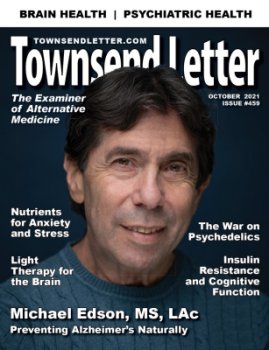 The latest Townsend Letter features co-owner of naturaleyecare.com Michael Edson, L.Ac., MS and his article, Underlying Causes and Natural Treatments for Alzheimer’s and Dementia.
The publisher’s discussion of Michael’s article also mentions that studies report that the Tdap (Tetanus, diphtheria, and pertussis) vaccination reduces the risk of dementia by 42% with similar results for flu and pneumonia vaccines. Both results may be due to reduced overall inflammation in the body.
Top Nutrients for the Brain
Top nutrients for the brain include: ashwagandha, CoQ10, curcumin, DHA, ginseng, gingko biloba, glutathione, lutein, resveratrol, taurine, and vitamins B2, B6, B9, B12, and D3. Interestingly, most of the essential nutrients that support healthy retina, optic nerve and overall eye health are needed in the brain as well and are allowed to pass through the blood-brain barrier.
Continue reading “Natural Eye Care Michael Edson’s Alzheimer’s Article in the Townsend Letter”
Diet and Eye, Brain and Overall Health
 Food for the Brain
Eating a healthy diet is one of the critical factors in helping both maintain good brain, eye and overall health. Also, the way we eat affects our digestion and how well we are able to breakdown and absorb the essential nutrients in the food we take in. Here are some basic recommendations.
Avoid Distractions
Eat without distractions. Eat slowly without watching TV or being distracted by other activities. Continue reading “Diet and Eye, Brain and Overall Health”
Melatonin: More than a Sleep Aid
What is Melatonin?
 Melatonin is a hormone primarily released by the pineal gland at night, and has long been associated with control of the sleep–wake cycle. It is typically taken at night before bedtime as a supplement. In addition to melatonin’s application as a sleep aid, this supplement can also be used for lowering eye pressure — such as in cases of open angle glaucoma or glaucoma suspects. Research shows melatonin may also protect the eye’s macula by supporting the functioning of the mitochondria, the tiny “batteries” in each cell. Alzheimer’s disease appears to be linked to poor quality sleep and melatonin production; therefore, melatonin may prove to be a useful supplement and research is underway. Keep reading for details plus information about supplements available on this website.
What Can Melatonin Help?
Insomnia
Melatonin is best known for helping us get to sleep. It is secreted by the pineal gland, acting as the body’s biochemical signal of biological darkness. In other words, our bodies biochemistry signals that you are ready for sleep. Blue light suppresses production of melatonin [1. Gooley JJ, Chamberlain K, Smith KA, Khalsa SB, Rajaratnam SM, et al. (2011). Exposure to Room Light before Bedtime Suppresses Melatonin Onset and Shortens Melatonin Duration in Humans. J Clin Endocrinol Metab. Mar;96(3):E463-72.] to a surprisingly profound degree.[2. Vartanian GV, Li BY, Chervenak AP, Walch OJ, Pack W, et al. (2015). Melatonin Suppression by Light in Humans Is More Sensitive Than Previously Reported. J Biol Rhythms. Aug;30(4):351-4.]
If you are exposed to blue light right before bedtime (e.g. checking your email one more time), it throws off the internal rhythm that allows you to get adequate sleep. Nearly 75% of children now use some sort of electronic device in their bedroom. The use of these devices markedly impacts sleep quality, which in turn, contributes to social adjustment problems, behavioral problems in school and at home, and surprisingly, weight gain.
Similarly, it has been found that sleeping in a room that is not dark, also disrupts sleep, or makes it less effective in reducing fatigue and alleviating the accumulated stress of the day. Most studies found that exposure to light in the room, during sleep, reduces melatonin production by 50%.
While most research on the effects of smartphones on sleep and circadian rhythms have involved children and teens, adults are also adversely impacted. One Flemish study included more than 800 adults, 50% of whom owned smartphones, and 60% of whom used their smartphone during the night. Nighttime phone use and texting at night markedly increased how long it took to fall asleep and markedly decreased the quality, duration, and efficiency of sleep. In younger adults, nighttime electronic-device use was tied to more fatigue and later rising time. In older adults, it was associated with shorter sleep duration and earlier rise time.[3. Exelmans L, Van den Bulck J. (2016). Bedtime mobile phone use and sleep in adults. Soc Sci Med. Jan;148:93-101.]
Recommended dosage is 1mg–3mg before bedtime.
Supports the Immune System
Melatonin plays a dual role in supporting the immune system, at least partially because it helps promote glutathione levels in the body, an essential master antioxidant. It communicates with the immune system and influences white blood cells to fight infections and inflammation. Lowered levels of the super antioxidant glutathione[4. Glutathione is actually the antioxidant found in greatest quantity in the brain and found to be deficient in the brains of Alzheimer’s and Parkinson’s patients.] are present in “clinical conditions like autoimmune disorders, neurological disorders, diabetes, and microbial infections”[5. NaveenKumar SK, Hemshekhar M, Jagadish S, Manikanta K, Vishalakshi GJ, et al. (2020). Melatonin restores neutrophil functions and prevents apoptosis amid dysfunctional glutathione redox system. J Pineal Res. Oct;69(3):e12676.] which are characterized by white blood cells. In other words, melatonin protects white blood cells from free radicals by supporting normal glutathione levels.
Lowers Eye Pressure
Intraocular pressure (IOP) is usually lowest at night, which is also when natural levels of melatonin are near their high in the circadian cycle. IOP is highest in the morning when melatonin is low. There seems to be a correlation between IOP and melatonin; supplementing with melatonin may lower IOP. [6. Samples, J.R., Krause, G., Lewy, A.J. (1988). Effect of melatonin on intraocular pressure. Curr Eye Res. Jul;7(7):649-53.] [7. Alkozi HA, Navarro G, Franco R, Pintor J. (2020). Melatonin and the control of intraocular pressure. Prog Rentin Eye Res. Mar;75:100798.]
Protects the Macula
Melatonin also protects the macula, the center part of the retina which is responsible for your central vision needed for close-up work such as reading. Age-related macular degeneration (AMD) is the loss of central vision and is caused by deterioration of the macula. A combination of melatonin (3mg), zinc (8.7mg), and selenium (50 mcg), taken before bedtime, helps stabilize AMD with some remarkable improvement in the fundus of the eye after taking the combination for 6 months. [8. Stefanova NA, ZHdankina AA, Fursova AZ, Kolosova NG. (2013). Potential of melatonin for prevention of age-related macular degeneration: experimental study (in Russian). Adv Gerontol. 2013;26(1):122-9.] [9. Yi C, Pan X, Yan H, Guo M, Pierpaoli W. (2005). Effects of melatonin in age-related macular degeneration. Ann N Y Acad Sci. Dec;1057:384-92.]
Supports Mitochondrial Functioning
A 2020 review proposed that melatonin protects the macula by supporting mitochondrial function. Mitochondria are the “energy-producers” of cells, and are essential for cellular health. As we age DNA repair functions, antioxidant activity, and lack of mitochondrial renewal lead to significant increase in free radicals. These changes cause inflammation and premature cell death in the retinal pigmented cells that protect the retina and macula.[10. Mehrzadi S, Kemati K, Reiter RJ, Hosseinzadeh A. (2020). Mitochondrial dysfunction in age-related macular degeneration: melatonin as a potential treatment. Expert Opin Ther Targets. Apr;24(4):359-378.]
Helps Night Vision
Photosensitive retinal ganglion cells (melanopsin-expressing retinal ganglion cells “mRGC”) release melanopsin which affects pupil dilation and adaption and suppresses melatonin[10. Bonmati-Carrion MA, Arguelles-Prieto R, Martinez-Madrid MJ, Reiter R, Hardeland R, et al. (2014). Protecting the melatonin rhythm through circadian healthy light exposure. In J Mol Sci. Dec 17;15(12):23448-500.] between dark and bright light (such as recovery after glare of an oncoming car headlights).
Melanopsin’s presence in retinal nerve cells is linked to reduced levels of melatonin and the relationship may be involved in poor night vision. At night, melatonin is secreted by rod and cone photoreceptors, functioning as a dark adaptive signal and it, in turn, modulates these photoreceptors.[11. Pack, W., Hill, D.D., Wong, K.Y., (2015). Melatonin modulates M4-type ganglion-cell photoreceptors. Neuroscience, Sep 10;303:178-88.]
Aids Alzheimer’s Disease Issues
Melatonin may be a useful agent in preventing and treating Alzheimer’s disease (AD). Classic markers of AD include the build-up of beta amyloid plaque, as well as excessive tau protein resulting in neurofibrillary fiber build-up.[12. This is discussed in detail, along with other underlying factors and causes including natural treatment strategies, in my book Natural Brain Support: Your Guide to Preventing and Treating Alzheimer’s, Dementia and Other Related Diseases Naturally.]
The production of melatonin runs parallel to AD progression. Quality of sleep is dependent upon melatonin, and it appears to be a safe and effective treatment for AD patients with sleep dysfunction.[13. Wang YY, Zheng W, Ng CH, Ungvari GS, Wei W, et al. (2017). Meta-analysis of randomized, double-blind, placebo-controlled trials of melatonin in Alzheimer’s disease. Int J Geriatr Psychiatry. Jan;32(1):50-57.] Melatonin stimulates non amyloidogenic processing and inhibits beta amyloid precursor protein processing which culminates in amyloid aggregates – a neuroprotective function in AD pathology.[14. Shukla M, Govitrapong P, Boontem P, Reiter RJ, Satayavivad J. (2017). Mechanisms of Melatonin in Alleviating Alzheimer’s Disease. Curr Neuropharmacol. 2017;15(7):1010-1031.] It decreases AD-like tau hyperphosphorylation, protects the cholinergic system and is anti-inflammatory. It may be a useful agent in preventing and treating AD.[15. Lin L, Huang QX, Yang SS, Chu J, Wang JZ, et al. (2013). Melatonin in Alzheimer’s disease. Int J Mol Sci. Jul 12;14(7):14575-93.] Weak melatonin signaling (melatonin receptor type 1A gene) appears to contribute to the cascade of AD pathology.[16. Sulkaya S, Muggalla P, Sulkava R, Ollila HM, Peuralinna T, et al. (2018). Melatonin receptor type 1A gene linked to Alzheimer’s disease in old age. Sleep. Jul;41(7):zsy103.]
Recommended Products
NEW – Dr. Grossman’s REM Sleep Support (sublingual) Formula – great sublingual night-time formula with melatonin, and a range of other nutrients to promote a good night’s sleep.
ACG Glutathione EXTRA STRENGTH Spray 2oz. – 6-12 sprays by mouth 2 times per day.
Melatonin (50) MZS 60 x 3mg Tabs, Dr. Pierpaoli – 50 3mg tabs with zinc and selenium
The Blood-Brain Barrier
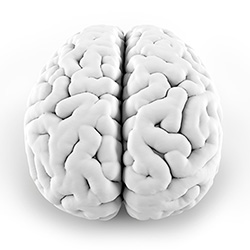
This is the 4th article in our series on the brain, memory, and dementia. This article discusses the blood-brain barrier which protects the brain.
What is the Blood-Brain Barrier?
The blood-brain barrier prevents toxins and microorganisms from crossing from the blood stream into the tissue of the brain. At the same time, beneficial nutrients are capable of crossing this barrier. Generally, integrity of the blood-brain barrier is important and its compromise contributes to a number of neurodegenerative conditions.
Breaking Down Amyloid-Beta Plaque
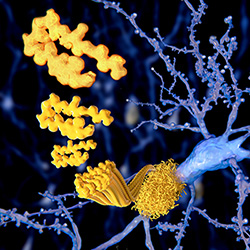 Alzheimer’s disease (AD) is a devastating fatal neurological condition that we’ve all heard or read about or have first-hand experience through our family connection. It is characterized by memory loss and abnormal behavior.
Amyloid beta plaque
This article discusses the role of amyloid beta plaque and the possibility of preventing or slowing its development. Formation of this plaque is the first event in the pathology of Alzheimer’s eventually resulting in nerve cell death.[1. Glenner GG. (1983). Alzheimer’s disease. The commonest form of amyloidosis. Arch Pathol Lab Med. Jun; 107(6):281-2.]
Is It Alzheimer’s or Something Else?
Deficiencies and conditions that can mimic Alzheimer’s Disease

We continue our series on brain health with this short discussion of nutrient deficiencies and a number of health issues which can cause symptoms similar to Alzheimer’s Disease. These should be checked for anyone showing signs of dementia. And we should all pay attention to getting a balanced diet with enough of these important nutrients, supplementing if necessary. Continue reading “Is It Alzheimer’s or Something Else?”
The Eye-Brain-Alzheimer’s-Dementia Connection
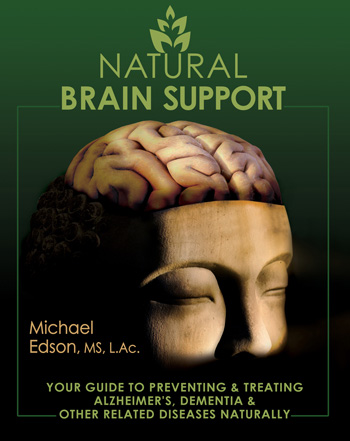 This is the first of a series of articles discussing how to maintain healthy brain function based on my newest book Natural Brain Support: Preventing and Treating Alzheimer’s and Dementia Naturally.
There is a strong connection between eye and brain health, and in fact the optic nerve is brain tissue and the retina was created prenatally from brain cells. Many of the nutrients discussed below are needed for healthy vision but also are found in the brain as well.
An eye doctor can often identify health issues because of observed changes in the retina. An eye doctor can detect hypertension, diabetes, multiple sclerosis, and even Alzheimer’s disease before it gets to the point that the specialists can identify them. Continue reading “The Eye-Brain-Alzheimer’s-Dementia Connection”