Best Foods for Eyes & Brain

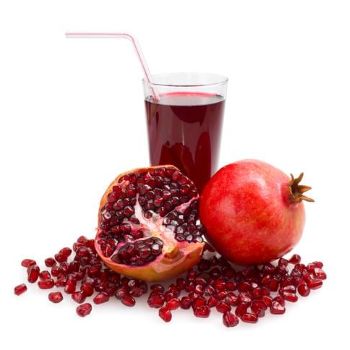
pomegranate juice for eyes and brain antioxidantThe food you eat supports your body, your eyes, and your brain.  And some foods, containing phytonutrients, enzymes, and vitamin and vitamin-like nutrients, are especially helpful. A common feature of these foods is that they contain a wealth of antioxidants.

The most powerful way to get these nutrients is through juicing. In the prevention section of our website, we discuss our favorite juicing recipes by eye condition, as well as the benefits of juicing. Continue reading “Best Foods for Eyes & Brain”
The Vision Diet: Food for Your Eyes

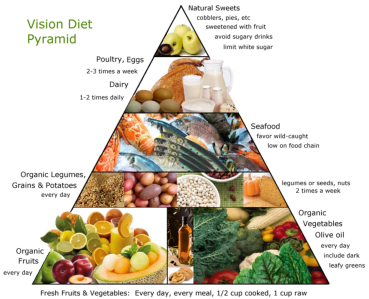
Vision Diet PyramidDiet for Better Vision and Overall Health

The standard Western diet tends to lack essential phytonutrients that support the health of the retina, as well as other nutrients such as adequate amounts of omega-3 fatty acids and a wide range of amino acids, minerals, vitamins, and vitamin-like nutrients. The standard diet features processed foods, non-whole grains, fats, sugars, and some types of meat that may aggravate inflammation in the body. Inflammation is an underlying cause, or sometimes a direct cause, of many health issues, such as arthritis. Inflammation also harms vision health.

We recommend an anti-inflammation diet based on a combination of the Mediterranean Diet and the Alkalizing Diet.

Dietary Guidelines

  • A well-balanced diet, combined with good eating habits, promotes the best possible absorption of nutrients.
  • Avoid foods containing AGEs. AGEs are biochemical compounds that form naturally within the body through enzyme reactions involving sugars, proteins, fats, or nucleic acids. If too-high levels of AGEs form, they cause oxidative damage and inflammation. AGEs are found in some foods and are formed by cooking these foods. High-heat methods of cooking meat and cheese, such as grilling, searing, roasting, and frying, hasten the formation of additional AGEs. High-fat, aged cheeses contain more AGEs than low-fat cheeses (low-fat mozzarella, cheddar, and cottage cheese). Other foods high in AGEs include butter and processed foods such as cream cheese and mayonnaise. Oils and nuts contain lower quantities.
  • Favor an Anti-inflammatory diet. Tight control of blood glucose levels and hypertension is essential to slow and manage inflammation. There are several treatments available to help control it.
  • Limit or avoid sugar and artificial sweeteners. It is thought that excess sugar in one’s diet results in too much glucose making its way to the eyes, making it difficult for the eyes to utilize all the glucose. This may result in more dry eye symptoms and can cause diabetes. 54.3% of diabetics suffer from dry eye syndrome. Know what you are putting into your body.
  • Avoid toxic fats in commercial red meats, dairy products, fried foods, and hydrogenated oils such as margarine and shortening. These fats interfere with the proper metabolism of essential fatty acids in the body and, indirectly, cause dry eye syndrome.
  • Gut issues may contribute to dry eye. Try taking a high-quality probiotic to replenish the healthy flora in your gut, particularly if you have been on long-term antibiotics. Once your symptoms are under control, try switching from probiotics in pill form to real food ferments such as sauerkraut, pickles, miso, kefir, kombucha, kimchi, yogurt, etc. They provide a greater variety of beneficial bacteria than can be found in a pill. And they contain many vitamins and minerals.

Suppose inflammation is a contributing factor in an individual’s dry eye syndrome. In that case, it is imperative to look at the possibility that your gut may be the source of the inflammation. Leaky gut syndrome and imbalances in gut flora may also be contributing. Chronic inflammatory conditions have been tied to dry eye syndrome.

Nutrition and Vision

The eyes need essential nutrients to maintain healthy vision, second only the needs of the brain. Macular degeneration is often related to the retina “starving” for essential nutrients. Glaucoma, cataracts, macular edema, epiretinal membrane, retinal tears and detachments, and other eye issues have underlying causes. Major contributing factors to eye disease are often connected to a poor diet, lack of exercise, chronic stress, and underlying inflammatory conditions. Other factors can come into play, such as genetics, being highly myopic, and exposure to environmental toxins. This represents an opportunity to take charge of our healthy vision and overall health. The body is always trying to heal, so the focus is on taking actions that support the body’s natural healing process.

The Vision Diet: A Plant-Based Diet

We believe that the Vision Diet is a healthy diet for both eyes and body. The diet consists mainly of plant-based foods, along with small portions of preferably organic, consciously produced animal products, such as free-range, grass-fed meats. Vegetarians on a strict plant-based diet need to routinely check their levels of certain nutrients that are difficult or not possible to obtain solely from plants, particularly vitamin B12, zinc, and iron.

The Vision Diet incorporates the following principles:

    1. The Alkalizing Diet avoids the foods that cause inflammation, including high amounts of processed food, refined carbohydrates, poor-quality oils, and high levels of salt.
    2. The Mediterranean Diet, for example, is alkaline and avoids processed and refined foods; it is rich in vegetables and fruit.
    3. Balanced omega-3 and omega-6. Minimize carbohydrates, particularly all refined carbohydrates (white flour, pasta, white bread and rice, and sugar).

Learn more about the Vision Diet.

Juicing

Make healthy juice in your kitchen. Choose at least four to six fruits and vegetables. Do not use too many carrots and beets due to their natural sweetness. Remember to include healthy ingredients, such as ginger, parsley, beets, cabbage, carrots, endive, green-leafy vegetables, chlorophyll, wheatgrasses, and berries. Favor organic produce. Do not use cold fruit or ice. Cold arrests the digestive fires. In the winter, you may have warm soups or stews instead.

Supplement Recommendations

Advanced Eye and Vision Support Formula – our whole food, organic, GMO free formula with lutein and zeaxanthin.

Dr. Grossman’s Meso Plus Retinal Support and Computer Eye Strain Formula with Astaxanthin 90 vcaps – with lutein, zeaxanthin, mesozeaxanthin, and astaxanthin

Dr. Grossman’s Whole Food Organic Superfood Multi-Vitamin 120 Vcaps -our organic, whole food, GMO-free multivitamin

Dr. Grossman’s Bilberry/Ginkgo Combination 2oz (60ml) – strengthens blood vessels and capillaries and are potent antioxidants.

Dr. Grossman’s Premium Turmeric Vcaps (Organic) – and GMO-free. Helps reduce inflammation.

ReVision Formula (wild-crafted herbal formula) 2 oz – wild-crafted herbal formula basic on classic Chinese formulation to promote healthy circulation and energy flow in the eyes and body.


Homeopathy and the Eyes

homeopathic eyedrops

Looking at the eyes from a holistic, integrated perspective gives us the best opportunity to maintain our whole body, eye, and brain health. Whole body means the relationship between the mind, body, emotions, and spirit. This perspective has been the good health foundation for thousands of years in Chinese and ayurvedic medicine, as well as more recent holistic practices such as homeopathy and functional medicine. Continue reading “Homeopathy and the Eyes”

Sedentary Life Has Many Hazards

sedentary life styleYour Best New Year’s Resolution is to Go For a Walk

The World Health Organization estimates that 3.2 million people worldwide die prematurely each year due to a sedentary lifestyle.  In contrast, an active lifestyle improves one′s general health and decreases the risk of chronic diseases.

Sitting long hours in many typical work scenarios increases the risk of cardiovascular disease and metabolic health risks. This sedentary time may have musculoskeletal and/or cognitive impacts on office workers. Sitting (with a relatively low energy expenditure) has the potential to result in a decline of cognitive function over time.  It is known that exercise improves cognitive function.[1. Olanrewaju O, Stockwell S, Stubbs B, Smith L. (2020). Sedentary behaviors, cognitive function, and possible mechanism in older adults: a systematic review. Aging Clin Exp Res. Jun;32(6):969-984.] Continue reading “Sedentary Life Has Many Hazards”

Aducanumab’s Serious Side Effects

brain diseaseThe FDA’s approval of aducanumab as a treatment for Alzheimer Disease in June, 2021 was controversial.  There were a number of known side effects and new information from clinical trials reveals possible serious consequences. Acucanumab was developed by Biogen and is being sold by Acumen as a $56,000-a-year treatment for Alzheimer’s. Continue reading “Aducanumab’s Serious Side Effects”

The Sun and Your Eyes: Enemy or Friend?

Does Sunlight Danger Outweigh the Benefits?

Many studies demonstrate that exposure to sunlight provides protection to diseases such as hypertension, diabetes, multiple sclerosis, and a variety of cancers, and avoiding sunlight may influence their progression.[1. Razzaque MS. (2018). Sunlight exposure: Do health benefits outweigh harm? J Steroid Biochem Mol Biol. Jan;175:44-48.]  It has been thought that these protections are due only to vitamin D, whose creation requires sunlight, but researchers are now reporting that circadian clock influencing, immune response modification, and nitric oxide, melatonin, and serotonin formation are involved as well.[2. Van der Rhee HJ, de Vries E, Coebergh JW. (2016). Regular sun exposure benefits health. Med Hypotheses. Dec;97:34-37.] In fact, researchers are finding that the risk of skin cancer increases with irregular patterns of sun exposure, while regular patterns convey relatively lower risk.  This is the difference between getting sunburned versus a brisk daily walk in the sunlight.

But too much sunlight is harmful to both eyes and skin. We know that getting sunburned increases skin cancer risk. Our vision is also directly negatively impacted by the sun and ultraviolet radiation (UVR), as well as blue light from computer screens. Continue reading “The Sun and Your Eyes: Enemy or Friend?”

Mitochondria: Essential Powerhouse for Brain & Vision

Cellular organelles called mitochondria produce energy.

Why are mitochondria essential to your health and well-being?

Mitochondria are the energy batteries of our cells. They are tiny organelles within most cells of the body that provide respiration and energy. Low metabolism develops in the brain as we age and is noticeable in brain regions where mitochondrial structure has changed. [1. Hirai K, Aliev G, Nunomura A, Fujioka H, Russell RL, et al. (2001). Mitochondrial abnormalities in Alzheimer’s disease. J Neuro-sci. May 1; 21(9):3017-23.] The mitochondria attempt to replace themselves whenever they are damaged and destroyed. However, mitochondrial biogenesis can be disrupted. Mitochondrial disease, oxidative stress and free radical damage, drinking alcohol, eating a poor diet, and heavy metals can harm the mitochondria. Research on links between mitochondrial dysfunction and Alzheimer’s Disease are underway. The good news is that lifestyle and natural supplements can support healthy mitochondria functioning. Continue reading “Mitochondria: Essential Powerhouse for Brain & Vision”

The Glycemic Index – A Key Health Factor

What is the Glycemic Index and Why Is It Important

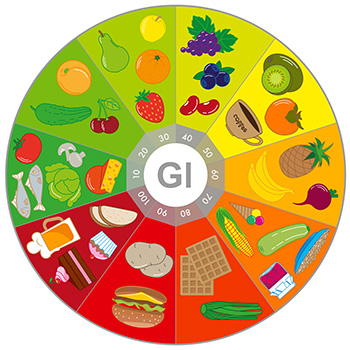
glycemic indexThe Glycemic Index represents the relative rise in the blood glucose level two hours after consuming food. It is a system that ranks foods on a scale from 1 to 100 based on their effect on blood-sugar levels.

Why Is It Important

The current American diet contains excessive sugar, refined carbohydrates, poor oils, and processed foods resulting in an epidemic in obesity, autoimmune diseases, diabetes, cancer, eye disease, and even dementia related disorders.

High Glycemic Index Foods

These include all refined carbohydrates  and sugars, white foods including white rice, bread, pasta, sugar, most commercial cereals, instant oatmeal, baked potato, corn.

Glycemic Index & Foods

Low glycemic index (GI of 55 or less): Most fruits and vegetables, beans, minimally processed grains, pasta, low-fat dairy foods, and nuts.

Moderate glycemic index (GI 56 to 69): White and sweet potatoes, corn, white rice, couscous, breakfast cereals such as Cream of Wheat and Mini Wheats.

High glycemic index (GI of 70 or higher): White bread, rice cakes, most crackers, bagels, cakes, doughnuts, croissants, most packaged breakfast cereals.

A high glycemic diet is pro-inflammatory which coincides with an acidic diet. An alkaline diet is anti-inflammatory.

In general, it is helpful to maintain a strong alkaline diet further described in detail in our book “Natural Eye Care: Your Guide to Healthy Vision and Healing.”  The keto diet can be considered for its strong anti-inflammatory benefits, or the paleo diet,[1. Shen Y, Kapfhammer D, Minella AM, Kim JE, Won SJ, et al. (2017). Bioenergetic state regulates innate inflammatory responses through the transcriptional co-repressor CtBP. Nat Commun. 2017;8(624).] although there are potential long-term issues, also described in the diet chapter.

Your gut helps to manage levels of inflammation and therefore, keeping your gut healthy with the right foods is essential to keeping your brain healthy and reducing your risk of brain inflammation.

Top Anti-Inflammatory Foods. Avocados, broccoli, cocoa (dark chocolate 85 percent or higher), green, leafy vegetables, nuts (in particular hazelnuts and walnuts due to their high levels of brain-protecting, inflammation reducing vitamin E and antioxidants). Oily fish such as wild salmon, trout, tuna as well as sardines, herring, anchovies, and mackerel have strong anti-inflammatory properties.

Food Sources for vegetarians: chia seeds, flax seeds, walnuts, as well as algae.

Avoid sugar and refined carbohydrates (particularly all white, refined foods). Low carbohydrate diets how been shown to reduce inflammation. Refined carbohydrates have a high glycemic index. Research has shown that just a single meal with a high glycemic load can impair memory in both children and adults. The effect on memory may be due to inflammation of the hippocampus, a part of the brain that affects some aspects of memory, as well as responsiveness to hunger and fullness cues.[2. Beilharz JE, Maniam J, Morris MJ. (2015). Diet-Induced Cognitive Deficits: The Role of Fat and Sugar, Potential Mechanisms and Nutritional Interventions. Nutrients. Aug 12;7(8):6719-38.] [3. Volek JS, Fernandez ML, Feinman RD, Phinney SD. (2008). Dietary carbohydrate restriction induces a unique metabolic state positively affecting atherogenic dyslipidemia, fatty acid partitioning, and metabolic syndrome. Prog Lipid Res. Sep;47(5):307-18.] One study found that elderly people who consumed more than 58 percent of their daily calories in the form of carbohydrates had almost double the risk of mild mental impairment and dementia.[4. Roberts RO, Roberts LA, Geda YE, Cha RH, Pankratz VS, et al. (2012). Relative intake of macronutrients impacts risk of mild cognitive impairment or dementia. J Alzheimers Dis. 2012;32(2):329-39.]

Have a Healthy Diet

  • Avoid vegetable oils, sodas and other sugary drinks (including anything with artificial sweeteners such as Aspartame (NutraSweet®, Equal®), Saccharin (Sweet’N Low®, SugarTwin®), Acesulfame K (Sunett®, Sweet One®,)  Sucralose (Splenda®). For an excellent natural sweetener, try stevia.
  • Also avoid trans fatty acids such as those found in most margarines and many fast foods, frosting, crackers and chips.
  • Limit your intake of saturated fats (cheese, milk, butter and other dairy products).

Recommended Products

Advanced Eye and Vision Support Formula – general whole-food-based nutrients for vision wellness.

Dr. Grossman’s Meso Plus Formula with Astaxanthin – essential nutrients for retinal and macular health.

Revision wild-crafted Formula – based on classic Chinese medicine formula for vision wellness.

Learn more about vision and brain wellness diets and how to care for vision conditions with our comprehensive guides

Natural Eye Care: Your Guide to Healthy Vision and Healing

Natural Brain Support: Your Guide to Preventing and Treating Alzheimer’s, Dementia and Other Related Diseases