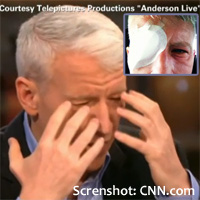
Corneal Flash Burn Temporarily Blinds CNN Reporter Anderson Cooper

anderson cooper flash blindedAnderson Cooper, veteran reporter for the news channel CNN, was temporarily blinded by a flash corneal burn from excessive sun exposure while researching a news story in Portugal. He was not wearing sunglasses. The reporter’s eyesight returned after 36 hours.

The host of Anderson Cooper 360 and Anderson Live, Anderson Cooper spent time on a boat on a sunny, windy day without sunglasses. That night, he awoke with eye irritation and burning eye pain. “It [felt] like my eyes [were] on fire, my eye balls.” Then he discovered he was blinded. Cooper sought medical attention.

Continue reading “Corneal Flash Burn Temporarily Blinds CNN Reporter Anderson Cooper”
No Eye Surgery Infections Yet from Fungal Meningitis Drug Contamination

sterile injectionThere have not been any reported cases so far of eye infection in eye surgery patients who received medications from the New England Compounding Pharmacy (NECC); however, other types of patients have contracted fungal meningitis. Several NECC products were recalled after patients receiving drug injections for back pain became ill. More than 400 people in 15 states developed fungal infections that have been traced to products from NECC, and more than 29 people have died.

The compounding pharmacy is supposed to ship sterile products that are free of bacteria, fungi, viruses, and contaminants. Investigators found contamination that was sometimes even visible to the naked eye. Compounding pharmacies operate in a legal gray area that includes both state and federal laws. Pharmacies are regulated by state pharmacy boards, but the FDA steps in when a significant situation arises. Sometimes the federal Continue reading “No Eye Surgery Infections Yet from Fungal Meningitis Drug Contamination”

Most School Children’s Eye Injuries Are Sports Related

basketball requires eye protectionDid you know that the leading cause of blindness in children is eye inquires, and that most eye injuries in schoolchildren are sports-related? According to The National Eye Institute, the damage from eye injuries can be temporary or, or they can lead to permanent loss of vision.


School children eye injury statistics:

  • Most eye injuries in school-aged children are from sports.
  • Baseball players under age 15 get the most sports-related eye injuries.
  • Basketball records the most eye injuries in young adults aged 15 through 24.

Eye protection is key to preventing sports-related eye injuries. The non-profit organization Prevent Blindness America has named September as Sports Eye Safety Awareness Month.

Continue reading “Most School Children’s Eye Injuries Are Sports Related”

Baby Boomer Natural Eye Care in the 21st Century

As the “Baby Boomer” generation in the United States approaches their 60’s and beyond, the incidence of eye disease in this aging population will rise. Eye problems become more prevalent as an individual ages. What are the most common eye diseases in older people? How can eye geriatric eye disease be prevented and addressed naturally? And what does Baby Boomer natural eye care look like?

Macular Degeneration

A major reason for visual impairment and blindness in adults aged 50+ is Macular Degeneration, also known as ARMD (Aged-Related Macular Degeneration). Vision in the center of the visual field is impaired, but peripheral vision remains. People with macular degeneration have difficulty writing, driving, recognizing faces and reading. Symptoms include:

  • Colors look dim
  • Words appear blurred or difficult to read
  • Straight lines look wavy
  • Dark or blank areas block the center of your vision
  • Distinct shapes are blurry
  • Fog in the center of your vision

Anyone with any of these symptoms should Continue reading “Baby Boomer Natural Eye Care in the 21st Century”

Firework Pose Serious Eye Injury Risk

The American Academy of Ophthalmology (AAO) reminds Americans that there are over 9,000 fireworks related injuries each year.  Of these injuries, almost half affect the head and nearly 30% of those are injuries to the eyes.  One quarter of these fireworks related injuries leave victims with permanent vision loss or blindness.

It is especially important to note that children age fifteen and younger suffer half of all fireworks eye injuries.  Sparklers, which can cause third degree burns, can be especially dangerous for young children.  Bottle rockets are considered the most dangerous fireworks.

The month of July has been established as “Eye Safety Awareness Month.”  The AOA offers the following safety tips:

  • Never let children play with fireworks of any type.
  • View fireworks from a safe distance: at least 500 feet away, or up to a quarter of a mile for best viewing.
  • Respect safety barriers set up to allow pyrotechnicians to do their jobs safely.
  • Leave the lighting of fireworks to trained professionals.
  • Follow directives given by event ushers or public safety personnel.
  • If you find unexploded fireworks remains, do not touch them. Immediately contact your local fire or police departments.
  • If you get an eye injury from fireworks, seek medical help immediately.

Source: AOA Press Release

Eye Infections Increase In Summer Floods: Precautions and Tips

flood
Image via arkansas.gov

In light of the recent flooding in the Midwest that has disrupted lives and endangered public health, the American Optometric Association (AOA) has published a list of reminders and precautions related to eye care, particularly for those contact lens wearers out there.  Their particular concerns involve the proliferation of water born pathogens such as amoeba, parasites, bacteria and viruses which can be responsible for eye infections.  Eye doctors have seen an increase in eye infections in areas of flood stricken Iowa.


These precautions and recommendations are also great reminders for contact wearers who are traveling or outside enjoying summer recreation and may not have easy access to fresh water and clean facilities.

According to the AOA:

  • Avoid contact with flood waters. If contact cannot be avoided, remove contact lenses prior to exposure to water. If contact lenses are unavoidable, wear goggles.
  • Don’t assume treated tap water is safe. Avoid using tap water to wash or store contact lenses or contact lens cases.
  • Always wash and dry hands before touching the eye or handling contact lenses. Use hand disinfectant frequently.
  • Use only sterile products recommended by your optometrist to clean and disinfect lenses. Saline solution and rewetting drops are not designed to disinfect lenses.
  • Only fresh solution should be used to clean and store contact lenses. Never re-use old solution. Contact lens solution must be changed according to the manufacturer’s recommendations, even if the lenses are not used daily.
  • Rub and rinse the surface of the contact lens before storing using a Food and Drug Administration (FDA)-approved contact lens disinfecting solution.
  • Store lenses in the proper lens storage case and replace the case at least every three months. Clean the case after each use by rubbing each well for at least 5 seconds, rinse with contact lens disinfecting solution, then wipe with a clean cloth. Store the case upside down with caps off between cleanings.
  • Contact lens wearers who regularly sleep in contact lenses as prescribed should refrain from doing so if exposed to water
  • Replace lenses using your doctor’s prescribed schedule.
  • Never put contact lenses in the mouth or moisten them with saliva, which is full of bacteria and a potential source of infection.
  • Never use contacts that have not been prescribed by an eye doctor. Never wear lenses prescribed for another person. Contact lens wearing is not an option for everyone; consult with an optometrist to see if contact lenses are an appropriate choice for vision correction.

Symptoms to watch for:

If you experience any of the following conditions, contact your optometrist immediately:

  • Red and irritated eyes lasting for an unusually long period of time after lens removal
  • Pain in and around the eyes especially if it progressively worsens
  • Increased sensitivity to light
  • Sudden blurred or fuzzy vision
  • Excessive eye tearing or discharge

SOURCE: AOA

Protect Children’s Eye With Safe Gift Choices

As the holidays get closer, make sure that the gifts you give the children in your life do not endanger their eyes.

According to the U.S. Consumer Product Safety Commission toy-related injuries are on the rise; 186,000 kids under 15  went to the emergency room after toy-related incidents last year.

Prevent Blindness America offers the following tips and warnings specifically related to protecting children’s eyes:

  • Avoid toys that shoot or include parts that fly off.
  • Inspect toys for sturdiness. Your child’s toys should be durable, with no sharp edges or points. The toys should also withstand impact.  Dispose of plastic wrapping material immediately on toys as they may have sharp edges.
  • Make recommendations to family members and friends about gifts that you feel are appropriate for your child.  Be diligent about inspecting these gifts before allowing your child to play with them.
  • Inspect all toys before purchasing.  Monitor toys that your child has received as gifts to make sure they are appropriate for your child’s age and developmental level.
  • Gifts of sports equipment should always be accompanied by protective gear (such as a basketball along with eye goggles or a face guard with a new batting helmet for baseball or softball).

Contact Lenses: Potential Problems With Long-Wearing Silicone Hydrogels

contact lens
image by jdurham

Researchers have found that people who wear silicone hydrogel (SH) contact lenses are likely to suffer corneal staining (mild abrasions of the eye), but that these situations rarely turn into more serious corneal infiltrative events.  Corneal infiltrates are marked by eye discomfort, feeling like there is something in your eye, light sensitivity, and conjunctival hyperemia.

Factors likely to cause these more serious corneal infiltrates include smoking and the presence of bacteria on the lens.  Smoking is a factor in the development of many other eye diseases as well – including everything from dark circles under your eyes to macular degeneration.

Silicone hydrogel lenses are purported to allow more oxygen to the eye and are designed for long term use (up to 3o days in some cases).  SH lenses on the market include:  Ciba Focus Night & Day, Acuvue Oasys, and Bausch and Lomb’s PureVision lenses.

Source: Medscape

Careful With Your Eyes, Guys: Males Likelier to Suffer Eye Injuries

man on ladder
Image courtesy of columbiabasin.jobcorps.gov

A survey by the American Academy of Ophthalmology and the American Society of Ocular Trauma finds that men are three times as likely to suffer from eye injuries than women are.

Each year, 2.5 million American experience injuries of the eye.  Almost 75% of those injuries happen to men and over half of all of the injuries occur at home.

Highlighted of the findings from the annual Eye Injury Snapshot include:

– One quarter of the eye injuries that happened at home were associated with play or sports
– Another 25 percent were due to home repair or power tools.

Source: aao.org