
Iritis, the most common form of uveitis, is more prevalent than most people realize. What are the symptoms of this eye condition? What can you do to prevent and manage all types of uveitis? When does uveitis signal an underlying condition?
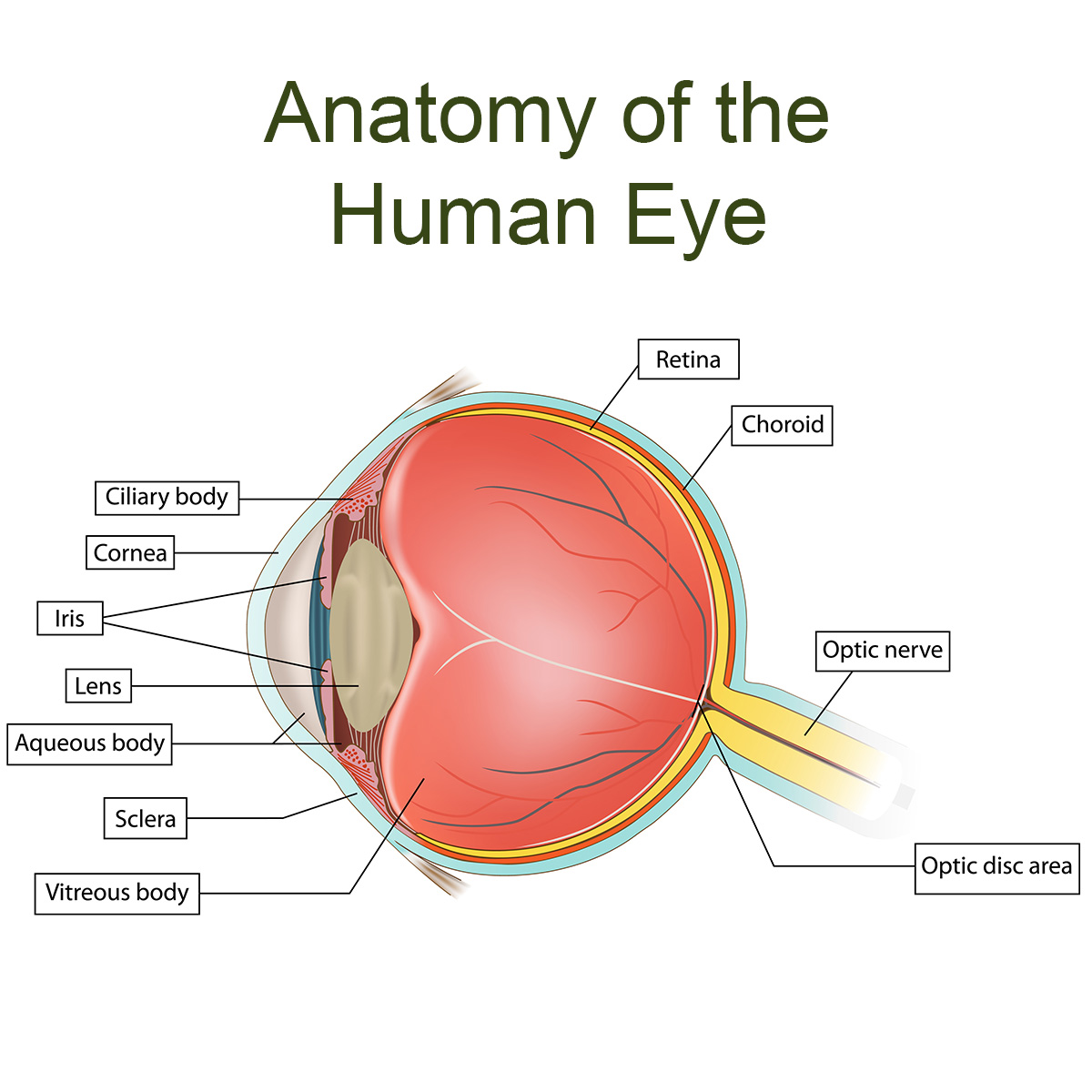
Uveitis is an inflammation of the uvea. The uvea is made up of the iris, the colored part of the eye; the ciliary body, which makes the fluid that fills the eye and flexes the eye lens; and the choroid, the layer beneath the retina.
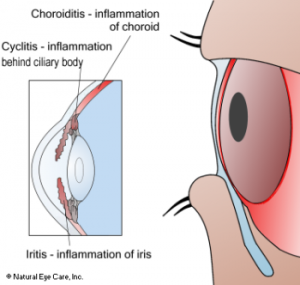 Types of Uveitis
-
- Iritis or anterior (front) uveitis. Anterior uveitis can involve the iris, ciliary body, cornea, and sclera. It is the most common type of uveitis and accounts for about 50–60% of all uveitis cases in special care clinics.[1. Albert, D.M., Jakobiec, F.A., editors. (2000). Principles and Practice of Ophthalmology. 2nd ed. Philadelphia, PA: WB Saunders Co.] Sixty-five percent of cases are related to another health condition. The remaining 35% are idiopathic (no discernible relationship to another health problem).
- Cyclitis or intermediate uveitis. Intermediate uveitis is the least common type of uveitis, involving the area between the ciliary body and the back of the eyeball. It has been found to account for 3–17% of uveitis around the world.[2. Ibid. Albert. (2000).]
- Choroiditis or posterior (back) uveitis. This category accounts for only 10–40% of uveitis cases. However, more visual loss results in these cases than from other uveitis forms. Such vision loss may be due to cystoid macular edema, retinal detachment, subretinal fibrosis, or optic nerve damage.[3. Jabs, D.A., Akpek, E.K. (2005). Immunosuppression for posterior uveitis Retina, Jan; 25(1):1-18.3.] Up to 50% of patients with posterior uveitis have an associated systemic disease.
 When eye injuries occur, eye first aid can prevent blindness and vision loss. Eye injuries can be inconsequential or life-changing. Know what to do with each type of eye injury. Also learn how to prevent injuries to the eyes. Most eye injuries can be prevented with protective eyewear. You should keep certain items on-hand in case of eye injuries.
 Eye washes provide natural relief for irritated, inflamed eyes. Natural Eye Care recommends eye washes for a wide variety of eye conditions. Good lid hygiene can both soothe and prevent eye irritation.
 An enzyme acts as a catalyst to increase the rate of a chemical reaction. Enzymes are proteins. Scientists have named 3,000+ different enzymes, but perhaps 50,000 additional enzymes may exist. Enzymes all have specific functions that result in biochemical reactions. For example, certain enzymes are involved in the absorption of oxygen and production of energy; other enzymes help nutrients get into the cells.
 Did you know that the leading cause of blindness in children is eye inquires, and that most eye injuries in schoolchildren are sports-related? According to The National Eye Institute, the damage from eye injuries can be temporary or, or they can lead to permanent loss of vision.