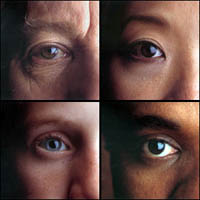
Firework Pose Serious Eye Injury Risk

The American Academy of Ophthalmology (AAO) reminds Americans that there are over 9,000 fireworks related injuries each year.  Of these injuries, almost half affect the head and nearly 30% of those are injuries to the eyes.  One quarter of these fireworks related injuries leave victims with permanent vision loss or blindness.

It is especially important to note that children age fifteen and younger suffer half of all fireworks eye injuries.  Sparklers, which can cause third degree burns, can be especially dangerous for young children.  Bottle rockets are considered the most dangerous fireworks.

The month of July has been established as “Eye Safety Awareness Month.”  The AOA offers the following safety tips:

  • Never let children play with fireworks of any type.
  • View fireworks from a safe distance: at least 500 feet away, or up to a quarter of a mile for best viewing.
  • Respect safety barriers set up to allow pyrotechnicians to do their jobs safely.
  • Leave the lighting of fireworks to trained professionals.
  • Follow directives given by event ushers or public safety personnel.
  • If you find unexploded fireworks remains, do not touch them. Immediately contact your local fire or police departments.
  • If you get an eye injury from fireworks, seek medical help immediately.

Source: AOA Press Release
Diabetics Know Lifestyle Changes Improve Health, But Behaviors Are Hard to Change

Diabetes & Lifestyle changes
Image via cancer.gov

Changes in lifestyle are usually the most important way that individuals with diabetes can control their conditions.  Most people seem to know this, but a new survey shows that many diabetics do not follow that advice.

A study called SHIELD (The Study to Help Improve Early Evaluation and Management of Risk Factors Leading to Diabetes), which was presented at the annual meeting of the American Diabetes Association, surveyed nearly 4,000 people with type 2 diabetes.  In response to questions about the link between diabetes and obesity, 87% said they knew excessive weight contributed the disease, but only 70% of respondents reported trying to lose weight in the preceding year.  Only a third of those surveyed had managed to maintain their target weight for longer than six months.  Almost one-fifth of those studied (17%) said they preferred to take medication to control their conditions rather than try diet and exercise.

Source: WebMD

At Natural Eye Care, we recommend that those with diabetes and the related condition diabetic retinopathy manage their condition with proper lifestyle habits, dietary changes, nutritional supplementation, and exercise.  We also recommend this approach to people with a host of other eye conditions including macular degeneration and glaucoma.  When there is something wrong with your eyes, it is so rarely just about the eyes themselves – so often the eyes are indicating that there is an issue affecting the rest of the body as well. For example, glaucoma has been linked to cardiovascular deaths and Alzheimer’s disease.


Artichokes, Pecans, and Blueberries All Protect Against Macular Degeneration

artichoke
Image via USDA

Can artichokes, blueberries and pecans save your sight?

A study out of Brigham Young University and Weill Medical College of Cornell University showed that the antioxidants found in these common foods can impede the onset of age-related blindness.  Antioxidants disrupt the link between two processes within the retina that cause macular degeneration.

Learn more about this study, as published in the Journal of Biological Chemistry and other studies related to macular degeneration at our website.

Pecans

Research published in the Journal of Nutrition shows that pecans are a good source of antioxidants.  Better yet, the study shows that the human body is capable of absorbing the antioxidizing compounds by eating the nut itself.

Source: www.lef.org

Learn more about how particular foods can help you beat eye disease.

Failing Eyesight Linked to Increased Fall Risk In Seniors

Failing eyesight is a key factor in increased fall risk in older adults.

A study out of the UK shows that 270,000 individuals over age 60 who have fallen in the last two years can blame poor vision.  This research also shows that many older adults in the UK do not take advantage of the free vision tests to which they are entitled.

An organization called Age UK is hoping to raise awareness about the need for regular vision exams and about the correlation between accidents and eye conditions that hinder sight.  Source: Medical News Today

Prevention is the best medicine when it comes to warding off potentially blinding conditions like glaucoma and macular degeneration.  Learn more about our Vision Wellness Protocol.

Glaucoma Treatment: A Holistic Approach

Glaucoma Treatment
Image via nei.nih.gov

Ideally, doctors look at patients in a holistic manner, rather than just a collection of symptoms. At Natural Eye Care, when we talk to glaucoma patients, we are concerned about more than their intraocular pressure measurements.  We want to talk about diet, lifestyle habits, and stress levels.  We want to get an idea of the whole person, and understand their overall health. Learn more about these complementary approaches to glaucoma management.

An article appearing at the site EyeWorld by Tony Realini, M.D. describes how many eye doctors take an “event-based approach” to managing glaucoma patients’ care.  Though he posits that there is still validity in this approach, he points out that it does not help determine the rate of progression of an individual’s condition.

According to one source quoted in Realini’s commentary, Claude F. Burgoyne, M.D., senior scientist and research director, Optic Nerve Head Research Laboratory, Devers Eye Institute, Portland, Oregon says, “Determination of the rate of progression can help us to identify those patients at the highest risk of vision loss,” he said. “A patient’s current rate of progression may inform us about future progression rates. If we then factor in life expectancy, we can begin to assess the risk of vision loss within a given patient’s lifetime.”

Dr. Realini recommends that a combination of “data acquired from visual field tests, from optic nerve imaging devices, or a combination of both.”

Source: EyeWorld.org, “Evaluating rate of change in glaucoma”


Diabetes Experts and Eye Professionals Working Together

The American Optometric Association has played an active role in the Centers for Disease Control and Prevention (CDC) Division of Diabetes Translation (DDT) for over ten years.  Eye docs hanging out with diabetes specialists?  Of course.  Diabetic retinopathy, according to the National Institute of Health, affects “4.2 million—28.5%— of people with diabetes ages 40 years or older … and of these, 655,000—4.4% of those with diabetes—had advanced diabetic retinopathy that could lead to severe vision loss.”

W. Lee Ball, O.D., AOA Associate Director for Quality Improvement gave a presentation entitled “Working Together to Manage Diabetes: Development and Testing of a Comprehensive Checklist.”  Of the medical professionals across several fields who responded to a questionnaire regarding the efficacy of the checklist, 74% said they found it useful in a real-world clinical setting.  Source: News from the AOA

The AOA recommends that those interested in diabetes prevention, care and treatment visit: www.yourdiabetesinfo.org, an address that links you to a wealth of diabetes information from the National Diabetes Education Program.

For our unique perspective on holistic approaches to dealing with diabetic retinopathy, visit our website.

Optic Glioma / Optic Nerve & Growth Factor Eye Drops

Optic Gliomas Respond to Growth Factor Eye Drops

Optic gliomas are rare tumors of the brain targeting one or both optic nerves or location where the two optic nerves cross each other, the optic chiasm.  This condition is not known to get better naturally, although nerve growth factor eye drops could help in milder causes.  So far, the results are limited and more research is needed.

Nerve growth factor is  is a neuropeptide (a small protein-like molecule essential for nerve cell communication) which has the capacity to maintain and regulate the growth and integrity of nerve cells, or neurons.  Administered in the form of eyedrops it has been used in the treatment of macular degeneration, glaucoma, and various optic nerve conditions.

The study was  published in Neurorehabilitation and Neural Repair, involved a single 45 year old female with an optic gliomas and who also had optic nerve atrophy for some time. She was given the nerve growth eyedrop for 2 months and there was some improvement.  Two months after the treatment stopped her vision seemed to get worse.

The study conclusion was that this type of eye drop might yield promising results in the future. There were no noted side effects as a result of the treatment.

Source: Neurorehabilitation and Neural Repair, February 22, 2011

Optic Nerve Helped by Growth Factor Eye Drops

Findings of another study  using nerve growth factor are promising for treating optic nerve caused blindness and  for spurring regeneration in the spinal cord and brain. The researchers reported that they’d  found a previously unknown, naturally occurring,  growth factor that stimulates regeneration in damaged optic nerves.

The growth factor is called a calcium binding protein called oncomodulin.  When researchers studied its effects on in-vitro nerve cells from the retina, and while other already-known growth factors were included, optic nerve cells grew by two times.  Oncomodulin was more potent than the other growth factors.

More Nerve Regeneration

Animal research was also performed and it was found that sustained-released oncomodulin (supplied from tiny capsules) increased nerve regrowth by 5-7 times.  A drug that helps nerve cells respond to oncomodulin was also given to the lab rats.  The process apparently involves activating genes connected to nerve cell growth.

“Out of the blue, we found a molecule that causes more nerve regeneration than anything else ever studied,” said one of the study investigators. We expect this to spur further research into what else oncomodulin is doing in the nervous system and elsewhere.

The data are published in the May 14, 2011 online edition of Nature Neuroscience.

Learn more about nutrients that naturally support optic nerve health.


Conventional Glaucoma Medication Prices Increase by 25%

Glaucoma medicationWe’re eye experts, not economists, but we know that a 25% increase in the cost of medications taken to treat glaucoma over a five year period is significant.

A study published in Archives of Ophthalmology describes how the average yearly expenditure for glaucoma medication went from $445 in 2001 to $557 in 2006.

Source: Arch Ophthalmol, 2011

At Natural Eye Care, we offer alternative regimens that anyone interested in taking a holistic approach to health and wellness should consider.  Learn more about our complementary medicine recommendations for glaucoma patients and glaucoma suspects.


Glaucoma: The Difference Is In the Cornea

The corneas of people with glaucoma seem to exhibit different qualities than those who do not suffer from this condition.

A French study determines  that corneas of patients with glaucoma are more likely to be less elastic and lose their proper shape  than healthy corneas.  The researchers assessed the condition of almost 500 eyes with and without glaucoma and found that the eyes of patients with glaucoma tended to have a higher corneal resistance factor (CRF) and lower corneal hysteresis (CH) – both signs of poor corneal biomechanics.

Corneal resistance refers to the flexibility or none flexibility of the cornea – a higher factor means that the cornea is less flexible.  I higher factor means that the cornea is less flexible.

Corneal hysteresis refers to the ability of the cells comprising the cornea to  to absorb and scatter energy.   A lower hysteresis factor means that the cornea is less able to accomplish these tasks – which are important, among other things, for blocking damaging UV radiation and blue light.

Source: PCONSupersite

Learn more about glaucoma.

Eye Infections Increase In Summer Floods: Precautions and Tips

flood
Image via arkansas.gov

In light of the recent flooding in the Midwest that has disrupted lives and endangered public health, the American Optometric Association (AOA) has published a list of reminders and precautions related to eye care, particularly for those contact lens wearers out there.  Their particular concerns involve the proliferation of water born pathogens such as amoeba, parasites, bacteria and viruses which can be responsible for eye infections.  Eye doctors have seen an increase in eye infections in areas of flood stricken Iowa.


These precautions and recommendations are also great reminders for contact wearers who are traveling or outside enjoying summer recreation and may not have easy access to fresh water and clean facilities.

According to the AOA:

  • Avoid contact with flood waters. If contact cannot be avoided, remove contact lenses prior to exposure to water. If contact lenses are unavoidable, wear goggles.
  • Don’t assume treated tap water is safe. Avoid using tap water to wash or store contact lenses or contact lens cases.
  • Always wash and dry hands before touching the eye or handling contact lenses. Use hand disinfectant frequently.
  • Use only sterile products recommended by your optometrist to clean and disinfect lenses. Saline solution and rewetting drops are not designed to disinfect lenses.
  • Only fresh solution should be used to clean and store contact lenses. Never re-use old solution. Contact lens solution must be changed according to the manufacturer’s recommendations, even if the lenses are not used daily.
  • Rub and rinse the surface of the contact lens before storing using a Food and Drug Administration (FDA)-approved contact lens disinfecting solution.
  • Store lenses in the proper lens storage case and replace the case at least every three months. Clean the case after each use by rubbing each well for at least 5 seconds, rinse with contact lens disinfecting solution, then wipe with a clean cloth. Store the case upside down with caps off between cleanings.
  • Contact lens wearers who regularly sleep in contact lenses as prescribed should refrain from doing so if exposed to water
  • Replace lenses using your doctor’s prescribed schedule.
  • Never put contact lenses in the mouth or moisten them with saliva, which is full of bacteria and a potential source of infection.
  • Never use contacts that have not been prescribed by an eye doctor. Never wear lenses prescribed for another person. Contact lens wearing is not an option for everyone; consult with an optometrist to see if contact lenses are an appropriate choice for vision correction.

Symptoms to watch for:

If you experience any of the following conditions, contact your optometrist immediately:

  • Red and irritated eyes lasting for an unusually long period of time after lens removal
  • Pain in and around the eyes especially if it progressively worsens
  • Increased sensitivity to light
  • Sudden blurred or fuzzy vision
  • Excessive eye tearing or discharge

SOURCE: AOA