Computer Vision Syndrome: A Real Problem For 90% of Users

Computer vision syndromeComputer Vision Syndrome (CVS) is the hot topic today – at least it is at the US Government’s health news website www.healthfinder.gov.

Their article discusses whether or not computer eye strain is a serious condition.  At Natural Eye Care, we side with the American Optometric Association and believe that CVS is in fact a real problem for many people.

According to OSHA (Occupational Safety and Health Administration) computer vision syndrome shortened as CVS, is a variety of vision difficulties and eye problems that arise to due computer use, especially extended computer use, and especially with growing use of smartphones and mobile phones.  It is a type of repetitive strain disorder which growing rapidly worldwide.

Over a period of time, excessive computer use can have cumulative negative effects including the worsening of farsightedness, nearsightedness, astigmatism, eye-focusing disorders, and poor eye coordination. In addition, prolonged periods of sitting in the same position can cause neck and shoulder stiffness, as well as stress headaches, which can then cause jaw pain (referred to TMJ or temporomandibular joint).

Learn more about how to prevent computer eye strain.

If you are looking for suggestions on how to deal with the red, burning eyes, headaches, dizziness and other symptoms of computer vision syndrome, visit our website.

Artificial Retina Bringing Sight Back to Retinitis Pigmentosa Patients

CBS News is reporting that a implanted artificial retina has been approved by European health officials.

The device is offering partial sight to people who have become blind due to the condition retinitis pigmentosa.

The report describes how a man who had lost his sight completely at age 35 is now able to make out shapes and outlines.  As described by CBS: “The device starts with a tiny video camera mounted in a pair of glasses. A transmitter in the glasses sends the images to chip implanted on the back of the damaged eye. There, 60 electrodes send the image along the optic nerve straight to the brain.”

Other Artificial Retina News

Scientists through the US Department of Energy are testing artificial retinas that they hope can restore partial sight to people who’ve lost their vision to the most common causes of blindness.

The Sylmar, Calif., company produced the devices for the U.S. Energy Department’s Artificial Retina Project. The department has been engaged in biological research since the atomic bomb tests of the 1950s raised fears of radiation poisoning.

The current version is being tested on 17 blind people in the U.S. and Europe, and more patients are being enrolled. At a retina conference in October, patients reported improvements in orientation and mobility. They were able to find a door from 20 feet away and to follow a line on the floor for 20 feet.

Meanwhile, researchers in the Energy Department’s National Laboratories are creating a third-generation artificial retina. Much smaller than its predecessors, the device will contain 200 or more electrodes on a thin, flexible film that curves to fit the shape of the retina. Human tests are scheduled to begin in 2011.

For more information, go to https://artificialretina.energy.gov/index.shtml


Napping Can Reduce Stress and Improve Heart Health

Nappint - heart diseaseStress is linked to a host of health problems including hypertension and the onset of glaucoma.  At Natural Eye Care we recommend that people concerned about their eye health and their overall health do whatever they can to reduce their stress levels including practicing yoga or tai chi, taking up a regular meditation practice, and taking walks in nature.

A new study in International Journal of Behavioral Medicine describes how a daily nap of at least 45 minutes reduces stress and helps lower blood pressure and promotes heart health.

Research involved 85 healthy college students.  Those who napped had significantly lower blood pressure than those did not sleep during the day. Source: www.healthfinder.gov

For more research on how to manage high blood pressure with integrative health approaches, visit our website.


Common Eye Complaints Can Indicate Other Diseases and Conditions

In my practice and at NaturalEyeCare.com we know that the eyes are the windows to the soul and windows that reveal the state of your overall health.

A new story over at Yahoo Health lists 14 different conditions that can be recognized by looking into your eyes.

The list includes Computer Vision Syndrome, also known as Computer Eyestrain. Red, burning eyes as well as blurred vision, dizziness, and trouble concentrating are all signs of eyestrain from excessive computer use.  Visit our pages on computer eyestrain for tips on how to prevent and treat it.

Blepharitis, or inflammation of the eyelids, also made this list because they say it can be linked to acne rosacea.  Inflammed eyelids can also be a sign of allergies and sensitivities to foods or the environment.  It can even be a reaction to certain prescription or over the counter drugs – see more on drugs that harm the eyes.

Dry eyes are the most common complaint brought to eye doctors.  They can be indicative of rheumatoid arthritis, diabetes (especially when the blood sugar is up), asthma, thyroid disease (lower lid does not move when blinking), lupus, and possibly glaucoma.  Dry Eye Syndrome itself can be treated with several natural remedies.

Connection between Glaucoma & Other Conditions

Glaucoma patients are more likely to suffer from and die from cardiovascular disease, diabetes, chronic obstructive pulmonary disease, asthma, Alzheimer’s disease, Parkinson’s disease, and accidents.

A study of over 300,000 people in Taiwan with and without glaucoma revealed that those with open-angle glaucoma were much more likely to be afflicted by comorbidities that adversely affect their quality of life.  Source: https://www.osnsupersite.com

Since we consider eye health to be a reflection of overall health, it makes sense that the health those with glaucoma would be compromised as well.  It’s not that eye disease is causing these other conditions; it may be that both glaucoma and the other conditions are just the outward signs that a person is unwell.


Free Radicals May Help the Heart (But Don’t Toss Your Antioxidants!)

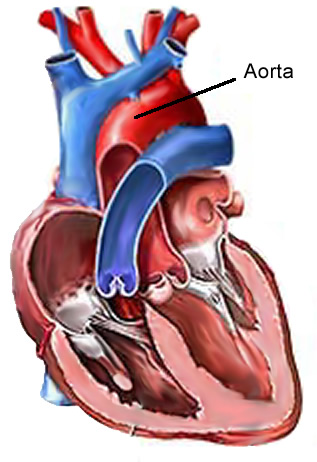
Free Radicals - Heart HealthFree radicals might be a good thing?

At Natural Eye Care, we extol the benefits of antioxidants because they fight the free radicals that lead to oxidation, which in turn cause aging: skin changes such as the appearance wrinkles, and ocular changes, including the development of cataracts and macular degeneration.

Your eyes love antioxidants like those found in bilberry (a close relative to the blueberry) and in high quality supplements.

And yet, a new study published in The Journal of Physiology (online 28 February 2011) describes how free radicals are actually essential to the healthy functioning of the heart.

It is true that high levels of free radicals can lead to heart disease, but the heart does need some quantities of free radicals to help it deal with stressful situations.

As described at Medical News Today, when under stress, the nervous system produces what are called beta-adrenergic receptors.  These beta-adrenergic receptors actually produce free radicals not as a negative byproduct of metabolism (as we usually describe the process), but to make the muscles of the heart contract more strongly when necessary.  The heart is then able to pump more blood throughout the body to nourish and sustain us in stressful situations.

This is not to say that you should toss out your antioxidants, but it does remind us that the body is an amazing and complex creation that rarely allows us to use a one-size-fits-all approach to disease or nutrition.


Probiotics Can Fight Ulcer-Causing Bacteria

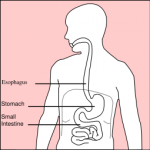
digestive tractIt seems that instead of just counteracting the negative effects of antibiotics, probiotics may actually be better at doing the work that antibiotics are supposed to do.

Because antibiotics kill the good bacteria even as they fight the infection you are trying to control it is commonly suggested that anyone who has to take antibiotics also take probiotics.  Probiotics help build up the good bacteria in the digestive tract destroyed by the antibiotics.

Researchers publishing in Applied and Environmental Microbiology (February 2011, Vol. 77, No. 4) describe how the probiotic bacteria B. bifidum can help treat ulcers and gastritis caused by the H. pylori bacteria. Source: medicalnewstoday.com

Probiotics can be found in foods like yogurt and in supplement form.

Learn more about how to take vitamins to ensure proper absorption and how to maintain good digestion.

Contacts May Help the Color Blind

A special contact lens might be able to help people with color blindness.

A report to the European Society of Cataract and Refractive Surgeons described how a custom color spectrum-correcting lens may be able to alter the way that color blind people see color.  The secret is in the digital diagnostic tool that determines the nature of patients’ color perception problems and helps inform the creation of custom lenses.

The special lenses were tried on 300 people in China.  According to researcher Mitsugu Shimmyo, MD, “Our lenses rebalance color perception by filtering and redistributing the intensity of color spectrum.”

Source: http://www.osnsupersite.com

Birth Control Pills/ Anti-Depressants Elevate Glaucoma Risk

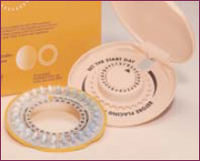
Glaucoma & birth control pillsBirth Control & Glaucoma

Taking birth control pills may be linked to the development of open angle glaucoma (also known as chronic glaucoma).

A study published in the journal Eye (18 February, 2011) describes the findings of a study of nearly 80,000 women over 26 years.  The study sought to find the connection, if any, between the development of glaucoma and the women’s age at menarche, reproductive history, and taking oral contraceptives.

Neither the age of the women when they first menstruated nor their childbearing history had any relation to their chances of getting glaucoma.

The study did find that taking birth control pills for longer than 5 years was related to a moderately increased risk of developing glaucoma.

Source: Nature.com (Eye)

Antidepressants & Glaucoma

The FDA has recently approved Cymbalta, the drug commonly prescribed to treat depression, to also be given patients who suffer from chronic musculoskeletal pain. It has been recommended to people with chronic low back pain and chronic osteoarthritis pain. The drug’s manufacturer, Elly Lily, does not claim to understand how Cymbalta helps alleviate these symptoms.

Source: .disabled-world.com

Cymbalta and other antidepressants have been associated with the development of glaucoma. Antidepressants have also been blamed for such conditions as cataracts and dry eye syndrome.


Home Remedies That Reduce Dark Circles Under Your Eyes

Sometimes one of the best parts of being an eye doctor is just looking into the beauty that is the human eye.

In order to keep your eyes looking this beautiful, try these home remedies to reduce the dark circles and bags under your eyes:

Cucumber or Cucumber Water

Containing calcium, vitamins A and C, and magnesium, the cucumber is known for its soothing properties. It helps relax the eyes and reduces redness. Cucumber water or thin slices of cucumber can also be applied to the skin around the eyes, especially if the skin is looking dry. Leaving the slices on the skin for at least fifteen minutes while relaxing will make your eyes look like new!

Agrimony Leaves or Flowers

Dried agrimony leaves and flowers can be added to boiled water to create an infusion that is strained and used to bathe the eyes. This solution reduce swelling and relieves itchy eyes. People who spend a lot of time working behind a computer and experience itchy or burning eyes will also benefit from this remedy.

Marigold Flowers

Make a weak tea out of marigold flowers. When it has cooled, soak two cotton wool pads in the tea and place them on the eyes for ten minutes. Alternatively, you can wash your eyes with the tea itself.

For even more remedies for dark circles under the eyes, please visit our website.

Blood Test Can Determine Chance of Developing Diabetic Retinopathy

Diabetes - Blood Test
image via ndep.nih.gov

A blood test may help determine your risk of developing diabetic retinopathy.

A study published in the Archives of Ophthalmology describes how a HbA1c test, which measures the amount of glycated hemoglobin in your blood, can indicate whether individuals with diabetes are likely to develop the sight threatening condition diabetic retinopathy. Researchers reveal that people with unhealthy HbA1c and blood sugar levels run a significantly higher risk of developing diabetic retinopathy within 10 years.

The scientists hope their findings will help doctors spot patients who are most likely to lose their eyesight and make recommendations on how to improve their lifestyle choices to maintain their eye health.

Source: MD Labs

A healthy lifestyle is a cornerstone of our plan for preventing diabetic retinopathy and other eye diseases.