Vegetarians Less Likely to Develop Metabolic Syndrome

Metabolic SyndromeMetabolic syndrome, a precursor to incidences of stroke, diabetes, and heart disease is more prevalent in people who eat meat.

A new study in the journal Diabetes Care describes how vegetarians are 36% less likely to develop metabolic syndrome than meat consumers.  Researchers conclude that a plant based diet can help to ward off the diseases associated with metabolic syndrome.  These findings offer further proof that a healthy diet can reduce one’s chances of developing cardiovascular disease.  Source: Foodconsumer.org

Eating well can also  reduce your risk of developing eye diseases like cataracts and diabetic retinopathy.  At Natural Eye Care we have developed The Vision Diet to help you eat your way to healthier eye sight.

 

Diabetes Speeds the Aging Process

The American Diabetes Association tells us that 8.3% of Americans have diabetes.  Another 79 million people are thought to be pre-diabetic.  Those numbers are staggering, especially when a new report describes how diabetes contributes to premature aging.

A study published in the Diabetes & AgingJournal of General Internal Medicine describes how diabetics in their 50s are more likely to age before their time.  People with diabetes between the ages of 51 and 70 all exhibit markers associated with aging including cognitive impairment, incontinence, falls, dizziness, vision impairment, and pain before their non-diabetic counterparts.

Researchers credit this all-over increased aging process to the fact that diabetes affect multiple organ systems.
Source: Life Extension Daily News

One of the main organs that feels the effects of diabetes?  The eyes.  Diabetic retinopathy.  One quarter of those with diabetes have compromised vision.

How Some Diabetes Patients Avoid Diabetic Retinopathy

Diabetes
Image via HealthyPeople.gov

Why do some people with type 1 diabetes remain free of diabetic retinopathy and other complications while others suffer from sight loss as well as kidney and cardiovascular problems?

Researchers publishing in Diabetes Care set out to answer this question by studying individuals who have been living with type 1 diabetes for over 50 years.  It seems that the sample group of 351 people with longterm diabetes diagnoses was mostly good at maintaining stable blood sugar levels, but blood sugar control did not seem to be the determining factor when it came to eye, kidney, and heart problems.

For the most part, scientists say it is still a mystery why 35% of these older type 1 diabetes patients seem free of the issues commonly associated with their disease.  They seem to have some inherent “protective mechanisms” that keep them from developing these conditions.  One factor may be the particular advanced glycation end products (AGEs) present in the subjects.  Some types of AGEs were linked to diabetes complications while others seems to protect the patients from the aforementioned eye, kidney, and heart troubles.  Study authors say that these protective AGEs may  lead to new biomarkers that will help indicate whether people are likely to be susceptible to these accompanying conditions.

As researchers strive to determine what protects certain people from diabetic retinopathy and other problems it is still essential that people with diabetes of both types work to control their blood sugar levels. Learn about natural ways to deal with diabetes.

Source: US News

For more peer reviewed research on diabetic retinopathy, visit our website.

MRI Tests May Be Unnecessary For Ocular Neuropathy Patients

Patients who have been diagnosed with isolated ocular neuropathic conditions, commonly a side effect or complication of diabetes, may no longer need MRI testing.

A new study reports that MRI exams are recommended for patients under 50 with a history of cancer, have more than one cranial nerve affected, or have a pupil-involving palsy of the third cranial nerve.  If patients are older and do not have these conditions, they don’t need such imaging, at least at the outset of treating the condition because such MRI images rarely helps medical professionals find lesions that would have made a difference in the type of treatment they received.

Published: Archives of Opthalmology

Garlic, Ginger, Turmeric All Help Regulate Diabetes

Diabetes & Spices
Image via doh.sd.gov

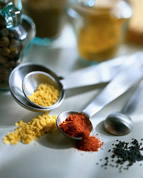
Another major study describes how some of the spices in your kitchen can help treat diabetes.

Garlic, ginger, and turmeric were found to have positive effects on diabetic rats.  The study, published in the British Journal of Nutrition (2011), 105: 1210-1217, finds that ingesting these common spices helped the animals who suffered from metabolic syndrome and helped modulate oxidative stress levels.

Rats who took the spices in powder form mixed with water for 28 days showed a 80-97% reduction in metabolic syndrome symptoms.  The animals’ insulin production increased by 26-37% and their antioxidant defense systems were boosted by up to 52%.

Of the three spices tested, garlic seemed to have the most profound impact on reducing the risks associated with metabolic syndrome and related cardiovascular problems.

Source: https://journals.cambridge.org

Important Note: Before taking turmeric supplements check with your doctor if you are taking a blood thinner.  While adding a bit of turmeric to your cooking is usually ok, more concentrated forms have a lot of punch.  Curcumin, the active ingredient of turmeric is a blood thinner.

Eye Exam Could Detect Diabetic Neuropathy

Importance of Eye Exams

Your eye doctor can help to detect whether you have diabetes.

When an optometrist dilates your eyes prior to an eye exam it makes it easier for her to look at the condition of your retina.  She can look for and readily detect early signs of diabetic retinopathy that indicate that you have diabetes.  Such signs include leaking blood vessels in the retina, swelling of the retina and deposits on the retina.   The retina is the only part of the body where blood vessels can be observed without looking through the skin.  This window into the state of your heath is a wonderful early detection system.

Source: Dr. Randy Steele, Journal Enterprise, Kentucky

Corneal Confocal Microscopy

For people who have diabetes, an eye exam may not only reveal signs that the patient has the eye condition diabetic retinopathy.  A doctor may also be able to tell if someone has diabetic neuropathy in other parts of the body.

Research demonstrates that a corneal confocal microscope (a special microscope that produces imaging of the living cornea, rather than looking at samples of tissue taken from the patient) that can look at the shape and condition and functioning capacity of the nerve fibers in the cornea.  This tool can help doctors determine whether a patient has diabetic neuropathy and if so, how serious it is.

Source: Virtual Medical Centre

Eye Health: Overall Health

The eyes are the windows not only of the soul, but of the body as well.  The health of your eyes reflects the health of your whole being.

Others in the medical community agree with us.  At the 25th Asia-Pacific Academy of Ophthalmology Congress Tien Yin Wong, MD gave a lecture titled: “An Eye Examination Can Save Your Life!”   He discussed the way that changes in the blood vessels of the retina can indicate potential problems in the  cardiovascular and metabolic systems.

An eye doctor who is considering your overall health can potentially see signs of stroke, heart disease, or diabeteshypertension, or kidney disease during your exam.


Whole Grains, Fiber Help Women Control Diabetes

whole grain
Image via womenshealth.gov

Whole Grains

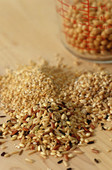
Women with diabetes can cut their risk of death from a heart attack by eating more whole grains.

A study published in the journal Circulation discusses how women who are a diet rich in whole grains and wheat bran were 16-31% less likely to die over a 26 year period compared to women who did not eat those foods.   When researchers considered mortality risks specifically associated with cardiovascular problems, those who ate a whole-grain and bran healthy diet were 28-35% less likely to die of heart related causes during the study’s duration.

Source: Food Consumer

Fiber

A new study indicated that people with diabetes who take psyllium fiber supplements paired with a low glycemic diet can experience a reduced glycemic risk factors including glycosylated hemoglobin A1c [A1C] or postprandial plasma glucose [PPG] concentrations.  Source: Food Consumer

It can also be important to eat a diet high in fiber. Focus on fruits, vegetables, seeds, oats, and whole-grain products. Note: Diabetics with unrecognized kidney failure could develop serious complications from a high-fiber (and therefore high-potassium) diet.

Learn more about how to help manage diabetes.


Americans Less Healthy Than British Peers, Diabetes, Weight

Overall Health

Americans of all ages are less healthy than people in Britain, according to an extensive new research project.

A study of health surveys of 40,000 U.S. residents and 70,000 individuals in the U.K. showed that Americans had more chronic diseases than their British counterparts.  Poor health was measured in rates of obesity, elevated cholesterol, heightened inflammation factors, diabetes, and asthma.

Published: MedlinePlus

Diabetes & Diabetic Retinopathy

The figures from the Centers for Disease Control on diabetes are staggering.  The CDC estimates in 2011 that 26 million Americans have diabetes.

Their report also estimates that one in three American adults is pre-diabetic with higher than normal blood sugar levels although not yet diagnosed has having diabetes.  They project that if current trends continue that 1 in 3 American adults could have diabetes by 2050.

Type II diabetes, or adult onset diabetes constitutes 90-95% of all diabetes incidences. The risk factors for the condition are aging, being over-weight, leading a sedentary lifestyle, as well as genetic factors.  Patients with a family history of diabetes and African-Americans, American Indians, Hispanics, Alaska Native Americans, and some Asian Americans are vulnerable.

Of these patients at risk for developing diabetes, 1/4 of those over 40 with a diabetes diagnosis develop diabetic retinopathy resulting in badly damaged vision.

Weight & Diabetic Retinopathy

A new study out of the University of Washington tells us that not only does obesity make one more likely to develop diabetes, but gaining weight in your 50s and after age 65 can double your risk of diabetes later in life.  Holding on to belly fat increases the likelihood that a person will develop type 2 diabetes.  The study also indicates that losing weight after the age 65 will not reduce the risk of diabetes in the way that losing weight when you are younger.

See more information on diabetes and treatment options.

Source: CNN

Blood Test Can Determine Chance of Developing Diabetic Retinopathy

Diabetes - Blood Test
image via ndep.nih.gov

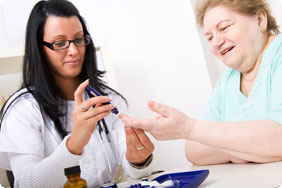
A blood test may help determine your risk of developing diabetic retinopathy.

A study published in the Archives of Ophthalmology describes how a HbA1c test, which measures the amount of glycated hemoglobin in your blood, can indicate whether individuals with diabetes are likely to develop the sight threatening condition diabetic retinopathy. Researchers reveal that people with unhealthy HbA1c and blood sugar levels run a significantly higher risk of developing diabetic retinopathy within 10 years.

The scientists hope their findings will help doctors spot patients who are most likely to lose their eyesight and make recommendations on how to improve their lifestyle choices to maintain their eye health.

Source: MD Labs

A healthy lifestyle is a cornerstone of our plan for preventing diabetic retinopathy and other eye diseases.

Exercise: Prevent Diabetes By Walking 10,000 Steps Per Day

exercise & diabetes
image via cdc.gov

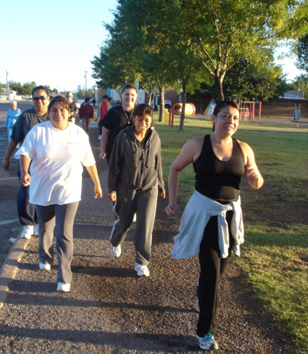
A new study published in the British Medical Journal makes the case for walking away from diabetes.

The researchers studied nearly 600 adults over 5 years and found that those who took 10,000 steps per day (the equivalent of 5 miles) had much better insulin sensitivity than those who walked less.

Diabetes risk decreases when one’s insulin sensitivity increases.

Source: LA Times article

Learn more about the related condition, diabetic retinopathy – a potentially blinding disease that can be prevented and treated with proper nutrition and exercise.

Low Muscle Mass = Increased Risk

New study shows low skeletal muscle mass and strength often found in those who are older or obese may put individuals at risk for developing type 2 diabetes, and that a good diet may not be enough to prevent type 2 diabetes.

These associations were stronger in people age 60 and under, in whom sarcopenia (the degenerative loss of skeletal muscle mass and strength associated with aging) was associated with high levels of blood sugar in both obese and thin people, and with diabetes in obese individuals.

The findings are published in the journal Plos One.

Editor’s Note: Learn more about  nutrition and diabetes.