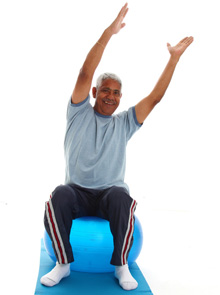
Strengthen Your Muscles from Your Eyes to Your Toes

exercise for the elderly including the eyesWhen you are in your 30’s, your skeletal muscle mass will peak. After that, they will reduce slightly in number and size every year. By the time you are in your 50’s, 15% of muscle mass may be lost, and by your 80’s, as much as 30% of muscle mass may be lost.

Obviously, strength training is crucial to strengthen your muscles and  increase their size. Being strong and fit helps maintain good health and energy, reduces osteoporosis and cardiovascular disease, burns calories for weight management, improves sleep, cuts cancer risk, and much more!

Everyone should make exercise a priority throughout their lives. However, up to 75% of older Americans do not get enough exercise.(1)

It is generally recommended that older adults should do strength training two or three times per week, performing 10-15 repetitions of approximately 8 to 10 different exercises.(1)

Recent research Continue reading “Strengthen Your Muscles from Your Eyes to Your Toes”

Silicon in Bottled Water Can Help Women With Osteoporosis

Scientists interested in counteracting osteoporosis and decreases in bone density are researching how the silicon found in bottled water from artesian wells can help postmenopausal women with low bone mass. Silicon is required in trace amounts for normal bone formation.

This study, published in Nutrition Journal, shows that drinking such water from artesian aquifers is a good source of silicon.  The trials only lasted 12 weeks, not enough time to show changes in the subjects’ bone markers, but researchers are optimistic and believe that further study is warranted.

Because standard treatments such as bisphosphonate drugs and hormone replacement therapy have been associated with osteonecrosis (bone death caused by decreased blood supply) or increased cardiovascular risk, it is important to find new options for women that have fewer debilitating and life threatening side effects.

There are many other compounds that can help combat osteoporosis including magnesium, vitamin D, and copper.

For other helpful supplements and a full overview of natural treatment options for osteoporosis, click here.

Source: Nutrition Journal

Tea Drinkers Less Likely to Develop Osteoporosis

Caffeine has been proven to increase one’s risk of developing osteoporosis, but some studies have shown that those who drink tea regularly are less likely to develop the disease. Scientists believe that the flavonoids in tea may have a protective effect. Other foods that tend to increase one’s risk of osteoporosis include soft drinks, salt, alcohol, and sugar. Food that can reduce your chances of developing the disease: soy, leafy green vegetables, sardines, and salmon.

Believe it or not, the answer when it comes to whether you should or should not rely on dairy products to help reduce your risk is “it depends.” Choose low-fat milk rather than American cheese or cottage cheese.

See more on diet and osteoporosis and an overview of the disease.

Ways to help prevent osteoporosis

Osteoporosis (loss of calcium in bones) affects 44 million men and women in the United States today, resulting in 1.5 million fractures each year. Approximately one-quarter of those people who have hip fractures due to the disorder die within a year after the break due to complications, including not being able to move around very well.

Osteoporosis (loss of calcium in bones) affects 44 million men and women in the United States today, resulting in 1.5 million fractures each year. Approximately one-quarter of those people who have hip fractures due to the disorder die within a year after the break due to complications, including not being able to move around very well.

The causes of osteoporosis for women is often due to estrogen deficiency during and after menopause. Caucasians and Asians also are at higher risk for the disorders than African-Americans. Other risk factors include low body weight, previous fractures and taking high-risk medications such as chemotherapy or steroid treatments which can deteriorate bone.

Things that can be done to help prevent bone loss include:

1) Daily weight bearing exercise

2) Eat a healthy diet (avoid carbonated drinks which can reduce calcium in the body).

3) Avoid bad habits such as smoking or excessive drinking

4) Supplement with a good calcium supplement which includes cofactors such as vitamin D3, Boron, Vitamin K1, Magnesium, and Phosphorus.

4) Supplement with at least 1,000 mg per day of Vitamin D3.

See more information on diet, nutrition and lifestyle related to Osteoporosis.

Dietary Protein Reducing Hip Fractures

The Framingham Osteoporosis Study found that seniors who consume a higher level of dietary protein are less likely to suffer hip fractures than seniors whose daily dietary protein intake is less, according to a new study by the Institute for Aging Research of Hebrew SeniorLife in Boston, an affiliate of Harvard Medical School.

Elderly women and men who have greater amounts of protein in their diet are less likely to experience hip fractures than do elders who consume less. The recommendation by Dr. Hannan is that elderly women include a minimum of 46 grams of protein daily, and that elderly men consume a minimum of 56 grams of protein daily.  The food sources can be from either animal or vegetable sources.  Animal sources of protein include meat and fish, eggs and milk products such as milk, cheese, cottage cheese and yogurt.  Vegetable sources of protein include beans, grains, nuts and seeds and vegetables.

Learn more about diet, protein and osteoporosis.

Researchers:
Framingham Osteoporosis Study
Dr. Hannan and associates, Institute for Aging Research of Hebrew Senior Life, Harvard Medical School

Flaxseed Oil May Reduce Osteoporosis Risk

Adding flaxseed oil to the diet may reduce risk of osteoporosis in post-menopausal women and women with diabetes, according to new research published in the International Journal of Food Safety, Nutrition, and Public Health.

In a study using laboratory rats, researchers have found that flaxseed oil has a beneficial effect on bone mineral density and reduces markers associated with osteoporosis, suggesting that this dietary supplement may help women with diabetes in reducing their risk of osteoporosis.

Study authors believe that the presence of n-3 fatty acids in flaxseed oil may play a role in protecting the processes of matrix formation and bone mineralization, which are compromised by diabetes and menopause. Further trials with humans are recommended to confirm the effects on bone health, but the implications for use in osteoporosis prevention are encouraging.

Source:  Elwassef, et al, Impact of feeding flaxseed oil on delaying the development of osteoporosis in ovariectomised diabetic rats, International Journal of Food Safety, Nutrition and Public Health 2009 – Vol. 2, No.2  pp. 189 – 201.