Glaucoma and Alzheimer’s: Plaque Is A Potential Connection


Alzheimer's patient
image via www.cdc.gov

Glaucoma refers to any condition that causes damage to the optic nerve, but its cause is generally unknown.  Researchers in London are establishing a potential link between the development of glaucoma and the onset of Alzheimer’s disease.

In both cases, the same “plaque” proteins are involved in the conditions’ development.  Researchers speculate that the same substances that destroy brain cells in Alzheimer’s patients also destroy the optic nerve cells of those with glaucoma. Source: https://www.lef.org/

For more information about how to treat and prevent glaucoma naturally, visit our website.

 

Narrow Angle Glaucoma: Potential Side Effect of General Anesthesia

Narrow angle glaucoma is an ocular emergency. In such cases, there is an obstruction in the drainage of the aqueous fluid due to a narrowing of the angle between the base of the iris and the cornea. The symptoms can be a sudden, painful red eye, nausea, vomiting, headache, and visual halos.

According to a study in PubMed, narrow angle glaucoma, also known as acute angle glaucoma, can be a rare, but potential, side effect of general anesthesia.  Researcher cite possible risk factors: the drugs ephedrine and nefopam administration and the prone surgical position (lying on the belly during the procedure).

Source: https://www.ncbi.nlm.nih.gov/pubmed/21081770?dopt=Abstract

Learn more about glaucoma and how to prevent and treat it naturally.

5 Ways to Absorb the Most Nutrients From Food and Supplements

woman holding apple
photo by agb

You take your nutritional supplements as directed by your health care provider or as directed on the bottle, but how do you know if you are absorbing all of those vital nutrients?  You may order a beautiful salad made with organic greens, but are you getting all of those carotenoids like lutein and zeaxanthin that are essential to preventing macular degeneration and cataracts?

Here are some tips on how to ensure that you are getting the most out your food as well as those vitamins, minerals, and other therapeutic compounds intended to improve your health:

1. Reduce stress: Stress restricts the flow of blood in the body by tightening muscles, and restricting the free flow of fluids. Meditation, yoga, tai chi or even daily walks in nature can all help reduce stress significantly.

2. Eat slowly: We should be eating our food slowly and thoughtfully. Try never to eat on the run, and don’t eat while conversing, writing, doing work, etc. Make eating a special time for yourself.

3. Exercise regularly: Exercise helps the body rid itself of harmful toxins that build-up daily. Numerous studies have shown that even a brisk walk of 20 minutes per day can have a major impact in reducing development of disease such as heart disease, and has even been shown to reduce high eye pressures in cases of glaucoma.

4. Positive thinking: In Chinese medicine, excessive thoughts of anger, worry, resentment, grief and fear all have significant effects on the free flow of “energy” in the body.

5. Eat healthy food: Our bodies crave fresh food, particularly fruits, vegetables, and grains. These foods provide energy to the body in the form of vitamins, minerals, and natural enzymes. Excessive intake of “dead” food such as fast foods, or highly processed foods, requires our bodies to use its own enzymes and energy to digest food in an attempt to separate whatever limited nutrients may be available.

Update:  Also see our new article on the relationship between digestive enzymes and vision health.

Treating Glaucoma Naturally; Focusing on the Needs of Individual Patients

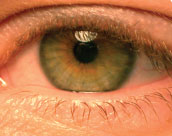
eye close up
Image via nida.nih.gov

At Natural Eye Care, we tend to have a different philosophy on how to treat and prevent eye conditions such as glaucoma compared to those in the conventional medical community.  One thing we definitely agree with, however, is that patients need to be seen as individuals with specific needs, especially when it comes to a disease like glaucoma.

An article at OSN SuperSite discusses the importance of crafting a specific medical regimen for glaucoma patients. They talk about pharmaceutical options, while we are advocates of natural approaches including diet, exercise, stress management, and nutritional supplementation.  (See our Vision Wellness Protocol for an introduction to this approach.)

While the doctors interviewed  in the above mentioned article focus a great deal on managing intraocular pressure and look at it as the major way to manage the progression of glaucoma, we know that more and more people are developing normal-tension glaucoma (NTG) and that progressive vision deterioration can occur even with IOP-lowering intervention. We advocate natural supplements such as ginkgo biloba that have been proven to improve pre-existing visual field damage in some individuals suffering from glaucoma.


Computer Eyestrain: Men Say It’s a Bigger Problem for Them

man looking at computer monitor
Image courtesy of bls.gov

The results are in from a online survey sponsored by the American Optometric Association.  It seems that men and women seem to see the world differently – at least when it comes to reporting computer eyestrain. Source: www.medicinenet.com

The numbers are relatively close.  Fifty-nine percent of men compared to 53% of women say that they have vision problems from spending too much time looking at a screen.  Over 50% of all respondents say that they take breaks every half hour or hour, but women are more likely to take a break every 20 minutes.

Less than 20% of people do take breaks every 20 minutes as we at Natural Eye Care recommend to prevent computer eyestrain.

Other tips to ward off computer eyestrain:

  • Frequently look at something more than 20 feet away.
  • Blink regularly to keep your eyes moist.

See more tips on preventing computer eyestrain and an important warning on the connection between computer time and glaucoma.

Exercise Supports Eye Health – A New Perspective on Stretching

woman exercising
Image courtesy of healthysd.gov

At Natural Eye Care, we know that exercise is a vital part of keeping both the eyes and the entire body healthy.  Exercise is a key part of our prevention protocol and essential to anyone who wants to preserve their sight and avoid developing such diseases as glaucoma, macular degeneration, diabetic retinopathy, or cataracts.

A story aired on NPR talks about how that old pre-exercise stretching routine you have been doing for years may not be effective when it comes to warding off injuries.

A study published in the Journal of Strength and Conditioning Research found that “competitive runners are less efficient after static stretching.”

According to a coach interviewed in the same story, consider an alternative to the “bend and hold” style of stretching – a repetitive set of 2 to 3 second stretches called “active isolated stretching.”


Video Gamers Have Better Hand-Eye Coordination But Risk Computer Eyestrain

gamersDoes video game playing offer health benefits or health risks?  As with many things, the answer is “it depends…”

Researchers at the Centre for Vision Research at York University in Toronto have discovered that young men who spend a lot of time playing video games do better at performing other complex visuomotor tasks.  Using functional MRI technology, scientists found that the brains of gamers had actually been “rewired.”  They used a different part of their brain than their non-gaming counterparts when performing complex task involving hand-eye coordination.

According to the source of this story, Medical News Today,” Such findings can hold important implications for research into neurodegenerative diseases like Alzheimer’s, where people with the disease find it increasingly difficult to complete even the simplest hand-eye coordination tasks.”

On the other hand, studies have shown that people who spend a great deal of time in front of computer screens are susceptible to computer eyestrain which can lead to glaucomaFor hints on how to avoid computer eyestrain, please visit our website.

Study of Fish Oil Quality and Content

fish oil capsules
Image courtesy of nccam.nih.gov

Independent testing by a White Plains, NY firm, ConsumerLab.com, has found that 7 of 24 fish oil supplements tested exhibited quality problems.  Some products exhibited multiple issues.

  • Three products contained less of the omega 3 fatty acids EPA and/or DHA than claimed,
  • Three product were spoiled (including a children’s supplement)
  • One enteric-coated product released its ingredients too early
  • One supplement for pets exceeded the contamination limit for PCBs.

We recommend fish oil supplements highly because their Omega-3 fatty acids help improve circulation, integrity of blood vessels, proper brain functioning, flexibility and permeability of cell membranes, and helps protect the retina’s photoreceptor cells.  They help to prevent and treat such conditions as glaucoma and macular degeneration.

You can access detailed test results at ConsumerLab.com

Omega-3s Can Reduce Heart Failure Hospitalizations

Image courtesy of sokhcn.baria-vungtau.gov.vn

Here’s another example of how omega 3 fatty acids can benefit your health: omega-3s can help people suffering from heart failure.

In a study presented at the Heart Failure Society of America 2010 Scientific Meeting, researchers stated that those taking omega-3s over a four year period “demonstrated a minor but statistically significant improvement in LVEF [left ventricular ejection fraction]. . . these effects were also associated with a reduction in hospitalizations for heart failure.”

Source: heartwire

We highly recommend that those wishing to prevent or suffering from such eye conditions as glaucoma, cone-rod disorders, retinitis pigmentosa, or diabetic retinopathy consider taking a daily dose of omega-3 fish oil.  Check with your doctor first, however, if you are taking a blood thinner.

Glaucoma May Originate in Brain, Not Retina

Cellular Basis for Glaucoma

Researchers at Catalyst for a Cure (CFC) consortium, a division of the Glaucoma Research Foundation, have announced their continuing work in 2011: studying how and why retinal ganglion cells degenerate in people with glaucoma. Retinal ganglion cells are types of neuron located near the inner surface eye’s retina.  They receive visual images from the photoreceptors and transmit the information to the brain.

These CFC researchers are looking at the onset and progression of glaucoma at the level of the cells and molecular pathways.  They have noted that the degeneration of the retinal ganglion cells is related to the loss of connectivity that accompanies glaucoma.  According to the CFC: “These degenerative changes compromise the neuron’s ability to process and transmit visual information well before the neurons actually die.”  The team has determined that the retinal ganglion cells are particularly vulnerable early in the development of glaucoma, “when these cells are more sensitive to metabolic insults and stressors.

Glaucoma May Originate in Brain, Not Retina

Other research has suggested that glaucoma may not originate in the retina itself, but at the other end of the optic nerve located back in the middle of the brain.  In a study of rodents published in PNAS, it was found that the problem may stem from the nerve’s inability to transport impulses.  The scientists from Vanderbilt University and University of Washington say that this transport deficit seems related to the subject’s age and is not necessarily related in increased ocular pressure.  Locating glaucoma’s cause in the nerve rather than the retina may lead to new breakthroughs in glaucoma detection and therapy.

Source: https://www.pnas.org/content/107/11/5196.abstract