Napping Can Reduce Stress and Improve Heart Health

Nappint - heart diseaseStress is linked to a host of health problems including hypertension and the onset of glaucoma.  At Natural Eye Care we recommend that people concerned about their eye health and their overall health do whatever they can to reduce their stress levels including practicing yoga or tai chi, taking up a regular meditation practice, and taking walks in nature.

A new study in International Journal of Behavioral Medicine describes how a daily nap of at least 45 minutes reduces stress and helps lower blood pressure and promotes heart health.

Research involved 85 healthy college students.  Those who napped had significantly lower blood pressure than those did not sleep during the day. Source: www.healthfinder.gov

For more research on how to manage high blood pressure with integrative health approaches, visit our website.


Birth Control Pills/ Anti-Depressants Elevate Glaucoma Risk

Glaucoma & birth control pillsBirth Control & Glaucoma

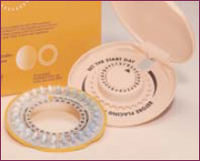
Taking birth control pills may be linked to the development of open angle glaucoma (also known as chronic glaucoma).

A study published in the journal Eye (18 February, 2011) describes the findings of a study of nearly 80,000 women over 26 years.  The study sought to find the connection, if any, between the development of glaucoma and the women’s age at menarche, reproductive history, and taking oral contraceptives.

Neither the age of the women when they first menstruated nor their childbearing history had any relation to their chances of getting glaucoma.

The study did find that taking birth control pills for longer than 5 years was related to a moderately increased risk of developing glaucoma.

Source: Nature.com (Eye)

Antidepressants & Glaucoma

The FDA has recently approved Cymbalta, the drug commonly prescribed to treat depression, to also be given patients who suffer from chronic musculoskeletal pain. It has been recommended to people with chronic low back pain and chronic osteoarthritis pain. The drug’s manufacturer, Elly Lily, does not claim to understand how Cymbalta helps alleviate these symptoms.

Source: .disabled-world.com

Cymbalta and other antidepressants have been associated with the development of glaucoma. Antidepressants have also been blamed for such conditions as cataracts and dry eye syndrome.


Lifestyle Factors & Glaucoma Risk

Do Weight, Smoking, and Drinking Influence Chances of Developing Glaucoma?

A 2011 study published in the Archives of Ophthalmology seeks to determine how “lifestyle-related risk factors, such as socioeconomic status, smoking, alcohol consumption, and obesity” can influence the likelihood that people will develop  open-angle glaucoma.

Nearly 4000 people were part of this nearly 10 year long study. None had glaucoma at the outset, but at the end, 2.7% had developed the eye condition.

The researchers claim that socioeconomic status, smoking, or alcohol intake were not associated with glaucoma.  They did assert that women who were obese were less likely to develop glaucoma (other studies have found the same thing).  Source: https://archopht.ama-assn.org/

These findings are in opposition to other studies that have linked smoking to glaucoma.  Studies do show that stress is a major factor in the development of glaucoma.

Smoking Increases Glaucoma Risk

New study shows smokers have increase risk of getting glaucoma. Specifically, inflammation and apoptosis marker levels increase with smoking in the aqueous humor and plasma samples of POAG women. Smoking could be an important additional risk factor for glaucoma progression in elderly women.

Source: Zanon-Moreno V, Garcia-Medina JJ, Zanon-Viguer V, et al. Smoking, an additional risk factor in elder women with primary open-angle glaucoma. Mol Vis 2009;15:2953-2959.

Editor’s Note: Chronic inflammation and related cell death (apoptosis) due to smoking is implicated in many chronic diseases including heart disease, diabetes, macular degeneration and cancer.  Eye disease is often related to poor circulation, chronic systemic inflammation and/or the lack of availability of nutrients.

Weightlifting Can Increase Pressure in the Eyes

Weightlifting, especially if one holds his or her breath during the exercise, may cause a temporary increase in pressure within the eyes.  Glaucoma is sometimes linked to increased pressure in the vitreous humor of the eye.

Generally, intraocular pressure generally decreases after both aerobic and anaerobic exercise. Higher intraocular pressure has been reported during the Valsalva maneuver (air is forced against a closed windpipe causing an increase of pressure in the chest). This action occurs during coughing, vomiting, playing wind instruments, as well as during some weightlifting sessions.

According to ScienceDaily.com, study authors note that a certain type of glaucoma (normal-tension glaucoma) is more common in individuals who are subjected to frequent changes in eye pressure. “Prolonged weightlifting could be a potential risk factor for the development or progression of glaucoma. Intermittent intraocular pressure increases during weightlifting should be suspected in patients with normal-tension glaucoma who perform such exercises,” they conclude. “Patients with normal-tension glaucoma should be questioned as to a history of regular weightlifting.”

Heavy Computer Use & Glaucoma

Those who use computers heavily are at greater risk for glaucoma than the general public, particularly those who are short-sighted. Glaucoma is an insidious disease characterized by the decrease of peripherial vision eventually leading to severe vision loss.

A 2004 cross-sectional study in 9124 Japanese workers indicated that there was a possible association between heavy computer users and glaucomatous visual field abnormalities. In other words – people who computers heavily (ie. programmers, software engineers, gamers) could be jeopardizing their sight.

The study looked at typical daily computer use, as well as long-term computer use history. More than 500 participants (5.4%) had problems with peripheral vision. Of that group, one third were found to have glaucoma … perhaps more than a third, since some workers with peripheral vision problems didn’t receive all the testing to accurately diagnose glaucoma.

Still, it may not be necessary to quit your day job or to give up your favorite hobby.  Glaucoma can be prevented.  Changes in diet and lifestyle can reduce your risk of glaucoma and other eye diseases and improve your overall health.

Swim Goggles and Increased IOP

Australian researchers took a look at whether swimming goggles elevated intraocular pressure.  They drilled holes in to the goggles permitting special measurement using a method called applanation tonometry in which force against the cornea allows inference as to the degree of pressure inside the eye.  IOP was measured prior to putting on the swim goggles, two minutes after they’d been put on, twenty minutes later  and after their removal. The testing was done with a variety of types of swim goggles.

The researchers found that in fact, IOP did increase while swim goggles were being worn by an average of 4.5 mm Hg.  The size of the face of the goggles was also correlated to IOP – with smaller faces having higher pressures.  The study was not performed while subjects were actually swimming.

Source: “Wearing swimming goggles can elevate intraocular pressure”, Morgan, et al, Br J Ophthalmol. 2008 Sep;92(9):1218-21.

Learn more about glaucoma’s causes at our website.


Increased Eye Pressure Noted in Musicians

Glaucoma can be associated with increased pressure in the eyes (though not always – one can have glaucoma without elevated intraocular pressure and vice versa).

A team of Scottish and German scientists have found that people who play brass and woodwind instruments can experience elevated eye pressure, a condition that these scientists do link to glaucoma.

Previous studies have found that high-resistance instruments such as the oboe were linked to increased eye pressure, but this is the first to note that lower-resistance instruments like the clarinet can also be linked to the potentially dangerous spike in pressure.  The study included 52 professional musicians playing in real life conditions.  The highest increases in pressure were noted in brass musicians when they played loud, high notes.

Source: https://www.gcu.ac.uk/sls/newsevents/news/bydate/2011/1/name,20760,en.html


Eggs Provide Nutrients and Ward Off Eye Disease

A new study further supports the benefits of eating eggs.

Michigan State University researchers sought to determine how eggs might be part of a healthy diet and also determine the impact egg consumption may have on cholesterol.  Egg eaters showed higher levels of such vital nutrients as vitamins B12, A, E, and C.  The study does remind us to enjoy eggs in moderation – four eggs per week is optimal.  Eating more than four eggs per week can lead to increased cholesterol.

Source: maculardegenerationassociation.org

Eating eggs can also help prevent a number of eye conditions including macular degeneration, cataracts, and glaucoma.

Vitamin C

In many parts of the world, especially in Europe and Asia, the value of vitamin C is well known.  It is considered to be an important part of routine glaucoma treatment. It lowers pressure in the eye by lessening fluid production within the eyeball and improving the circulation of aqueous humor, as toxins are removed, from the eye.  Vitamin C also improves the metabolism of collagen which is possibly an underlying cause of glaucoma.

Learn more about how the nutrients in eggs and other foods can increase your eye health and overall health.

High Stress Can Lead to Glaucoma: Tips to Reduce Stress

Most individuals with undiagnosed glaucoma do not notice any symptoms the condition is somewhat advanced. Technically, glaucoma is due to damage to the optic nerve, sometimes as a result of increased pressure of the aqueous humor –  the clear, watery fluid that circulates in the chamber of the eye between the cornea and the lens.

Stress

Stress has been determined to be a major cause of chronic glaucoma. Stress causes us to breathe shallowly, which reduces the amount of oxygen in the bloodstream, causing venous backflow in the head. This process effects the eyes’ ability to revolve ocular fluids, which in turn increases eye pressure. Although we do not know exactly how the optic nerve is damaged in glaucoma, one common factor in all cases of glaucoma is a lack of blood flow to the retina and optic nerve. This lack of blood flow results in retinal nerve cell death, enlargement of the optic cup, and an eventual loss of vision.

Here are a few suggestions for those who are trying to reduce stress in their lives:

  • Exercise regularly
  • Take walks in nature
  • Practice yoga or tai chi
  • Engage in prayer or meditation daily

Nutrition

Sufferers of glaucoma are often deficient in some or many of the important nutrients including essential fatty acids, lutein, zeaxanthin, taurine, alpha lipoic acid, antioxidants, bioflavonoids, zinc, selenium, vitamin B-complex.

Yoga

Regular exercise is key to managing and preventing eye disease.  Many with glaucoma have concerns about their intraocular pressure (eye pressure) and allowing their heads to be below their hearts, as is common in yoga’s common inversion poses.  Those you might need to avoid include downward facing dog, head and shoulder stands, and any poses that require you to touch your toes while in a standing position.

Livestrong.com offers this tip for practicing a modified forward bend:

You can still enjoy the benefits of wide-legged forward bend by modifying how you practice it. Place a chair against a wall with the seat facing toward you. Hold your feet wide apart and keep them parallel. Lean slightly forward to keep your hips above your legs rather than behind your heels. Rest your forearms on the chair seat. Breathe deeply for 10 to 15 breaths, feeling an inner thigh and groin stretch and relaxing your back. Certified advanced Iyengar instructor Dean Learner emphasizes that modified forward bends should be part of your regular yoga practice.  Source: www.livestrong.com


Glaucoma Breakthrough: Researchers Gain Insight Into Origins of Glaucoma in Mice

New examinations of the optic nerve of mice have yielded new insight into the development of glaucoma. Scientists better understand both the cellular and molecular structure of this part of the eye, a discovery that will pave the way for a better understanding of the human eye.  This breakthrough should hasten the development of new therapies that will help to combat the potentially devastating effects of glaucoma.

Researchers discovered a unique class of cells called astrocytes that seem to play an integral role in the development of glaucoma.  They also learned more about a certain protein called gamma synuclein; abnormalities in this protein can result in eye disease.  Another exciting discovery, which may influence the way science looks at a number of neurodegenerative diseases, involves the way that neurons clear away debris from the optic nerve.  Essentially, the cells’ failure to clean up after themselves can lead to their own demise.

Source: https://www.medicalnewstoday.com/articles/212650.php


Mercury in Fish Can Increase Blood Pressure: Find Omegas in Other Sources for Heart and Eye Health

Your new year’s resolutions may well include eating better, both for the health of your heart and the health of your eyes.  The essential fatty acids found in fish can be a great addition to your diet.

In particular, omega-3 fatty acids help to reduce cholesterol and increase circulation to the retina.  Omega-6 fatty acids are important as they protect cells from degenerative changes and reduce inflammation throughout the body. Both Omega 3s and 6s help prevent and even treat glaucoma and macular degeneration.

ocean
image via noaa.gov

A word of caution about your fish intake the effect of mercury which contaminates the larger ocean predator fish (tuna, swordfish, marlin, sharks, etc): too much mercury in the body can raise your blood pressure.

Source: theheart.org/article/1010897.doc

Small fish like sardines are a safe choice, but there are non-swimming sources of essential fatty acids out there too.  Find omega-3s in flax seed oil, black current oil, walnuts and walnut oils, dark leafy vegetables, eggs (preferably from free range chickens), spices (including mustard, fennel, cumin, and fenugreek).  Get your omega-6s from evening primrose, borage and black currant oils.


Learn more about food sources of nutrients and how they can benefit your eyes and your whole body.

Anti-Inflammatory Medications May Slow Macular Degeneration, But Are They Safe?

Macular Degeneration
nlm.nih.gov

Researchers have found that taking anti-inflammatory medication may slow the progression of macular degeneration. But, there are concerns about the safety of this “solution.”

A study published in the journal Eye describes how corticosteroids, nonsteroidal anti-inflammatory drugs (NSAIDs), immunosuppressive agents (e.g. methotrexate and rapamycin), and biologics could help those with AMD. Source www.nature.com

A caveat to the research indicates that there are concerns about the long term safety of taking such drugs.  At Natural Eye Care we are very concerned about the way that prescription and non-prescription pharmaceuticals can harm the eyes.

For example, NSAID drugs like aspirin, ibuprofen, and naproxen can cause eye hemorrhaging, glaucoma, and cataracts.

Healthy Lifestyle Prevents Stroke, Cataracts, Macular Degeneration, Glaucoma

Stroke, Cataracts, Macular Degeneration
image via doh.sd.gov

A healthy lifestyle can reduce your risk of stroke by up to 80%.

Research published in the journal Stroke encourages people to exercise regularly, drink alcohol only in moderation, eat plenty of fruits and veggies, control weight, and not smoke in order to avoid stroke.

These guidelines are the same that we recommend when it comes to avoiding vision conditions like cataracts, glaucoma, macular degeneration, and diabetic retinopathy.

Moderate Alcohol Use

There’s another piece of evidence that suggests moderate drinking – one or two alcoholic beverages each day – can be beneficial for the eyes.

A study of over 3,600 Australians found that when the figures were adjusted to account for other factors (including age, smoking, and diabetes), people who had one or two drinks each day were 50% less likely to have cataract surgery.  The moderate drinkers were less likely to require surgery for cataracts than counterparts who drank more as well as those who did not drink at all.

Source: https://www.osnsupersite.com

Read more about how prevention is the best medicine to ward off eye disease and other conditions that jeopardize your well-being.