
 Photophobia literally means “fear of light,” but it just means that you are overly sensitive to light. Light sensitivity might be temporary, but it can be an indicator or symptom of another problem.
People with photophobia experience pain, tearing, and sometimes headaches especially when they are out in bright light too long. A common summer example is too much light from the sun plus reflection off water when we are out in a boat. You just want to close your eye from so much light, and later in the day or evening you may have a headache.
However, light sensitivity may be a chronic condition and therefore a symptom of another problem.
What causes photophobia?
Photosensitive retinal ganglion cells play a key role in light sensitivity.[1. Katz BJ, Digre KB. (2016). Diagnosis, pathophysiology, and treatment of photophobia. Suv Ophthalmol. Jul-Aug;61(4):46-77.] There are at least two (possibly three) distinct neural pathways associated with photophobia: one is a messaging pathway involving the thyroid and calcium, and another is a pituitary gland neurotransmitting pathway.[2. Albiali A, Dilli E. (2018). Photophobia: When Light Hurts, a Review. Curr Neurol Neurosci Rep. Jul 30;18(9):62.]
Recent research points to impaired light processing by the photoreceptors (cones and rods) which create the electrical impulse resulting in image perception, as well as non-image-forming neural pathways. These light signals are sent to multiple regions of the brain that control not only the senses, but the autonomic nervous system and regulation of emotions.[3. Noseda R, Copenhagen D, Burstein R. (2019). Current understanding of photophobia, visual networks and headaches. Cephalalgia. Nov;39(13):1623-1634.]
Excessive bright light we may encounter during a sunny summer day at the beach can cause eye pain, but photophobia can also be caused by dry eye syndrome, optic nerve swelling,[4. Ibid. Albilai. (2018).] corneal swelling (keratitis) or a scratch on the cornea, iris swelling (iritis), cataracts, conjunctivitis (pink eye), blepharospasm,[5. Ibid. Katz. (2016).] retinal damage, or post eye surgery.
Aside from eye conditions, photophobia can be caused by migraine headaches,[6. Ibid. Katz. (2016).] tension headaches, cluster headaches, meningitis, brain trauma,[7. Ibid. Albilai. (2018).] and tumors in the brain or pituitary gland, as well as some medications including antibiotics, drugs that help your body get rid of excess fluid, and quinine (for malaria).
What can we do?
If light sensitivity is continuous and doesn’t go away with rest, then you should certainly see your eye doctor, and advise the doctor of your medications and any medical conditions.
In the meantime, always wear UVA/AVB 100% (polarized) protecting dark glasses outdoors which protect your retina from the damaging effects of UV / blue light. Get adequate exercise, drink plenty of water, and pay attention to your diet and nutrients.
Nutritional support
The first line of protection is carotenoids which support the macular pigment that protects the retina from UV and blue light-related damage.[7. Eggersdorfer M, Wyss A. (2018). Carotenoids in human nutrition and health. Arch Biochem Biophys. Aug 15;652:18-26.]
Dr. Grossman has assembled several packages for light sensitivity. These will be especially helpful during the summer as you swim, sail, boat, hike, or picnic outdoors.
Light Sensitivity Package. Contains Advanced Eye and Vision Support Formula (whole food, organic, GMO free), Dr. Grossman’s Meso Plus Formula (with the carotenoids mesozeaxanthin, lutein, zeaxanthin, and astaxanthin), as well as Dr. Grossman’s Bilberry/Ginkgo Formula (wild crafted herbs in tincture form).
Blue Light Protecting/Night Vision Package (2-month supply). This package contains our Advanced Eye and Vision Support Formula, Astaxanthin (a potent antioxidant), and Black Currant Seed Oil (which supplies the fatty acid gamma linolenic acid).
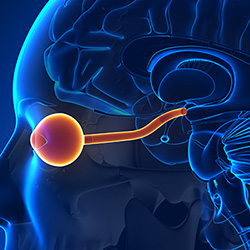 What is the optic nerve and what does it do?
 Computer users are concerned about their vision. When we recently searched online for “vision computer screen” the top four searches were:
 Our bodies are designed to handle stressful situations, referred to as the “flight or fight” mode, wherein when we need to quickly react, the body goes into action and produces hormones that stimulate the adrenal system, raise cortisol levels, and gets our muscles instantly ready to go. Once that situation is resolved, our body has the remarkable ability to return back to homeostasis or normal balance quickly.
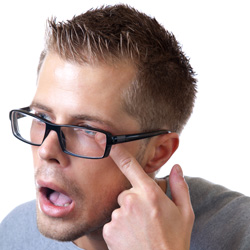 The U.S. Centers for Disease Control and Prevention tells us to avoid touching our eyes, nose, mouth, or anywhere on the face with unwashed hands. This should help prevent us from contracting Coronavirus 19 (COVID-19).
 Tired eyes are one of the most common complaints eye doctors get from their patients. In this era of computers and mobile devices, the average person in the United States spends about 10 hours, 39 minutes daily in screen time.[1. Howard J. (2016). Americans at more than 10 hours a day on screens. CNN, Cable News Network, 29 July 2016, www.cnn.com/2016/06/30/health/americans-screen-time-nielsen/index.html]
 Liver, Chinese Medicine and Eye Health
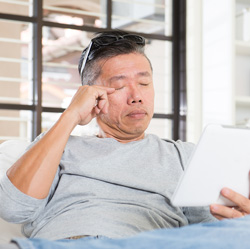 With drier weather of windy fall and cold winter, added to our hours on the computer, come increased dry, burning, and itchy eyes, known as dry eye syndrome. This is the number one complaint that eye doctors hear from patients. Most of us experience it at least from time to time.