
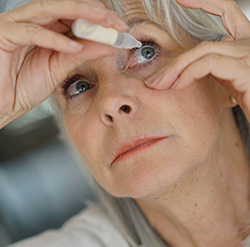
Looking at the eyes from a holistic, integrated perspective gives us the best opportunity to maintain our whole body, eye, and brain health. Whole body means the relationship between the mind, body, emotions, and spirit. This perspective has been the good health foundation for thousands of years in Chinese and ayurvedic medicine, as well as more recent holistic practices such as homeopathy and functional medicine. Continue reading “Homeopathy and the Eyes”
 Did you know that how well your gut works is directly related to your healthy vision and your healthy brain?
 Does Sunlight Danger Outweigh the Benefits?
 Poor night vision or night blindness can be a life-limiting symptom. Night blindness can be caused by either an inherited or acquired reason. Poor night vision disorders (night blindness, impaired dark adaptation, etc.) include the experience of reduced vision in dimly lit environments, including at night. They include partial or complete impairment in ability of the eyes to adapt from brightness to darkness. It is not a disease in itself, but rather a symptom of an underlying problem, usually located in the retina. It is common for patients who are myopic (nearsighted) to have some difficulties with night vision, but this is due to optical issues rather than to a retinal condition. Symptoms include difficulty driving at night, tripping over objects when walking in the dark, and slow response when light conditions change (such as entering a dark movie theater). Photoreceptor cells in the retina allow you to see in dim lighting. When they malfunction, vision in dark conditions becomes difficult.
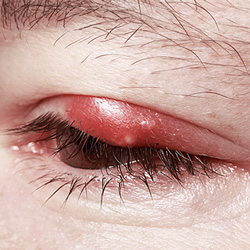 Natural Treatments for the Eyelid
 The most common form of glaucoma is “open-angle” glaucoma, where the eye pressure or IOP remains higher than normal (typically 8-20 mm Hg). Eye doctors also look at changes in peripheral field typically measured with a visual fields test and any changes in the optic nerve such as optic nerve thinning or increased cupping. Ocular hypertension is diagnosed when IOP is higher than normal but there as no signs of glaucoma. In addition glaucoma can occur without high IOP, “normal or low tension glaucoma.”
 Food for the Brain
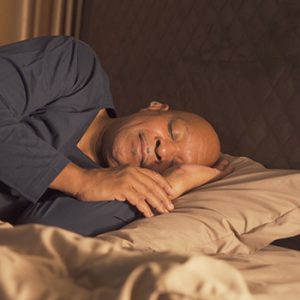 Melatonin is a hormone primarily released by the pineal gland at night, and has long been associated with control of the sleep–wake cycle. It is typically taken at night before bedtime as a supplement. In addition to melatonin’s application as a sleep aid, this supplement can also be used for lowering eye pressure — such as in cases of open angle glaucoma or glaucoma suspects. Research shows melatonin may also protect the eye’s macula by supporting the functioning of the mitochondria, the tiny “batteries” in each cell. Alzheimer’s disease appears to be linked to poor quality sleep and melatonin production; therefore, melatonin may prove to be a useful supplement and research is underway. Keep reading for details plus information about supplements available on this website.