Traditional Chinese Medicine’s Approach to Cataracts and Dark Circles Under the Eyes

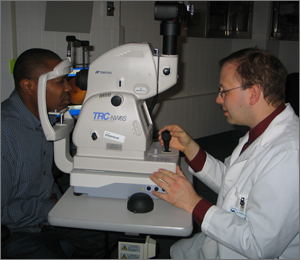
Traditional Chinese Medicine offers invaluable tools for diagnosing and treating conditions of the eyes.

For example, dark circles under the eyes relate can be attributed to imbalances in the kidneys, the organs that provide us with our vitality. People who present with a “Kidney Qi Deficiency ” are advised to follow one of the simplest at home remedies around: get sufficient sleep.

Chinese Medicine attributes the onset of cataracts often to deficiencies in the kidney and liver meridians. The resulting reduction of the energy and blood flow to the eyes leads to poor eye nutrition and eventually can cause the lens to become opaque.  Also, the spleen meridian plays a role in the nourishment of the eyes.  A dysfunction along this meridian can cause cataracts.

This information is from a chapter of our book, A Comprehensive Manual for Practitioners of Oriental Medicine.

Too Much Meat, Too Little Fiber Lead to Colorectal Cancer

A new study confirms earlier findings that indicate that consuming red and processed meats increases one’s risk of developing colorectal cancer.  The study also strengthens previous assertions that fiber rich foods help protect people from colorectal cancer.

This evidence underlines the preventable nature of colorectal cancer, since it is so attributable to diet.  According to Elisa Bandera, MD, PhD, who served on the World Cancer Research Fund/American Institute for Cancer Research’s Continuous Update Project (CUP) Expert Panel that authored the report “About 45 percent of colorectal cancer cases could be prevented if we all ate more fiber-rich plant foods and less meat, drank less alcohol, moved more and stayed lean.”

The American Institute for Cancer Research (AICR) suggests that people eat no more than 18 ounces of red meat per week (that includes beef, lamb, and pork) and that all processed meats should be avoided.

A plant-based diet rich in fiber-containing foods like whole grains, fruits, vegetables and beans is more important than ever.  Source: Medical News Today, 23 May 2011

These findings on the prevention of colorectal cancer are very much in line with those that we recommend in The Vision Diet. Learn about how to keep your entire body healthy with these recommendations.

Driving Skills Decline With Age According To a New Study

senior citizen driving
Image via de.gov

A new study finds that driving skills decline with age, even if they have previously clean driving records and showed no signs of dementia. Drivers over age 70 were much more likely to forget to check blind spots and use their turn signals and make other errors associated with increased crash risks.  Motor vehicle operators between the ages of 85 and 89 were four times more likely to make critical errors than those between 70 and 74 years of age.


An Australian study appearing in Neuropsychology finds that decreased driving performance  is a normal sign of aging.  Researchers suggest that older drivers should undergo “additional training in related cognitive skills.”

The study does have some limitations.  For example, researchers did not study vision and visual skills. Eye diseases like macular degeneration are associated with aging and are a chief reason why the elderly are advised by the doctors to stop driving.

Source: HealthFinder

Bilberry May Lower Insulin Levels

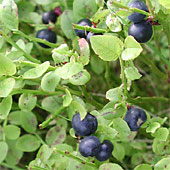
Blueberries and their European cousins, bilberries, have long been used to regulate blood sugar in people with type 2 diabetes.  Recent studies of mice are convincing researchers of the bilberry’s potential in helping people deal with diabetes.

A study published in Nutrition Journal describes a trial involving the examination of the effect of consuming oat meal drinks that contained bilberries or rosehips on healthy young adults.  Researchers specifically looked at how these drinks influenced individuals’ glycemic indexes and insulin levels.  The drinks with bilberry induced a lower insulin response.  Scientists credit either the bilberry or the oat meal base.  Source: Nutrition Journal (Published: 21 May 2011).

Bilberries are also known to impact eye health in remarkably positive ways. mostly due to their antioxidant properties.  Studies show it has helped patients who suffer from diabetic retinopathy and cataracts, just to name a few conditions.


Diabetic Retinopathy: Declining Vision Tied to Lower Quality of Life

Diabetic retinopathy
Image via VA.gov

A new study confirms what might sound like common sense: the more severe one’s case of diabetic retinopathy, the more likely one’s quality of life is to deteriorate.

Published in the journal Ophthalmology (Issue 118, 2011), research suggests that individuals’ quality of life declines more rapidly when their sight loss due to diabetic retinopathy becomes more severe.  The study involved over 1,000 type 2 diabetes patients taking part in the Los Angeles Latino Eye Study.

Authors indicate that quality of life markers related to dependency, mental health, and  tasks that required visual skills, dependence were most significantly impacted by worsening cases of diabetic retinopathy.

Source: OSN Supersite

Link Between Erectile Dysfunction & Diabetic Retinopathy

Not surprisingly, another study finds new information about the link between erectile dysfunction and diabetic retinopathy in men with diabetes.

Published in the journal Urology, this research included men with type 2 diabetes of an average age of 64 years, some of whom exhibited proliferative diabetic retinopathy (PDR) and some of whom were diagnosed severe nonproliferative diabetic retinopathy (NPDR).

Researchers found that there is an association between erectile dysfunction and diabetic retinopathy, regardless of age, time since diabetes diagnosis, and cardiovascular risk factors.

Source: Urology, 4 January 2011

Antioxidants & L-Arginine Help Pregnant Mothers with Pre-Eclampsia


Pregnant woman
image via www.nationalchildrensstudy.gov

Antioxidants have been found to successfully treat yet another medical condition: pre-eclampsia, a condition experienced by 5% of pregnant women that is marked by abnormally high blood pressure.


According to a study published in the British Medical Journal, taking a dietary supplement containing an amino acid and antioxidant vitamins significantly reduced pregnant women’s chances of developing pre-eclampsia.

A trial involving 228 women at high risk of pre-eclampsia were given either a food bar containing the amino acid L-arginine and antioxidant vitamins or a bar containing only vitamins or a placebo food bar.  Results showed that only 12.7% of women taking the amino acid-antioxidant supplements developed pre-eclampsia.  This was compared to 22.5% who received antioxidants and 30.2% who received the placebo.

Researchers are now wondering how L-arginine and antioxidants work together and whether there are any contraindications to this natural therapy.

Source: Science Daily

Computer Vision Syndrome Impacts Quality of Life

Computer Eye Strain
image by Marinela

Research shows that Computer Vision Syndrome results in quantifiable physical symptoms and impacts quality of life.

In a study of 1000 university employees, it was found that people were negatively affected by their time at the computer, regardless of age and gender.  According to researchers at Ohio State University, ergonomics, hours at the computer, and exercise had a great deal to do with the degree to which individuals were bothered by computer eyestrain and other related symptoms such as back and neck pain.  Source: Optometry & Vision Science (August 2007 – Volume 84 – Issue 8.)

Learn how to prevent computer eyestrain with tips on computer set ups, exercises, and supplements at our website.

Blueberries Help Cut Atherosclerosis and Macular Degeneration Risk

April, 2011 edition of Agricultural Research from the USDA is all about the powerful blueberry.

In one article, “Blueberries and Your Health: Scientists Study Nutrition Secrets of Popular Fruit,” researcher Xianli Wu describes his work with blueberries and their ability to reduce atherosclerosis.

“It’s already known that oxidative stress can increase atherosclerosis risk,” says Wu, “so the beneficial interactions of blueberries with these antioxidant enzymes are of interest to us. Since our center specializes in children’s nutrition research, we also want to determine whether blueberry-based interventions early in life could prevent atherosclerosis from developing in later years. If Mom eats blueberries during her pregnancy and feeds blueberries to her child, would that have a protective effect for the child? We don’t know, but that’s something we’d like to determine.”

Other studies have shown that diets rich in antioxidants – especially those found in blueberries – can be instrumental in helping people avoid macular degeneration.

Bilberry & Pine Bark Supplement Mitrogenol Lowers IOP

Glaucoma
Image via nccam.nih.gov

A nutritional supplement comprised of a patented blend of bilberry and pine bark is marketed as Mitrogenol.  A study published in Clinical Opthamology describes a study of 79 people with raised eye pressure levels.  The intraocular pressure (IOP) of participants who took Mitrogenol decreased by 24%.  Those who took the pharmaceutical eye drop Latanoprost experienced a 28% drop in IOP.  A third group that took a combination of both remedies watched their levels go down by 40%

Researchers found that taking these products together helped lower IOP and resulted in better retinal blood flow.  It is noted that Latanoprost has been noted to cause dry eyes, eye color changes, and eyelid irritation.

Elevated IOP is often related to the onset of glaucoma.

Source: https://www.naturaleyecare.com/study.asp?num=294

An earlier pilot study also found that supplementing with bilberry and pine bark can helps lower intraocular pressure (IOP).

In this small study 20 patients who have high IOP received  bilberry and French maritime pine bark  and 18 patients were the control group.

Vision sharpness, IOP and blood flow in the eye were measured 2, 3 & 6 months later.  The researchers reported that the mean IOP was reduced and ocular blood flow improved after 2 months.  These results may constitute a safe complementary treatment for glaucoma or have preventative value.

Bilberry Purity

The compounds found in bilberries, blueberries, and huckleberries are key to preventing and treating not only Glaucoma but poor night visionmyopia macular degeneration diabetic retinopathy cataracts , and computer eye syndrome.

National Institute of Standards and Technology (NIST) is now certifying the amount organic acids available in dietary supplements formulated with Vaccinium berries, including blueberries and bilberries.   These new standards can help consumers buy products made of the berries that they advertise, rather than diluting them with less expensive juices.  Source: www.sciencedaily.com

Substantiates Earlier Research

The above research substantiates earlier Italian research looking at supplementation with bilberry and pine bark. Researchers in Italy reported that nutritional supplements of bilberry and French maritime pine bark can help reduce intra-ocular pressure (IOP).

Authors of the study from the University of Chieti-Pescara in Italy studied thirty-eight subjects with intraocular hypertension. Twenty subjects were given bilberry and French maritime pine bark; eighteen subjects were not treated. The visual acuity, IOP, and ocular blood flow were measured at two, three, and six months. After two months, the group taking the supplements showed a decrease in the mean IOP. No side effects were observed and ocular blood flow improved.

Having reviewed the results, these researchers believe that food supplements of bilberry and pine bark may represent a safe preventative intervention for lowering the risk of developing glaucoma by supporting a healthier pressure in the eyes.

SOURCE: “Effects of Mirtogenol on ocular blood flow and intraocular hypertension in asymptomatic subjects”, Robert Steigerwalt Jr., et al, Molecular Vision 2008; 14:1288-1292.

Non-Invasive Therapy May Help Stroke Victims See Again

cycling
Image via cdc.gov

Stroke patients may have new hope of recovering their eye sight.  The company NovaVision describes how its clinically tested light stimulation technology can help stroke survivors see again.

Vision Restoration Therapy (VRT) seeks to “rewire” the part of the brain responsible for vision.  VRT works to make healthy visual nerves make up for those that are damaged by a stroke or other brain trauma.  Patients who have undergone this therapy describe how they are able to read and enjoy seeking films again.  Some are even able to drive after having to give up their licenses due to vision loss.

Source: Medical News Today

Our Vision Wellness Protocol is dedicated to enhancing eye health and overall health.  A healthy lifestyle is instrumental in preventing medical emergencies like strokes.