Alzheimer’s Disease Onset Delayed In Bilingual People


Closeup portrait of a smiling elderly woman

Parlez-vous Français?

A new study in the journal Neurology indicates that speaking a second language can help fend off the development of neurological diseases like Alzheimer’s.

Research indicates that those who speak a foreign language are likely to be diagnosed with Alzheimer’s four years later than those who only speak one language.  Brain scans indicated that bilingual people demonstrate superior cognitive function even when they have more advanced brain deterioration when compared to their single language speaking counterparts.  Previous studies have established that speech and language issues are linked to dementia.  Source: https://www.foodconsumer.org/newsite/Non-food/Disease/language_delays_onset_of_dementia_0219110210.html


Certain supplements have been reported to aid in the prevention of Alzheimer’s including acetyl-L-carnitine, antioxidants, and B vitamins.  For an extensive discussion of complementary treatment for Alzheimer’s disease, please visit our website.

 

Blood Test Can Determine Chance of Developing Diabetic Retinopathy

Diabetes - Blood Test
image via ndep.nih.gov

A blood test may help determine your risk of developing diabetic retinopathy.

A study published in the Archives of Ophthalmology describes how a HbA1c test, which measures the amount of glycated hemoglobin in your blood, can indicate whether individuals with diabetes are likely to develop the sight threatening condition diabetic retinopathy. Researchers reveal that people with unhealthy HbA1c and blood sugar levels run a significantly higher risk of developing diabetic retinopathy within 10 years.

The scientists hope their findings will help doctors spot patients who are most likely to lose their eyesight and make recommendations on how to improve their lifestyle choices to maintain their eye health.

Source: MD Labs

A healthy lifestyle is a cornerstone of our plan for preventing diabetic retinopathy and other eye diseases.

Fish Oil Can Reduce Risk of Breast Cancer As Well As Eye Disease

Taking fish oil every day can reduce the risk of developing breast cancer.

A study published in The Journal of Nutrition studied women with early breast stage breast cancer who took omega fatty acids EPA and DHA in the form of both seafood and dietary supplements.  Women who took the most EPA and DHA were 25% less likely to suffer from further breast cancers compared to those in the study who took markedly less of the omega-3s.  Source: https://jn.nutrition.org/content/141/2/201.short?rss=1

This is great news – and it just adds to the already ample evidence about the benefits of fish oils.  Studies have also shown that omega-3 fatty acids can help ward off macular degeneration, retinitis pigmentosa, and dry eye syndrome, just to name a few.  Visit our research pages to learn more.

Care for Early Breast Cancer

On another positive note, researchers reported  that for women who receive breast cancer treatment, may not require an operation to remove the lymph nodes under the arms.  This is a procedure that often leaves the patient with very swollen and painful arms.  The scientists reported that such surgery did not help survival rates or stop the cancer from recurring.

Another study determined that one dose of radiation directly to the tumor location immediately after breast cancer surgery, was just as effective as weeks of radiation treatments following surgery.

Reported by the New York Times

Patient Expectation Greatly Influence Drugs’ Effectiveness

taking medicationExpectations can be powerful forces – particularly when it comes to the expectations associated with the effectiveness of pain medications.

A study published in Science Translational Medicine shows that expectations can shape both a drug’s benefits and negative side effects. Using functional MRI technology, researchers tracked study participants’ reaction to pain under three conditions: participants had no expectation of receiving pain killers (in this case, a potent opiod); participants expected pain relief from the medication; and participants expected that the medication would actually make the pain worse.

Researchers found that positive expectations made the medication twice as effective.  On the other hand, when they had negative expectations the pain killers were essentially useless.  Different parts of the brain were stimulated depending on whether the participants were optimistic or pessimistic about the effects of the drug.

The scientists concluded that patients’ expectations are critical to the effectiveness of a prescribed drug.  They also say that “may be necessary to integrate patients’ beliefs and expectations into drug treatment regimes alongside traditional considerations in order to optimize treatment outcomes.”  Source: https://stm.sciencemag.org/content/3/70/70ra14.abstract

Lifestyle Factors & Glaucoma Risk

Do Weight, Smoking, and Drinking Influence Chances of Developing Glaucoma?

A 2011 study published in the Archives of Ophthalmology seeks to determine how “lifestyle-related risk factors, such as socioeconomic status, smoking, alcohol consumption, and obesity” can influence the likelihood that people will develop  open-angle glaucoma.

Nearly 4000 people were part of this nearly 10 year long study. None had glaucoma at the outset, but at the end, 2.7% had developed the eye condition.

The researchers claim that socioeconomic status, smoking, or alcohol intake were not associated with glaucoma.  They did assert that women who were obese were less likely to develop glaucoma (other studies have found the same thing).  Source: https://archopht.ama-assn.org/

These findings are in opposition to other studies that have linked smoking to glaucoma.  Studies do show that stress is a major factor in the development of glaucoma.

Smoking Increases Glaucoma Risk

New study shows smokers have increase risk of getting glaucoma. Specifically, inflammation and apoptosis marker levels increase with smoking in the aqueous humor and plasma samples of POAG women. Smoking could be an important additional risk factor for glaucoma progression in elderly women.

Source: Zanon-Moreno V, Garcia-Medina JJ, Zanon-Viguer V, et al. Smoking, an additional risk factor in elder women with primary open-angle glaucoma. Mol Vis 2009;15:2953-2959.

Editor’s Note: Chronic inflammation and related cell death (apoptosis) due to smoking is implicated in many chronic diseases including heart disease, diabetes, macular degeneration and cancer.  Eye disease is often related to poor circulation, chronic systemic inflammation and/or the lack of availability of nutrients.

Weightlifting Can Increase Pressure in the Eyes

Weightlifting, especially if one holds his or her breath during the exercise, may cause a temporary increase in pressure within the eyes.  Glaucoma is sometimes linked to increased pressure in the vitreous humor of the eye.

Generally, intraocular pressure generally decreases after both aerobic and anaerobic exercise. Higher intraocular pressure has been reported during the Valsalva maneuver (air is forced against a closed windpipe causing an increase of pressure in the chest). This action occurs during coughing, vomiting, playing wind instruments, as well as during some weightlifting sessions.

According to ScienceDaily.com, study authors note that a certain type of glaucoma (normal-tension glaucoma) is more common in individuals who are subjected to frequent changes in eye pressure. “Prolonged weightlifting could be a potential risk factor for the development or progression of glaucoma. Intermittent intraocular pressure increases during weightlifting should be suspected in patients with normal-tension glaucoma who perform such exercises,” they conclude. “Patients with normal-tension glaucoma should be questioned as to a history of regular weightlifting.”

Heavy Computer Use & Glaucoma

Those who use computers heavily are at greater risk for glaucoma than the general public, particularly those who are short-sighted. Glaucoma is an insidious disease characterized by the decrease of peripherial vision eventually leading to severe vision loss.

A 2004 cross-sectional study in 9124 Japanese workers indicated that there was a possible association between heavy computer users and glaucomatous visual field abnormalities. In other words – people who computers heavily (ie. programmers, software engineers, gamers) could be jeopardizing their sight.

The study looked at typical daily computer use, as well as long-term computer use history. More than 500 participants (5.4%) had problems with peripheral vision. Of that group, one third were found to have glaucoma … perhaps more than a third, since some workers with peripheral vision problems didn’t receive all the testing to accurately diagnose glaucoma.

Still, it may not be necessary to quit your day job or to give up your favorite hobby.  Glaucoma can be prevented.  Changes in diet and lifestyle can reduce your risk of glaucoma and other eye diseases and improve your overall health.

Swim Goggles and Increased IOP

Australian researchers took a look at whether swimming goggles elevated intraocular pressure.  They drilled holes in to the goggles permitting special measurement using a method called applanation tonometry in which force against the cornea allows inference as to the degree of pressure inside the eye.  IOP was measured prior to putting on the swim goggles, two minutes after they’d been put on, twenty minutes later  and after their removal. The testing was done with a variety of types of swim goggles.

The researchers found that in fact, IOP did increase while swim goggles were being worn by an average of 4.5 mm Hg.  The size of the face of the goggles was also correlated to IOP – with smaller faces having higher pressures.  The study was not performed while subjects were actually swimming.

Source: “Wearing swimming goggles can elevate intraocular pressure”, Morgan, et al, Br J Ophthalmol. 2008 Sep;92(9):1218-21.

Learn more about glaucoma’s causes at our website.


Macular Degeneration Linked to Stroke in the Elderly

Studies have established that elderly people with age related macular degeneration are more likely to experience strokes. A new study presented at the American Stroke Association’s International Stroke Conference 2011 is the first to determine the type of stroke that people with AMD are likely to suffer.

Researchers looked at two kinds of strokes: those caused by brain hemorrhage (aka a “bleeding stroke”) and those caused by brain infarction (a blood clot).

Macular degeneration is associated with brain hemorrhages rather than brain infarction.

Scientists involved with the study urge AMD patients not to worry that they will inevitably experience hemorrhaging in the brain.  They state that more research is necessary.  One doctor speculates that AMD does not cause bleeding stokes.  Instead, the two medical conditions may stem from a common cause.  Source: https://www.medicalnewstoday.com/articles/216090.php

Learn about how to prevent and even reverse macular degeneration.

Omega-3 Fatty Acids Help Fight Diabetic Retinopathy and Macular Degeneration

Omega-3 & Diabetic retinopathy
image via www.research.gov

A new study further supports what we know about how beneficial omega-3 fatty acids can be, particularly in the prevention of diabetic retinopathy. This new study, performed at Children’s Hospital Boston, describes how these “good fats” most commonly found in fish oil actually work to prevent diabetic retinopathy.

Both diabetic retinopathy and another potentially blinding condition, macular degeneration, are caused by the abnormal growth of leaky blood vessels within the eyes.  Mice whose diets were supplemented with omega-3 fatty acids (which many people on a Western diet do not get enough of) were 50% less likely to have these eye conditions compared to other mice who were given lots of omega-6’s (fats more commonly found in the Western food chain).

This study shows how omega-3 fatty acids actually have  “a direct effect on blood vessel growth (angiogenesis) that selectively promotes the growth of healthy blood vessels and inhibits the growth of abnormal vessels.”

Source: MedicalNewsToday.com

Learn more about how to prevent diabetic retinopathy through diet, lifestyle habits, and other supplements.

See information on natural treatment options for macular degeneration.

Blood Pressure Medication Administered After Stroke Can Harm Patients

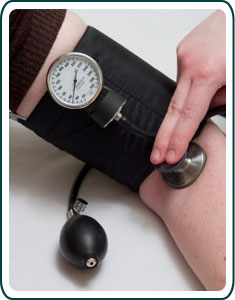
blood pressure cuffBlood pressure medicines and stroke victims don’t mix, says a new study out of Norway.

The study, published in The Lancet, describes how the administration of blood pressure medication to people who have just had a stroke who also have high blood pressure will offer them no benefit and may even be harmful.

Researchers say that stroke victims should not be given anti-hypertensive medications during the week after a stroke.  In some stroke patients the drugs had no effect; in others there were actually negative outcomes associated with the blood pressure medications.  This study indicates that doctors should stick to current guidelines and abstain from trying to lower stroke patients’ blood pressure.  Source: https://www.healthfinder.gov/news/newsstory.aspx?docID=649806

People who have high blood pressure are 4 to 6 times more likely to have a stroke.  Learn more about how to lower blood pressure naturally – before you have to worry about whether you can lower it post-stroke.

Also, visit our website to learn about the negative side effects of commonly prescribed pharmaceuticals.

Advances in Retinal Implants May Help Macular Degeneration Patients

Scientists are developing new technologies that will make retinal implants better.  When diseases like macular degeneration or retinitis pigmentosa become so advanced, some people may choose to turn to surgically implanted artificial retinal devices.

Existing technology has made it possible for a signal sent from a video camera attached to a pair of glasses to transmit images to device placed on a person’s retina.

New advances at the Italian Institute of Technology show how using organic polymer semiconductor can improve the quality of the images and prevent retinal scarring. They are actually developing ways for this special semiconductor to communicate with the neurons in the brain.  Researchers are hoping these new techniques will eventually allow people with the implants to see more clearly and also see in color, not just black and white.

Source: https://www.technologyreview.com/

Retinal implants are not for everyone.  It is possible to slow the progression of degenerative eye diseases without surgery. Learn more about how to slow, stop, or even reverse the progression of diseases like macular degeneration and retinitis pigmentosa on our complementary treatment pages.

Fireplaces and Wood Stoves Linked to Dry Eyes and Lung Problems

Do you have a fireplace or a wood stove that helps keep you cozy this winter?  A new study published in the journal Chemical Research in Toxicology describes how indoor air pollution caused by wood smoke have been linked to various lung problems.

Researchers describe how inhaling wood smoke particulate matter has been linked to heart disease, asthma, and bronchitis.  It is likely that the inhaled wood smoke is also carcinogenic.

Source: ScienceBlog.com

Indoor fires can also dry up the air, and dry air has been linked to dry eye syndrome. Be sure to run a humidifier in these dry winter months.  Learn more about how to prevent and treat dry eye symptoms.