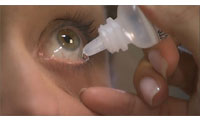
Dry Eyes At the Office?


eye frops
Image courtesy of nei.nih.gov

Dry Eye Syndrome is the most common eye complaint that we hear about from our patients and clients.

A study out of Denmark surveys the causes of eye discomfort in office settings.

According to the study authors: “Ocular discomfort,” characterized by burning, dry and itching eyes is associated with the presence of aerosols and combustion products and other sensory irritating indoor pollutants.  Other factors that contribute to dry eye include prolonged periods of detailed visual tasking.  The general climate in an office – if it has low humidity, high temperature, or is drafty – will also contribute to dry eye symptoms.

Source: https://www.ncbi.nlm.nih.gov/pubmed/20833234

Self help and prevention tips for dry eye are available at our website.

Computer eye strain is also a common problem when you spend the day at a desk.

Processed Red Meat Associated with Metabolic Sydrome, Heart Disease

hotdogs
Image courtesy US Govt.

An estimated 50 million Americans have Metabolic Syndrome, which means they are at increased risk of coronary heart disease and other diseases related to plaque buildups in artery walls.  Per the American Heart Association, those with MetS suffer from: abdominal obesity, blood fat disorders, elevated blood pressure, and insulin resistance or glucose intolerance.

A new study published in the journal Nutrition, Metabolism and Cardiovascular Diseases finds that one doubles his or her risk of developing MetS if they consume high amounts of red meat, especially processed red meat.

The researchers say that this is the first study of its kind to specifically examine the consequences of eating processed red meat.  Processed meats include: hot dogs, bologna, sausage, ham, and other packaged lunch meats.

Source: Foodnavigator-usa.com

New Technology to Diagnose “Lazy Eye” in Children

Amblyopia or “lazy eye” can lead to vision loss in a person’s weaker eye if it goes untreated.  Luckily, if amblyopia is diagnosed and worked on before age seven, more than three quarters of children can achieve at least 23/30 vision.

Because there are concerns that caregivers can miss the signs of amblyopia, experts are looking into a better way to diagnose the problem.

A program in Iowa sponsored by he University of Iowa and the Iowa Lions Clubs worked together over the last decade to screen almost 150,000 children using technology called the PhotoScreener.  According to the source of this story, MedicalNewsToday.com, this device “records the pattern of light reflected through each of the child’s pupils as the child’s eyes are photographed.”

The PhotoScreener is also helpful in finding such conditions as  unequal visual acuity between the two eyes (anisometropia), high nearsightedness, high farsightedness, astigmatism, and strabismus.

For more on ways that Vision Therapy can help amblyopia and other eye convergence problems, please visit our website.

Probiotics Prevent Coughs in Infants

infant
Image courtesy of NIH.gov

Kids get colds.  It’s just part of life, but it’s best to keep babies from experiencing their first cough or cold for as long as possible.

New research out of Finland shows that babies under eight months are a third less likely to develop respiratory illnesses if they are given daily probiotic supplements.

In the study published in the British Journal of Nutrition, 65% infants who received daily Bifidobacterium animalis subsp. lactis BB-12 developed respiratory illnesses.  This is compared to the 94% of children who did not receive the supplements developed respiratory illness.

Source: Nutraingredients

Other reports find that the chances of developing a cold decrease for adults who take probiotics too. 

Prevent Computer Eyestrain with Ergonomics, Eye Exercises, Diet and Supplements

To prevent computer eyestrain it is important to analyze your habits – your time in front of the screen, your light source, your posture.  See more about how to set up your desk to avoid computer eyestrain at our website.

In addition to good ergonomics, you can also try eye exercises and think about your diet.

A study published in Applied Ergonomics reveals that eyestrain may be eased by taking a daily supplement containing blackcurrant fruit extract, lutein, and zeaxanthin.  These antioxidants are powerful aids to eye health.

Prevention is always the best medicine.  That means eating right and changing any lifestyle habits that may be detrimental to your health. Learn more about how to prevent computer eye strain today.

Regeneration of Human Cells Could Reverse Macular Degeneration and Retinitis Pigmentosa

Image by tico24

Shakespeare’s fictional witches made a potion with eye of newt, but now some very real researchers are looking to the regenerative powers of newt to save human sight.

Scientists at the University of California, San Diego have been awarded a National Institutes of Health grant to study regenerative potential of retinal cells with hopes of finding treatments for macular degeneration and retinitis pigmentosa.

Inspired by goldfish and newts who have the ability to regenerate a lost limb or eye, researchers are hoping to make it possible for humans to do the same thing for retinal cells.  The team at UCSD is specifically looking at Muller cells, which fish use to regenerate nerve cells after eye injuries and which are also present in the nervous system of humans.  The human genome is close enough to those of others in the animal kingdom to find these cell commonalities.  It is hoped that these Muller cells can be turned into photoreceptors in the eye.  When photoreceptors die off, people lose visual function to diseases like macular degeneration and retinitis pigmentosa.

Source: https://www.eurekalert.org/pub_releases/2010-09/uoc–urn092810.php

Scientists at UC Irvine have created an early stage retina from human embryonic stem cells.  It is the first three-dimensional tissue structure to be made from stem cells and bring us closer to the development of transplant-ready retinas to treat eye disorders such as retinitis pigmentosa and macular degeneration that affect millions.  Researchers managed to employ a technique that allowed them to create the multiple cell types necessary for the retina.

Source: Journal of Neuroscience Methods, 4-24-10.


Video Gamers Have Better Hand-Eye Coordination But Risk Computer Eyestrain

gamersDoes video game playing offer health benefits or health risks?  As with many things, the answer is “it depends…”

Researchers at the Centre for Vision Research at York University in Toronto have discovered that young men who spend a lot of time playing video games do better at performing other complex visuomotor tasks.  Using functional MRI technology, scientists found that the brains of gamers had actually been “rewired.”  They used a different part of their brain than their non-gaming counterparts when performing complex task involving hand-eye coordination.

According to the source of this story, Medical News Today,” Such findings can hold important implications for research into neurodegenerative diseases like Alzheimer’s, where people with the disease find it increasingly difficult to complete even the simplest hand-eye coordination tasks.”

On the other hand, studies have shown that people who spend a great deal of time in front of computer screens are susceptible to computer eyestrain which can lead to glaucomaFor hints on how to avoid computer eyestrain, please visit our website.

Study of Fish Oil Quality and Content

fish oil capsules
Image courtesy of nccam.nih.gov

Independent testing by a White Plains, NY firm, ConsumerLab.com, has found that 7 of 24 fish oil supplements tested exhibited quality problems.  Some products exhibited multiple issues.

  • Three products contained less of the omega 3 fatty acids EPA and/or DHA than claimed,
  • Three product were spoiled (including a children’s supplement)
  • One enteric-coated product released its ingredients too early
  • One supplement for pets exceeded the contamination limit for PCBs.

We recommend fish oil supplements highly because their Omega-3 fatty acids help improve circulation, integrity of blood vessels, proper brain functioning, flexibility and permeability of cell membranes, and helps protect the retina’s photoreceptor cells.  They help to prevent and treat such conditions as glaucoma and macular degeneration.

You can access detailed test results at ConsumerLab.com

Dry Eye Associated with Oil Gland Dysfunction, Cataracts Surgery, Glaucoma

Researchers are examining dry eye syndrome‘s relationship to meibomian gland dysfunction and other eye conditions.

According to The Cornea & Contact Lens Society of New Zealand, “meibomian glands are the oil-producing glands located in both the upper and lower eyelids… This oil helps to stop the water in the tears from evaporating, thus helping to prevent dry eyes.”  Dry eye symptoms can result when this stabilizing oil does not reach the tear film.

Spanish scientists publishing in Cornea found that nearly 50% of subjects with dry eye also had meibomian gland dysfunction.

In this study, it was also concluded that “Pterygium*, trauma, cataract surgery, pseudoexfoliation, and glaucoma are associated with signs of dry eye.”

Source: https://www.ncbi.nlm.nih.gov

*If someone has a raised, cream colored growth in the white of his or her eye, then it might be what is called a pterygium.  These non-cancerous growths generally grow in the nasal side of the white of the eye. Caused by extended time spent in hot, windy environments, people who live on the equator are 10 times more likely to develop this problem than those living in the United States.

Though not dangerous, a pterygium can eventually distort vision because it can grow onto the cornea, and eventually even onto the central part of the eye which can block entering light. If removed surgically, there is a 40% chance that the problem will recur and the growth will return to be even larger and more aggressive.

Reducing Glaucoma and Diabetic Retinopathy in African Americans

Older black Americans are twice as likely to suffer from eye diseases, particularly glaucoma and diabetic retinopathy, than their white contemporaries.

A new grant from the Centers for Disease Control and Prevention (CDC) will allow researchers at the University of Alabama at Birmingham to work on reducing the rates of visual impairment in African Americans.  It is believed that inadequate access to medical care is the cause of this high rate of eye disease in this particular population.

According to study leader Cynthia Owsley, Ph.D, “People with vision impairment are at increased risk for depression, transportation challenges, being unemployed, placement into long-term care, injury and death.”

Source: https://main.uab.edu/Sites/MediaRelations/articles/80565/