Improving Vision In Athletes – And the Rest of Us

pewee baseball
image via santabarbaraca.gov

A survey of Italian coaches, trainers, and physical education teachers sought to determine attitudes toward vision correction in athletes.  Those interviewed believed it was important to correct vision problems during sports, but they were not likely to recommend that their athletes try contact lenses.  Coaches who wore contacts themselves, however, were more likely to suggest them to sports participants.

The researchers, who published their findings in Contact Lens and Anterior Eye, believe that education is key to helping more athletes find solutions to their vision deficits. Source: ScienceDirect

Another solution besides corrective lenses may be the daily practice of eye exercises. (You don’t even have to be an athlete to do them!)

Learn more about how to prevent and treat myopia (nearsightedness) naturally.

Dry Eyes Can Be Relieved With Evening Primrose Oil

Dry eye syndrome can be a difficult condition to cope with, especially if you are a contact lens wearer.

Many patients found that the eye drops that can be purchased at the pharmacy don’t work, and can even be hazardous to use – eye drops that contain preservatives can aggravate dry eye symptoms, and even kill corneal cells. Eye drops that promise to “get the red out” will reduce circulation in the eye, decrease production of the tear film, and worse, eventually make your eyes even drier.

A study published in Contact Lens and Anterior Eye showed that the omega-6 fatty acids in evening primrose oil can help reduce dry eye symptoms in female contact lens wearers.  After six months, the women in the trial who were administered evening primrose oil reported less eye dryness than those who received the placebo (olive oil).

In an earlier  pilot study, patients suffering from dry eye symptoms who exhibited a chronic need/use of lubricant drops were given X500 mg capsules of evening Primrose oil (Efamol-73% linoleic acid and 10% gamma-linolenic acid), 50 mg vitamin B6 (pyroxidine) and 1 g vitamin C three times a day. Over 50% of those in the study showed substantial improvement within 2-6 weeks.

Read more on dry eyes.

Smoking Increases Risk of Alzheimer’s, Cataracts, and Macular Degeneration

no smoking sign
via blog.usa.gov

We recommend that anyone interested in enjoying healthy eyes quit smoking because it has been linked to eye diseases including cataracts and macular degeneration. Here’s another reason to quit smoking: cigarettes increase your chance of developing Alzheimer’s disease by over 150%.

Though researchers are not exactly certain of why smoking can lead to Alzheimer’s and vascular dementia, it may have something to do with the fact that smoking causes inflammation and oxidative stress, both of which are known markers for Alzheimer’s.

The study, published in the Archives of Internal Medicine, followed over 21,000 Californians over three decades.  Source: livescience.com

A non-smoking lifestyle marked by other healthy choices related to diet, exercise, and stress management are the key to eye health and overall health.  Learn more about the Vision Wellness Protocol.

Learn more about how understanding and managing Alzheimer’s naturally.

Natural Ways to Fight “Old Eyes” or Presbyopia


People who develop presbyopia (from the Latin, meaning “old eyes”) have difficulty focusing on close objects because the crystalline lens of the eye loses its flexibility.  Though it may seem to happen suddenly, this change in vision takes place over many years.  Signs of presbyopia include the tendency to hold reading materials at arm’s length, blurred vision at normal reading distance, and eye fatigue along with headaches when doing close work.

The American Society of Cataract & Refractive Surgery (ASCRS) is aiming help patients and the public better understand presbyopia.  They have introduced the new term “Age-Related Focus Dysfunction” to “medicalize” the condition.  The ASCRS  has a very different perspective on eye health than we do at Natural Eye Care, and while they seek to educate the public about surgical options for dealing with “short arm syndrome,” we would emphasize the ways in which healthy lifestyle and diet choices can keep eye young and flexible.

It’s important to realize that deteriorating eye sight is not inevitable just because you have celebrated forty-five birthdays or more.

To combat presbyopia, we recommend a combination of visual therapy, nutrition, and lifestyle changes to help slow down the progression of farsighted vision and possibly even improve vision. Genetics, stress, diet, and even personality type all play a role in the deterioration of vision and the onset of disease. Certain nutrients including lutein, zeaxanthin, vinpocetine, l-lysine can be very helpful.

A good place to start is with eye exercises that can help to bring energy and blood to the eyes, thereby helping to drain away toxins or congestion to the eyes.

There are surgical options out there, with more coming down the pike all the time, but why not improve your diet (leafy greens, whole grains, no transfats), quit smoking, cut back on alcohol, start an exercise (20 minutes per day of aerobic activity is a great start), and take up a relaxation practice (yoga, meditation, etc.)?

Presbyopia Affects Women the Most

Research focused on individuals in the developing world is showing that presbyopia affects men and women at different ages and in different ways.

A number of studies have revealed that women are more likely to suffer from presbyopia across the world – in Ghana, India, and Brazil.  Due to economics, women are also less likely to be able to obtain glasses than men.  For example, in a study of people with presbyopia in Tanzania, only 6% with the condition had glasses and nearly all of those were men.

While this condition is often associated with difficulties associated with reading and writing, in many parts of the world presbyopia interferes with other essential daily tasks like “lighting and adjusting lamps, winnowing grain, sorting rice, weeding, sewing, cooking food, and dressing children.”

Source: Community Eye Health Journal

Multifocal Contact Lenses for Presybyopia: A problem

Multifocal contacts lenses are often prescribed to people with presbyopia and have been linked to problems with driving at night.

An article published in Investigative Ophthalmology & Visual Science describes how people wearing the lenses have a harder time recognizing road hazards.  Though the subjects could read the road signs, they had to be closer to see them clearly than when they were wearing glasses.

Researchers hope that their findings will help move manufacturers to improve the optical quality of their multifocal lenses.

Source: https://www.medicalnewstoday.com

Learn more about presbyopia.

Retinitis Pigmentosa Patients Helped By Beta Carotene

Sometimes those bits of wisdom that “everybody knows” just have to be true.  In this case, yes, carrots really are good for your eyes.

A report at the recent American Academy of Ophthalmology (AAO) – Middle East-Africa Council of Ophthalmology (MEACO) Joint Meeting described how beta carotene can help people with retinitis pigmentosa.

Retinitis pigmentosa is a hereditary disease most often marked by the onset of night blindness during childhood that eventually leads to a loss of peripheral and eventually in many cases blindness.  Previous research has shown beta carotene, 9-cis, can help treat night blindness.  In this study, one third of the retinitis pigmentosa patients under observation showed improved visual function after taking a beta carotene supplement for 90 days. Source: https://www.medicalnewstoday.com/articles/204979.php


iPhone Good Enough for Eye Doctors to Examine Patients’ Results

Maybe they will start calling it the EyePhone…

At the  American Academy of Ophthalmology (AAO) – Middle East-Africa Council of Ophthalmology (MEACO) Joint Meeting in Chicago researchers described how images on the iPhone are of high enough quality that they can be used by eye doctors who want a portable way to carry around patients’ diagnostic images.

It is common for images of patients’ eyes to be viewed on a computer screen, but researchers at the University of Pittsburg School of Medicine decided to see if they could jump on the portable device wagon.

The study involved the office visits of over 100 patients with diabetic retinopathy.  For some, the examining doctor relied on computer screens to evaluate images of the eyes and for others, the iPhone.  According to Dr. Michael J. Pokabla. “There were no significant differences between evaluations and recommendations using the two different systems, and the doctors rated the iPhone images as excellent. We conclude that mobile devices like the iPhone can be used to evaluate ophthalmic images.”

Source: https://www.medicalnewstoday.com/articles/204895.php

Study of Astigmatism in Children

Genetics seems to be the reason that Hispanic kids are more likely to have astigmatism than African-American kids.  Research shows that  17% of Hispanic children may exhibit astigmatism between the ages of 6 months and 6 years.

The good news is that children from all ethnic groups who show evidence of astigmatism in the first year of life tend to grow out of the condition.  In the case of the Hispanic children in the study, only 5% had significant enough astigmatism to require corrective lenses.

As part of the Multi-Ethnic Pediatric Eye Disease Study, researchers have been tracking trends in vision conditions so that health practitioners have an idea of what to look for in their patients.

Source: Medscape

Teaching Eyes to Work Together: Treatment for Amblyopia or Lazy Eye

Depth perception, the ability to see our 3D world, relies on the eyes’ ability to work as a perfect team.  In people with an eye imbalance or amblyopia, also known as lazy eye, one team member (one eye) is stronger than the other and depth perception becomes compromised.

Push Pull Training Method

A study published in Current Biology presents a new way to correct sensory eye dominance.  Researchers call it a “push-pull training method” that proved to improve depth perception in study participants.

When caught early, amblyopia (lazy eye) in children can be corrected through covering the stronger eye so that the weaker eye is forced to do the work of seeing.  This new method is focused on adults who do not respond as well to such strategies.  The researchers’ new approach involves making the two eyes compete to see an image but giving the weaker eye an advantage so that it learns how to win, so to speak.

Source: medicalnewstoday

Acupuncture Treatment for Lazy Eye

Chinese medicine is a key aspect of our treatment plan at Natural Eye Care, and acupuncture is one of the best tools we have in our medicine chest.

A new study published in the Archives of Ophthalmology finds that acupuncture can help treat lazy eye or amblyopia.

It is vital that amblyopia is diagnosed and treated early – up to age 7 is ideal.  Between ages 7 and 12 the chances of remedying lazy eye with the traditional method – patching the “good” eye so the affected eye learns to work harder – is reduced to a 30% effective rate.

The Chinese researchers who published this study found that acupuncture alone was more effective than eye patching.  In 41.5% of the children who received acupuncture the lazy eye was considered “resolved” compared to only 16.7% of kids whose eyes were patched.

Source: https://www.medicalnewstoday.com

Neurological Cause

Researchers at New York University have found a neurological cause for amblyopia.

Amblyopia is actually the result of developmental problems in the brain and its neurons, rather than the eye itself.  Also, they have found that the issue is not only related to problems in the visual cortex (the part of the brain that processes images), but from other parts of the brain as well.

For more on binocular conditions, visit our website.

Treating Glaucoma Naturally; Focusing on the Needs of Individual Patients

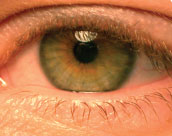
eye close up
Image via nida.nih.gov

At Natural Eye Care, we tend to have a different philosophy on how to treat and prevent eye conditions such as glaucoma compared to those in the conventional medical community.  One thing we definitely agree with, however, is that patients need to be seen as individuals with specific needs, especially when it comes to a disease like glaucoma.

An article at OSN SuperSite discusses the importance of crafting a specific medical regimen for glaucoma patients. They talk about pharmaceutical options, while we are advocates of natural approaches including diet, exercise, stress management, and nutritional supplementation.  (See our Vision Wellness Protocol for an introduction to this approach.)

While the doctors interviewed  in the above mentioned article focus a great deal on managing intraocular pressure and look at it as the major way to manage the progression of glaucoma, we know that more and more people are developing normal-tension glaucoma (NTG) and that progressive vision deterioration can occur even with IOP-lowering intervention. We advocate natural supplements such as ginkgo biloba that have been proven to improve pre-existing visual field damage in some individuals suffering from glaucoma.


Computer Eyestrain: Men Say It’s a Bigger Problem for Them

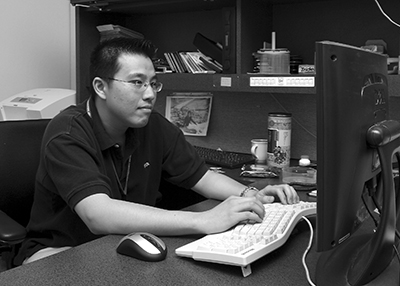
man looking at computer monitor
Image courtesy of bls.gov

The results are in from a online survey sponsored by the American Optometric Association.  It seems that men and women seem to see the world differently – at least when it comes to reporting computer eyestrain. Source: www.medicinenet.com

The numbers are relatively close.  Fifty-nine percent of men compared to 53% of women say that they have vision problems from spending too much time looking at a screen.  Over 50% of all respondents say that they take breaks every half hour or hour, but women are more likely to take a break every 20 minutes.

Less than 20% of people do take breaks every 20 minutes as we at Natural Eye Care recommend to prevent computer eyestrain.

Other tips to ward off computer eyestrain:

  • Frequently look at something more than 20 feet away.
  • Blink regularly to keep your eyes moist.

See more tips on preventing computer eyestrain and an important warning on the connection between computer time and glaucoma.