Glaucoma Associated with Metabolic Syndrome

image via www.nih.gov

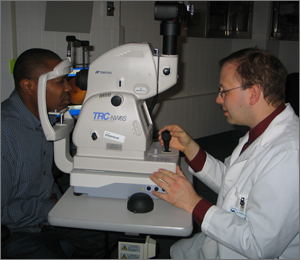
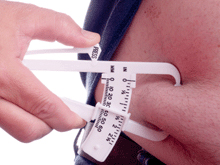
Don’t just take it from us that glaucoma risk increases in those who have diabetes, high blood pressure, and who are overweight.  Researchers publishing in the journal Ophthalmology have found that these conditions, which together are labeled “metabolic syndrome” are all linked to the development of open-angle glaucoma.

A staggering 20% of people in America are said to have metabolic syndrome.  Both metabolic syndrome and glaucoma are associated with aging, so, as the US population gets older, scientists believe that both conditions with become more prevalent.

This study included over two million adults over age 40.  The study authors analyzed the results from the subjects’ eye care records to discover the correlations between metabolic syndrome and glaucoma.  According to this story’s source, PCON Supersite, “Raw data showed that 1,576,993 subjects had at least one metabolic disease; 55,090 subjects had OAG.”

PCON Supersite goes on: “Adjusted data showed that subjects with diabetes alone had a 35% increased risk of developing OAG, and those with hypertension alone had a 17% increased risk. Those with diabetes and hypertension combined had a 48% risk. Those with hyperlipidemia alone had a 5% decreased risk. Obese subjects had a 14% increased risk.”

Learn more about your glaucoma risk factors.

 

Diabetes: Insufficient Water Intake Linked to Blood Sugar Problems

Here’s another reason to stay well-hydrated this summer: drinking at least 34 ounces of water each day can cut your risk of developing high blood sugar (hyperglycemia).

A French study shows that people who drink at least four eight ounce glasses of water per day were 21% less likely to develop hyperglycemia over a nine year period compared to those who had less than 16 ounces each day.

The report was presented at the annual meeting of the American Diabetes Association.  Prediabetes, which is marked by elevated blood sugar levels, affects nearly 80 million American and greatly increases one’s risk of developing full blown diabetes and its accompanying eye condition, diabetic retinopathy.  Source: WebMD

When you’re drinking that extra glass of water today, remember that increasing your water intake to a recommended eight glasses per day can also help you deal with dry eyes.


Diabetics Know Lifestyle Changes Improve Health, But Behaviors Are Hard to Change

Diabetes & Lifestyle changes
Image via cancer.gov

Changes in lifestyle are usually the most important way that individuals with diabetes can control their conditions.  Most people seem to know this, but a new survey shows that many diabetics do not follow that advice.

A study called SHIELD (The Study to Help Improve Early Evaluation and Management of Risk Factors Leading to Diabetes), which was presented at the annual meeting of the American Diabetes Association, surveyed nearly 4,000 people with type 2 diabetes.  In response to questions about the link between diabetes and obesity, 87% said they knew excessive weight contributed the disease, but only 70% of respondents reported trying to lose weight in the preceding year.  Only a third of those surveyed had managed to maintain their target weight for longer than six months.  Almost one-fifth of those studied (17%) said they preferred to take medication to control their conditions rather than try diet and exercise.

Source: WebMD

At Natural Eye Care, we recommend that those with diabetes and the related condition diabetic retinopathy manage their condition with proper lifestyle habits, dietary changes, nutritional supplementation, and exercise.  We also recommend this approach to people with a host of other eye conditions including macular degeneration and glaucoma.  When there is something wrong with your eyes, it is so rarely just about the eyes themselves – so often the eyes are indicating that there is an issue affecting the rest of the body as well. For example, glaucoma has been linked to cardiovascular deaths and Alzheimer’s disease.


Lupin Flour Cuts Heart Disease and Diabetes Risk

Lupins lining the roadsides are common sights for anyone who has visited Atlantic Canada or Maine during the summertime, but have you ever heard of eating lupine seeds?  Even better, have you ever heard about how good lupin flour can be for the heart?


A study out of the University of Western Australia describes how it is possible to lower your risk of heart disease “significantly” by replacing conventional wholemeal flour with a blend that contains 40% lupin beans.  A yearlong study of over 100 overweight men and women showed that increasing one’s intake of “lupin flour lowered blood pressure and reduced the risk of heart disease.”

Cooking with lupin flour – it is easily incorporated into the baking of bread, pasta, and cookies – is an Australian phenomenon (80% of the world’s commercial lupin crop is grown in Western Australia).  A quick Google search did not yield any information about US sources, though there is some concern that the consumption of lupin flour has been linked to anaphylaxis (particularly in those with a peanut allergy).

According to this post’s source, ScienceAlert,  “The study suggested that lupin flour might also be good for those suffering from Type 2 or adult onset diabetes, because even in non-diabetic individuals sensitivity to insulin improved during the trial.”

Yoga Improves Balance and Reduced Fall Risks for Stroke Survivors

people practicising yoga
Image via nccam.nih.gov

Preliminary research shows that a regular yoga practice can help stroke patients recover more effectively.


A study of 20 stroke survivors of an average age of 66 engaged in twice weekly yoga classes for two months.  It was found that the participants balance improved.  Researchers also found that a practice of yoga could help prevent potentially dangerous falls.

On the whole, balance scores increased by 17% on the Berg Balance Scale and by 34% on the Fullerton Balance Scale.  It is important to not that the average score was upped from 40 to 47 on the Berg Balance Scale, which means that the individuals were no longer on the “high risk” list when it comes to falls.

These findings were presented at he American College of Sports Medicine Annual Meeting in Denver; they have not yet undergone full peer review.  Source: WebMD

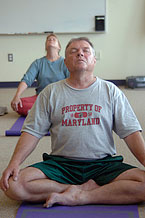
We recommend a yoga practice or other regular stress relieving activity as part of a healthy eye regimen.  Yoga can even help improve your overall sense of vision – check out Dr. Grossman’s DVD, Yoga & Vision Improvement.

Omega-3s May Alleviate Alcoholism, Psychiatric Disorders, and Eye Diseases

researchers
Image via USDA

Omega-3 fatty acids are known to help the heart and they have also been found to help defend against eye diseases like macular degeneration.


A study by researchers at the Indiana University School of Medicine shows that omega-3 fatty acids could also help people struggling with alcohol addiction or psychiatric disorders.  According to scientists, the DHA in the fatty acid was responsible for “normalizing behavior” in mice.  When taking DHA, mice were less likely to become depressed or manic when placed under stress.  Unexpectedly, the mice also lost their taste for alcohol when consuming DHA supplements.

We believe a diet rich in omega 3 fatty acids may help the treatment and prevention of bipolar disorder, and may help with alcoholism as well,” says Alexander B. Niculescu, M.D., Ph.D.  Source: Science Daily, May 27, 2001


Too Much Meat, Too Little Fiber Lead to Colorectal Cancer

A new study confirms earlier findings that indicate that consuming red and processed meats increases one’s risk of developing colorectal cancer.  The study also strengthens previous assertions that fiber rich foods help protect people from colorectal cancer.

This evidence underlines the preventable nature of colorectal cancer, since it is so attributable to diet.  According to Elisa Bandera, MD, PhD, who served on the World Cancer Research Fund/American Institute for Cancer Research’s Continuous Update Project (CUP) Expert Panel that authored the report “About 45 percent of colorectal cancer cases could be prevented if we all ate more fiber-rich plant foods and less meat, drank less alcohol, moved more and stayed lean.”

The American Institute for Cancer Research (AICR) suggests that people eat no more than 18 ounces of red meat per week (that includes beef, lamb, and pork) and that all processed meats should be avoided.

A plant-based diet rich in fiber-containing foods like whole grains, fruits, vegetables and beans is more important than ever.  Source: Medical News Today, 23 May 2011

These findings on the prevention of colorectal cancer are very much in line with those that we recommend in The Vision Diet. Learn about how to keep your entire body healthy with these recommendations.

Diabetic Retinopathy: Declining Vision Tied to Lower Quality of Life

Diabetic retinopathy
Image via VA.gov

A new study confirms what might sound like common sense: the more severe one’s case of diabetic retinopathy, the more likely one’s quality of life is to deteriorate.

Published in the journal Ophthalmology (Issue 118, 2011), research suggests that individuals’ quality of life declines more rapidly when their sight loss due to diabetic retinopathy becomes more severe.  The study involved over 1,000 type 2 diabetes patients taking part in the Los Angeles Latino Eye Study.

Authors indicate that quality of life markers related to dependency, mental health, and  tasks that required visual skills, dependence were most significantly impacted by worsening cases of diabetic retinopathy.

Source: OSN Supersite

Link Between Erectile Dysfunction & Diabetic Retinopathy

Not surprisingly, another study finds new information about the link between erectile dysfunction and diabetic retinopathy in men with diabetes.

Published in the journal Urology, this research included men with type 2 diabetes of an average age of 64 years, some of whom exhibited proliferative diabetic retinopathy (PDR) and some of whom were diagnosed severe nonproliferative diabetic retinopathy (NPDR).

Researchers found that there is an association between erectile dysfunction and diabetic retinopathy, regardless of age, time since diabetes diagnosis, and cardiovascular risk factors.

Source: Urology, 4 January 2011

Antioxidants & L-Arginine Help Pregnant Mothers with Pre-Eclampsia


Pregnant woman
image via www.nationalchildrensstudy.gov

Antioxidants have been found to successfully treat yet another medical condition: pre-eclampsia, a condition experienced by 5% of pregnant women that is marked by abnormally high blood pressure.


According to a study published in the British Medical Journal, taking a dietary supplement containing an amino acid and antioxidant vitamins significantly reduced pregnant women’s chances of developing pre-eclampsia.

A trial involving 228 women at high risk of pre-eclampsia were given either a food bar containing the amino acid L-arginine and antioxidant vitamins or a bar containing only vitamins or a placebo food bar.  Results showed that only 12.7% of women taking the amino acid-antioxidant supplements developed pre-eclampsia.  This was compared to 22.5% who received antioxidants and 30.2% who received the placebo.

Researchers are now wondering how L-arginine and antioxidants work together and whether there are any contraindications to this natural therapy.

Source: Science Daily

Non-Invasive Therapy May Help Stroke Victims See Again

cycling
Image via cdc.gov

Stroke patients may have new hope of recovering their eye sight.  The company NovaVision describes how its clinically tested light stimulation technology can help stroke survivors see again.

Vision Restoration Therapy (VRT) seeks to “rewire” the part of the brain responsible for vision.  VRT works to make healthy visual nerves make up for those that are damaged by a stroke or other brain trauma.  Patients who have undergone this therapy describe how they are able to read and enjoy seeking films again.  Some are even able to drive after having to give up their licenses due to vision loss.

Source: Medical News Today

Our Vision Wellness Protocol is dedicated to enhancing eye health and overall health.  A healthy lifestyle is instrumental in preventing medical emergencies like strokes.