Diabetes Related Hospitalizations On the Rise For Young Women

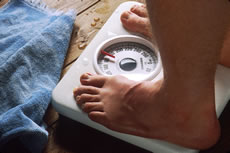
person on bathroom scale
Image courtesy of genome.gov

Over a fourteen year period (1993-2006) diabetes related hospitalizations increased by 66%.  This study, published in the Journal of Women’s Health, shows an even more marked increase for people in their 30s.  Diabetes related hospitalizations for both men and women nearly doubled, but women were 1.3 time more likely to be admitted than their male counterparts.

According to study authors, this discrepancy could be due to women receiving less preventative care for their diabetes.  Pregnancy can be a factor on the development and progression of diabetes, but this study shows that impending motherhood is not the main culprit.  Researchers blame these figures on high obesity rates in the age 20-39 female segment of the population and less aggressive medical management of women’s cases of diabetes.

Source: https://www.medicalnewstoday.com/articles/204245.php

For more information about how to control and prevent diabetes naturally, visit our website.

Also, learn more about how to prevent the related condition, diabetic retinopathy.

Processed Red Meat Associated with Metabolic Sydrome, Heart Disease

hotdogs
Image courtesy US Govt.

An estimated 50 million Americans have Metabolic Syndrome, which means they are at increased risk of coronary heart disease and other diseases related to plaque buildups in artery walls.  Per the American Heart Association, those with MetS suffer from: abdominal obesity, blood fat disorders, elevated blood pressure, and insulin resistance or glucose intolerance.

A new study published in the journal Nutrition, Metabolism and Cardiovascular Diseases finds that one doubles his or her risk of developing MetS if they consume high amounts of red meat, especially processed red meat.

The researchers say that this is the first study of its kind to specifically examine the consequences of eating processed red meat.  Processed meats include: hot dogs, bologna, sausage, ham, and other packaged lunch meats.

Source: Foodnavigator-usa.com

Probiotics Prevent Coughs in Infants

infant
Image courtesy of NIH.gov

Kids get colds.  It’s just part of life, but it’s best to keep babies from experiencing their first cough or cold for as long as possible.

New research out of Finland shows that babies under eight months are a third less likely to develop respiratory illnesses if they are given daily probiotic supplements.

In the study published in the British Journal of Nutrition, 65% infants who received daily Bifidobacterium animalis subsp. lactis BB-12 developed respiratory illnesses.  This is compared to the 94% of children who did not receive the supplements developed respiratory illness.

Source: Nutraingredients

Other reports find that the chances of developing a cold decrease for adults who take probiotics too. 

Video Gamers Have Better Hand-Eye Coordination But Risk Computer Eyestrain

gamersDoes video game playing offer health benefits or health risks?  As with many things, the answer is “it depends…”

Researchers at the Centre for Vision Research at York University in Toronto have discovered that young men who spend a lot of time playing video games do better at performing other complex visuomotor tasks.  Using functional MRI technology, scientists found that the brains of gamers had actually been “rewired.”  They used a different part of their brain than their non-gaming counterparts when performing complex task involving hand-eye coordination.

According to the source of this story, Medical News Today,” Such findings can hold important implications for research into neurodegenerative diseases like Alzheimer’s, where people with the disease find it increasingly difficult to complete even the simplest hand-eye coordination tasks.”

On the other hand, studies have shown that people who spend a great deal of time in front of computer screens are susceptible to computer eyestrain which can lead to glaucomaFor hints on how to avoid computer eyestrain, please visit our website.

Omega-3s Can Reduce Heart Failure Hospitalizations

Image courtesy of sokhcn.baria-vungtau.gov.vn

Here’s another example of how omega 3 fatty acids can benefit your health: omega-3s can help people suffering from heart failure.

In a study presented at the Heart Failure Society of America 2010 Scientific Meeting, researchers stated that those taking omega-3s over a four year period “demonstrated a minor but statistically significant improvement in LVEF [left ventricular ejection fraction]. . . these effects were also associated with a reduction in hospitalizations for heart failure.”

Source: heartwire

We highly recommend that those wishing to prevent or suffering from such eye conditions as glaucoma, cone-rod disorders, retinitis pigmentosa, or diabetic retinopathy consider taking a daily dose of omega-3 fish oil.  Check with your doctor first, however, if you are taking a blood thinner.

Muscles Can Respond to Light and Help Stroke Patients and Others

researchers
Image from bio.sandia.gov

The eyes tend to get all the credit for being the organs that are receptive to light, but scientists at Stanford University are fining that muscles can respond to light as well.  A study of mice whose nerve cells have been coated with specialized light-sensing proteins are helping researchers seeking treatment breakthroughs for people with physical disabilities caused by stroke, spinal cord injuries, or cerebral palsy.

The scientists are pioneers in the field of optogenetics, which uses a special gene derived from algae.  In this case, they are using this technology to control muscle contraction.

The study was published in Nature Medicine.

Source:scienceblog.com

Stress Can Reduce Effectiveness of Cancer Treatments

Image courtesy of NOAA.gov

Physical or mental stress in the days before a cancer treatment can actually hinder a patient’s ability to respond to chemotherapy or radiation.

When the body undergoes stress (even just from strenuous exercise) in the days leading up to treatment a certain stress-sensitive protein becomes active.  Researchers have found that this protein actually helps the cancer cells adapt and survive.

Scientists first became aware of this protein, heat shock factor-1 when they found that it could help heart tissue survive even in a toxic environment.  In this case, it is actually working against the body and allowing cancer cells to live on.

The study appears online in the journal Molecular Cancer Research.

Source: Science Daily.

Reducing stress is vital to all aspects of your health.  Have a look at out Vision Wellness Protocol for tips on how to preserve your sight and enjoy overall health.

Are Grains Always Good For You? Potential Diabetes Risk


Though we have often heard that whole grains are an essential part of a healthy diet, but this may not be true for everyone. According to Dr. Mercola, over 85% of Americans have trouble controlling their insulin levels which is related to the development of diabetes.

Eating carbohydrate-containing foods, whether high in sugar or high in starch (such as bread – even organic, whole-grain bread, potatoes, processed breakfast cereals, and rice), temporarily raises blood sugar and insulin levels. The blood sugar-raising effect of a food, called its “glycemic index,” depends on how rapidly its carbohydrate is absorbed. People eating large amounts of foods with high glycemic indices, have been reported to be at increased risk of type 2 diabetes.

However, diets high in total carbohydrates do not necessarily increase the risk of type 2 diabetes and some studies have found no independent relationship between sugar intake and the development of glucose intolerance.

For more on natural diabetes treatment and prevention as well as information on the related condition diabetic retinopathy, please visit our website.

Diabetes Drug Can Cause Bladder Cancer According to FDA

capsules and pills
Image courtesy of Iowa.gov

The U.S. Food and Drug Administration is examining a potential link between the diabetes drug Actos or pioglitazone and an increased risk of bladder cancer.  Patients who have taken this medication to help control their type 2 diabetes for more than two years have an elevated risk of developing cancer of the bladder, but the FDA did not announce how great this risk might be.  They have not gone so far as to tell doctors to stop prescribing it or recommending that patients stop taking it.

Learn more about the symptoms and causes of diabetes mellitus and natural diabetes treatment options.

Personality Types and Cardiovascular Disease

heart with monitor line
Image courtesy of Oregon.gov

“Type D” Personality

Heart disease researchers have identified a new personality type that can influence your health.  Those with the “type-D personality” are heart disease patients who suffer from psychological distress and are more likely to experience “adverse cardiovascular events.”

The “D” does not necessarily stand for depression, though some of these individuals may exhibit symptoms of depression.  Study leader Dr Johan Denollet (Tilburg University, the Netherlands) tells heartwire “This is the type of patient that tells you everything is okay, that there are no problems, but you can sense that something is going on, something is not quite right.”  He goes on, “On the one hand, type-D people have the tendency to experience negative emotions, such as anxiety, depression, stress, and so on,” he said. “At the same time, they also score higher [on tests] measuring social inhibition. Type-D patients are more closed in social interactions and are more unlikely to disclose their personal feelings toward others and tend to feel a bit insecure. This combination makes them more liable to chronic forms of psychological distress.”

Constant stress causes increased levels of stress hormones like cortisol, which can lead to future heart attacks.  Stress can also lead to chronic inflammation, which also can contribute to heart problems.

Source: https://www.theheart.org/article/1121787.do

Stifling Anger at Work Doubles Risk

Researchers have substantiated the well understood theory that stress at work is tied to increased risk of heart disease.  In a new study reported in the Journal of Epidemiology and Community Health, scientists reported that male employees who normally stifle their resentment regarding disagreements with their boss or co-worker were more than two times as  likely to have a heart attack or die of heart disease as those workers who expressed their anger.

Both western and alternative care providers have acknowledged that there is a connection between strong emotions and heart disease.  Chinese medicine takes this a step further to recognize a strong connection between most extremely strong emotions and most diseases.  Traditional Chinese medicine recognizes that emotions play a critical role in development of disease – such as repressed anger impairing the Liver (meridian) which can result in a wide range of illnesses (such as heart disease and migraines) and eye diseases (including glaucoma, dry eyes and eye inflammatory conditions), grief affecting the Kidneys (meridians) and sadness affecting the Stomach/Spleen (meridians).

For more information on lifestyle, diet and vision, go to www.naturaleyecare.com

Positive Emotions Helpful

A 2010 study reported that happy, enthusiastic, content people are less likely to suffer from heart disease than those whose tendency is toward unhappiness and pessimism. The research is the first showing a significant relationship between heart disease and a positive outlook.

Editor’s Note: Having a positive attitude helps boost us maintain a healthy immune system. Cardiovascular disease can be a major contributor to eye disease such as macular degeneration and glaucoma.

Published: European Heart Journal, Feb. 18, 2010

At NaturalEyeCare.com we focus on the importance of managing stress in order to improve your overall health, and, by extension, the health of your eyes.  Please read more about ways in which prevention is the best medicine for ails you.