Yoga Improves Balance and Reduced Fall Risks for Stroke Survivors

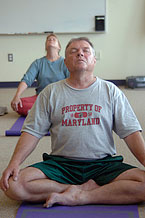
people practicising yoga
Image via nccam.nih.gov

Preliminary research shows that a regular yoga practice can help stroke patients recover more effectively.


A study of 20 stroke survivors of an average age of 66 engaged in twice weekly yoga classes for two months.  It was found that the participants balance improved.  Researchers also found that a practice of yoga could help prevent potentially dangerous falls.

On the whole, balance scores increased by 17% on the Berg Balance Scale and by 34% on the Fullerton Balance Scale.  It is important to not that the average score was upped from 40 to 47 on the Berg Balance Scale, which means that the individuals were no longer on the “high risk” list when it comes to falls.

These findings were presented at he American College of Sports Medicine Annual Meeting in Denver; they have not yet undergone full peer review.  Source: WebMD

We recommend a yoga practice or other regular stress relieving activity as part of a healthy eye regimen.  Yoga can even help improve your overall sense of vision – check out Dr. Grossman’s DVD, Yoga & Vision Improvement.

Too Much Meat, Too Little Fiber Lead to Colorectal Cancer

A new study confirms earlier findings that indicate that consuming red and processed meats increases one’s risk of developing colorectal cancer.  The study also strengthens previous assertions that fiber rich foods help protect people from colorectal cancer.

This evidence underlines the preventable nature of colorectal cancer, since it is so attributable to diet.  According to Elisa Bandera, MD, PhD, who served on the World Cancer Research Fund/American Institute for Cancer Research’s Continuous Update Project (CUP) Expert Panel that authored the report “About 45 percent of colorectal cancer cases could be prevented if we all ate more fiber-rich plant foods and less meat, drank less alcohol, moved more and stayed lean.”

The American Institute for Cancer Research (AICR) suggests that people eat no more than 18 ounces of red meat per week (that includes beef, lamb, and pork) and that all processed meats should be avoided.

A plant-based diet rich in fiber-containing foods like whole grains, fruits, vegetables and beans is more important than ever.  Source: Medical News Today, 23 May 2011

These findings on the prevention of colorectal cancer are very much in line with those that we recommend in The Vision Diet. Learn about how to keep your entire body healthy with these recommendations.

Tricky To Read Fonts Make Material Easier to Remember

strange fontThere seems to be a common misconception out there that material written in bold font will be easier to remember

New research actually finds that heavy typeface doesn’t help people retain material.  Instead, researchers find that unusual or difficult to read fonts actually help increase the likelihood that you will remember what you read.

A study published in the journal Cognition found that trial participants who studied material in the familiar and easy to read 16-point Arial font only retained about 73% of the facts when tested later.  The rest of the group that read the material in 12-point Comic Sans MS or 12-point Bodoni MT remembered 85.5% of the things they read.

As quoted in the source for the post, The New York Times, study co-author Daniel M. Oppenheimer says, “The reason that the unusual fonts are effective is that it causes us to think more deeply about the material.  But we are capable of thinking deeply without being subjected to unusual fonts. Think of it this way, you can’t skim material in a hard to read font, so putting text in a hard-to-read font will force you to read more carefully.”

But, it is important to note that reading fonts that are too small can actually increase your blood pressure and can lead to eye strain.  If you want to start experimenting with unusual typeface to increase your powers of retention, do not do so at the expense of your eye health.

Study: How Does Glaucoma Influence Patients’ Lives?


In addition to significantly compromising vision, glaucoma is a disease that also takes an emotional toll, according to a new study in the April issue of the Journal of Advanced Nursing.


This study of 24 Chinese individuals with glaucoma showed that there are many fears associated with the disease including concerns about blindness and how the condition may effect other family members.  Many who were on medication, such as eye drops, were found to be self-administering them incorrectly.

Despite the relatively common nature of glaucoma in China, study participants knew little about the disease before they were diagnosed, leading researchers to conclude that there needs to be more public education about glaucoma as well as increased  support available to those who have received a glaucoma diagnosis.

According to the source for this story, Science Daily, “Some used traditional Chinese herbs like Wolfberry and Ginseng and the martial art of Tai Chi to help manage their condition. Others avoided spicy food to keep their condition stable. [According to one participant,]”Some food will get you into trouble like seafood and leek. They contain too much Yang, which can do harm to the eyes.”

At Natural Eye Care we believe strongly in both the power of traditional Chinese medicine and the power of food to help heal eye conditions.  Learn more about our prevention protocol, which includes a proper diet and the practice of a calming activity like Tai Chi.

Macular Degeneration Drug Associated With Cerebral Hemorrhage

eyesThe Wall Street Journal reports that researchers at Johns Hopkins are concerned about potential safety issues with the drug Avastin, which is sometimes proscribed on an off-label basis to macular degeneration patients.  A study comparing Avastin to its leading competition Lucentis (which was formulated specifically for the eye condition) found that those taking Avastin had an 11 percent higher mortality risk and 57 percent higher risk of cerebral hemorrhage.  The study did not take into account other risk factors like smoking, hypertension, or elevated cholesterol levels.  Source: Wall Street Journal

At Natural Eye Care we offer people with macular degeneration options that include nutrition advice, lifestyle recommendations, and natural supplement suggestions.

Diabetes Speeds the Aging Process

The American Diabetes Association tells us that 8.3% of Americans have diabetes.  Another 79 million people are thought to be pre-diabetic.  Those numbers are staggering, especially when a new report describes how diabetes contributes to premature aging.

A study published in the Diabetes & AgingJournal of General Internal Medicine describes how diabetics in their 50s are more likely to age before their time.  People with diabetes between the ages of 51 and 70 all exhibit markers associated with aging including cognitive impairment, incontinence, falls, dizziness, vision impairment, and pain before their non-diabetic counterparts.

Researchers credit this all-over increased aging process to the fact that diabetes affect multiple organ systems.
Source: Life Extension Daily News

One of the main organs that feels the effects of diabetes?  The eyes.  Diabetic retinopathy.  One quarter of those with diabetes have compromised vision.

Atrial Fibrillation Patients Fare Better With Yoga

What would it take to get you on a yoga mat?  How about the possibility of cutting in half your chances of suffering episodes of dangerous irregular heartbeats if you suffer from a condition called atrial fibrillation.

A new study out of Mid-America Cardiology at the University of Kansas Hospital describes how doing yoga three times per week ups quality of life and lowers anxiety and depression rates in people with atrial fibrillation.

Generally, atrial fibrillation is treated with invasive surgery or medication with heavy side effects.  In this study, 49 people between age 25 and 70 with this heart condition began a thrice weekly yoga practice for three months.  They had 2.1 episodes of atrial fib while doing yoga compared  to the three months prior to the trial when they only did non-yogic exercise during which time they had an average of 3.8 episodes.  Source: HealthFinder

A regular practice of yoga can benefit your health in so many ways.  Read an article by our do-founder Dr. Marc Grossman on “The Yoga of Vision.”

Toxicity Found in Freshwater Fish

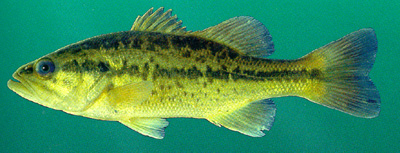
Freshwater fish toxinsWe often recommend cold water ocean fish for the essential fatty acids they provide, which are vital to protecting us from glaucoma and macular degeneration.

New information presented at an American Chemical Society (ACS) meeting may  raise concerns about consuming freshwater fish, however.

Freshwater fish are showing high levels of an agent called triclocarban (TCC) that has potential hormone-disrupting properties.  Researchers believe the source of this river and stream contamination that is showing up in fish is an ingredient found in some antibacterial soaps.  Scientists do point out that there is no evidence that TCC accumulates in the human body.

Previous studies have found that TCC and another antibacterial soap additive, triclosan “don’t prevent the spread of disease any better than ordinary soap, yet both may cause disruption of reproductive hormones,” according to the ACS press release.  Source: healthfinder.gov


Sleep and Stress Reduction Encourage Weight Loss

Are you ready to sleep away those extra pounds?

A new study from Kaiser Permanente’s Center for Health Research in Portland describes how high levels of stress and inadequate sleep can keep people from losing weight, even when they are following a diet.

Study authors say that those who get 6-8 hours of sleep and moderate the stress in their lives are most successful when they try to lose weight.

The study included 472 obese adults who both reduced their caloric intake by 500 calories and exercised 3 hours per week.  The researchers found that proper amounts of sleep and healthy stress levels at the beginning of the trials were predictive of optimal weight loss.

“People who are healthy and vital tend to be healthy and vital not because of any one factor, but because of many. And the factors that promote health — eating well, being active, not smoking, sleeping enough, controlling stress, to name a few –promote all aspects of health,” said study author Dr. Charles Elder.  Story via HealthFinder.gov

Reducing stress will positively impact a number of health conditions – everything from blepharospasm (eye twitches) to peptic ulcers.

Retinitis Pigmentosa Responds to Acupuncture

acupuncture
Image via healthfinder.gov

Acupuncture is an effective treatment for the potentially blinding condition retinitis pigmentosa.


An article in the Journal of Clinical Acupuncture and Moxibustion describes how acupuncture treatments alleviate stress on the retinal and optic nerves by relieving intraocular pressure.

Another study, this one published in Chinese Journal of Integrated Traditional and Western Medicine discusses how Traditional Chinese Medicine is able to improve retinitis pigmentosa patients’ retinal cone activity.

Scientist involved with this study say, “TCM (Traditional Chinese Medicine) treatment could also enhance the bioactivity of (the) nerve network and therefore have a definite significance in retarding the progression of disease and keeping the central vision.”

Source: https://www.healthcmi.com

At Natural Eye Care, we believe strongly in the power of acupuncture and TCM when it comes to healing the eyes.  In fact, we wrote the book on it.