
Diet and Eye, Brain and Overall Health

healthy dietFood for the Brain

Eating a healthy diet is one of the critical factors in helping both maintain good brain, eye and overall health. Also, the way we eat affects our digestion and how well we are able to breakdown and absorb the essential nutrients in the food we take in. Here are some basic recommendations.

Avoid Distractions

Eat without distractions. Eat slowly without watching TV or being distracted by other activities. Continue reading “Diet and Eye, Brain and Overall Health”

The Glycemic Index – A Key Health Factor

What is the Glycemic Index and Why Is It Important

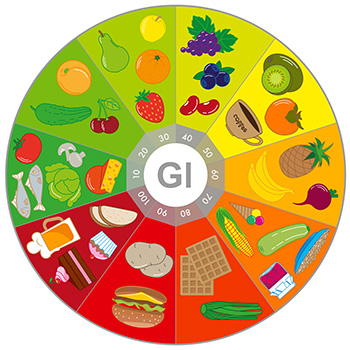
glycemic indexThe Glycemic Index represents the relative rise in the blood glucose level two hours after consuming food. It is a system that ranks foods on a scale from 1 to 100 based on their effect on blood-sugar levels.

Why Is It Important

The current American diet contains excessive sugar, refined carbohydrates, poor oils, and processed foods resulting in an epidemic in obesity, autoimmune diseases, diabetes, cancer, eye disease, and even dementia related disorders.

High Glycemic Index Foods

These include all refined carbohydrates  and sugars, white foods including white rice, bread, pasta, sugar, most commercial cereals, instant oatmeal, baked potato, corn.

Glycemic Index & Foods

Low glycemic index (GI of 55 or less): Most fruits and vegetables, beans, minimally processed grains, pasta, low-fat dairy foods, and nuts.

Moderate glycemic index (GI 56 to 69): White and sweet potatoes, corn, white rice, couscous, breakfast cereals such as Cream of Wheat and Mini Wheats.

High glycemic index (GI of 70 or higher): White bread, rice cakes, most crackers, bagels, cakes, doughnuts, croissants, most packaged breakfast cereals.

A high glycemic diet is pro-inflammatory which coincides with an acidic diet. An alkaline diet is anti-inflammatory.

In general, it is helpful to maintain a strong alkaline diet further described in detail in our book “Natural Eye Care: Your Guide to Healthy Vision and Healing.”  The keto diet can be considered for its strong anti-inflammatory benefits, or the paleo diet,[1. Shen Y, Kapfhammer D, Minella AM, Kim JE, Won SJ, et al. (2017). Bioenergetic state regulates innate inflammatory responses through the transcriptional co-repressor CtBP. Nat Commun. 2017;8(624).] although there are potential long-term issues, also described in the diet chapter.

Your gut helps to manage levels of inflammation and therefore, keeping your gut healthy with the right foods is essential to keeping your brain healthy and reducing your risk of brain inflammation.

Top Anti-Inflammatory Foods. Avocados, broccoli, cocoa (dark chocolate 85 percent or higher), green, leafy vegetables, nuts (in particular hazelnuts and walnuts due to their high levels of brain-protecting, inflammation reducing vitamin E and antioxidants). Oily fish such as wild salmon, trout, tuna as well as sardines, herring, anchovies, and mackerel have strong anti-inflammatory properties.

Food Sources for vegetarians: chia seeds, flax seeds, walnuts, as well as algae.

Avoid sugar and refined carbohydrates (particularly all white, refined foods). Low carbohydrate diets how been shown to reduce inflammation. Refined carbohydrates have a high glycemic index. Research has shown that just a single meal with a high glycemic load can impair memory in both children and adults. The effect on memory may be due to inflammation of the hippocampus, a part of the brain that affects some aspects of memory, as well as responsiveness to hunger and fullness cues.[2. Beilharz JE, Maniam J, Morris MJ. (2015). Diet-Induced Cognitive Deficits: The Role of Fat and Sugar, Potential Mechanisms and Nutritional Interventions. Nutrients. Aug 12;7(8):6719-38.] [3. Volek JS, Fernandez ML, Feinman RD, Phinney SD. (2008). Dietary carbohydrate restriction induces a unique metabolic state positively affecting atherogenic dyslipidemia, fatty acid partitioning, and metabolic syndrome. Prog Lipid Res. Sep;47(5):307-18.] One study found that elderly people who consumed more than 58 percent of their daily calories in the form of carbohydrates had almost double the risk of mild mental impairment and dementia.[4. Roberts RO, Roberts LA, Geda YE, Cha RH, Pankratz VS, et al. (2012). Relative intake of macronutrients impacts risk of mild cognitive impairment or dementia. J Alzheimers Dis. 2012;32(2):329-39.]

Have a Healthy Diet

  • Avoid vegetable oils, sodas and other sugary drinks (including anything with artificial sweeteners such as Aspartame (NutraSweet®, Equal®), Saccharin (Sweet’N Low®, SugarTwin®), Acesulfame K (Sunett®, Sweet One®,)  Sucralose (Splenda®). For an excellent natural sweetener, try stevia.
  • Also avoid trans fatty acids such as those found in most margarines and many fast foods, frosting, crackers and chips.
  • Limit your intake of saturated fats (cheese, milk, butter and other dairy products).

Recommended Products

Advanced Eye and Vision Support Formula – general whole-food-based nutrients for vision wellness.

Dr. Grossman’s Meso Plus Formula with Astaxanthin – essential nutrients for retinal and macular health.

Revision wild-crafted Formula – based on classic Chinese medicine formula for vision wellness.

Learn more about vision and brain wellness diets and how to care for vision conditions with our comprehensive guides

Natural Eye Care: Your Guide to Healthy Vision and Healing

Natural Brain Support: Your Guide to Preventing and Treating Alzheimer’s, Dementia and Other Related Diseases

Mesozeaxanthin: Star of Macular Carotenoids

carotenoid supplements and foodsMesozeaxanthin, less well-known than lutein and zeaxanthin, is the most powerful antioxidant of the threesome, but the combined trio presents the most potent protection for the eye than any of the three carotenoids alone.[1. Li B, Ahmed F, Bernstein PS. (2010-12-01). Studies on the singlet oxygen scavenging mechanism of human macular pigment. Arc Biochem Biophys. 504(1):56–60.]  Out of all of the roughly 7000 carotenoids known in nature, it is these three that are found in great concentrations in the macula, the key part of the retina, responsible for central vision. Continue reading “Mesozeaxanthin: Star of Macular Carotenoids”

Melatonin: More than a Sleep Aid

What is Melatonin?

melatonin and sleepingMelatonin is a hormone primarily released by the pineal gland at night, and has long been associated with control of the sleep–wake cycle. It is typically taken at night before bedtime as a supplement. In addition to melatonin’s application as a sleep aid, this supplement can also be used for lowering eye pressure — such as in cases of open angle glaucoma or glaucoma suspects.  Research shows melatonin may also protect the eye’s macula by supporting the functioning of the mitochondria, the tiny “batteries” in each cell. Alzheimer’s disease appears to be linked to poor quality sleep and melatonin production; therefore, melatonin may prove to be a useful supplement and research is underway. Keep reading for details plus information about supplements available on this website.

What Can Melatonin Help?

Insomnia

Melatonin is best known for helping us get to sleep. It is secreted by the pineal gland, acting as the body’s biochemical signal of biological darkness. In other words, our bodies biochemistry signals that you are ready for sleep. Blue light suppresses production of melatonin [1. Gooley JJ, Chamberlain K, Smith KA, Khalsa SB, Rajaratnam SM, et al. (2011). Exposure to Room Light before Bedtime Suppresses Melatonin Onset and Shortens Melatonin Duration in Humans. J Clin Endocrinol Metab. Mar;96(3):E463-72.] to a surprisingly profound degree.[2. Vartanian GV, Li BY, Chervenak AP, Walch OJ, Pack W, et al. (2015). Melatonin Suppression by Light in Humans Is More Sensitive Than Previously Reported. J Biol Rhythms. Aug;30(4):351-4.]

If you are exposed to blue light right before bedtime (e.g. checking your email one more time), it throws off the internal rhythm that allows you to get adequate sleep. Nearly 75% of children now use some sort of electronic device in their bedroom. The use of these devices markedly impacts sleep quality, which in turn, contributes to social adjustment problems, behavioral problems in school and at home, and surprisingly, weight gain.

Similarly, it has been found that sleeping in a room that is not dark, also disrupts sleep, or makes it less effective in reducing fatigue and alleviating the accumulated stress of the day. Most studies found that exposure to light in the room, during sleep, reduces melatonin production by 50%.

While most research on the effects of smartphones on sleep and circadian rhythms have involved children and teens, adults are also adversely impacted. One Flemish study included more than 800 adults, 50% of whom owned smartphones, and 60% of whom used their smartphone during the night. Nighttime phone use and texting at night markedly increased how long it took to fall asleep and markedly decreased the quality, duration, and efficiency of sleep. In younger adults, nighttime electronic-device use was tied to more fatigue and later rising time. In older adults, it was associated with shorter sleep duration and earlier rise time.[3. Exelmans L, Van den Bulck J. (2016). Bedtime mobile phone use and sleep in adults. Soc Sci Med. Jan;148:93-101.]

Recommended dosage is 1mg–3mg before bedtime.

Supports the Immune System

Melatonin plays a dual role in supporting the immune system, at least partially because it helps promote glutathione levels in the body, an essential master antioxidant.  It communicates with the immune system and influences white blood cells to fight infections and inflammation. Lowered levels of the super antioxidant glutathione[4. Glutathione is actually the antioxidant found in greatest quantity in the brain and found to be deficient in the brains of Alzheimer’s and Parkinson’s patients.] are present in “clinical conditions like autoimmune disorders, neurological disorders, diabetes, and microbial infections”[5. NaveenKumar SK, Hemshekhar M, Jagadish S, Manikanta K, Vishalakshi GJ, et al. (2020). Melatonin restores neutrophil functions and prevents apoptosis amid dysfunctional glutathione redox system. J Pineal Res. Oct;69(3):e12676.] which are characterized by white blood cells. In other words, melatonin protects white blood cells from free radicals by supporting normal glutathione levels.

Lowers Eye Pressure

Intraocular pressure (IOP) is usually lowest at night, which is also when natural levels of melatonin are near their high in the circadian cycle. IOP is highest in the morning when melatonin is low. There seems to be a correlation between IOP and melatonin; supplementing with melatonin may lower IOP. [6. Samples, J.R., Krause, G., Lewy, A.J. (1988). Effect of melatonin on intraocular pressure. Curr Eye Res. Jul;7(7):649-53.] [7. Alkozi HA, Navarro G, Franco R, Pintor J. (2020). Melatonin and the control of intraocular pressure. Prog Rentin Eye Res. Mar;75:100798.]

Protects the Macula

Melatonin also protects the macula, the center part of the retina which is responsible for your central vision needed for close-up work such as reading. Age-related macular degeneration (AMD) is the loss of central vision and is caused by deterioration of the macula. A combination of melatonin (3mg), zinc (8.7mg), and selenium (50 mcg), taken before bedtime, helps stabilize AMD with some remarkable improvement in the fundus of the eye after taking the combination for 6 months. [8. Stefanova NA, ZHdankina AA, Fursova AZ, Kolosova NG. (2013). Potential of melatonin for prevention of age-related macular degeneration: experimental study (in Russian). Adv Gerontol. 2013;26(1):122-9.] [9. Yi C, Pan X, Yan H, Guo M, Pierpaoli W. (2005). Effects of melatonin in age-related macular degeneration. Ann N Y Acad Sci. Dec;1057:384-92.]

Supports Mitochondrial Functioning

A 2020 review proposed that melatonin protects the macula by supporting mitochondrial function. Mitochondria are the “energy-producers” of cells, and are essential for cellular health. As we age DNA repair functions, antioxidant activity, and lack of mitochondrial renewal lead to significant increase in free radicals. These changes cause inflammation and premature cell death in the retinal pigmented cells that protect the retina and macula.[10. Mehrzadi S, Kemati K, Reiter RJ, Hosseinzadeh A. (2020). Mitochondrial dysfunction in age-related macular degeneration: melatonin as a potential treatment. Expert Opin Ther Targets. Apr;24(4):359-378.]

Helps Night Vision

Photosensitive retinal ganglion cells (melanopsin-expressing retinal ganglion cells “mRGC”) release melanopsin which affects pupil dilation and adaption and suppresses melatonin[10. Bonmati-Carrion MA, Arguelles-Prieto R, Martinez-Madrid MJ, Reiter R, Hardeland R, et al. (2014). Protecting the melatonin rhythm through circadian healthy light exposure. In J Mol Sci. Dec 17;15(12):23448-500.] between dark and bright light (such as recovery after glare of an oncoming car headlights).

Melanopsin’s presence in retinal nerve cells is linked to reduced levels of melatonin and the relationship may be involved in poor night vision. At night, melatonin is secreted by rod and cone photoreceptors, functioning as a dark adaptive signal and it, in turn, modulates these photoreceptors.[11. Pack, W., Hill, D.D., Wong, K.Y., (2015). Melatonin modulates M4-type ganglion-cell photoreceptors. Neuroscience, Sep 10;303:178-88.]

Aids Alzheimer’s Disease Issues

Melatonin may be a useful agent in preventing and treating Alzheimer’s disease (AD).  Classic markers of AD include the build-up of beta amyloid plaque, as well as excessive tau protein resulting in neurofibrillary fiber build-up.[12. This is discussed in detail, along with other underlying factors and causes including natural treatment strategies, in my book Natural Brain Support: Your Guide to Preventing and Treating Alzheimer’s, Dementia and Other Related Diseases Naturally.]

The production of melatonin runs parallel to AD progression. Quality of sleep is dependent upon melatonin, and it appears to be a safe and effective treatment for AD patients with sleep dysfunction.[13. Wang YY, Zheng W, Ng CH, Ungvari GS, Wei W, et al. (2017). Meta-analysis of randomized, double-blind, placebo-controlled trials of melatonin in Alzheimer’s disease. Int J Geriatr Psychiatry. Jan;32(1):50-57.] Melatonin stimulates non amyloidogenic processing and inhibits beta amyloid precursor protein processing which culminates in amyloid aggregates – a neuroprotective function in AD pathology.[14. Shukla M, Govitrapong P, Boontem P, Reiter RJ, Satayavivad J. (2017). Mechanisms of Melatonin in Alleviating Alzheimer’s Disease. Curr Neuropharmacol. 2017;15(7):1010-1031.] It decreases AD-like tau hyperphosphorylation, protects the cholinergic system and is anti-inflammatory. It may be a useful agent in preventing and treating AD.[15. Lin L, Huang QX, Yang SS, Chu J, Wang JZ, et al. (2013). Melatonin in Alzheimer’s disease. Int J Mol Sci. Jul 12;14(7):14575-93.] Weak melatonin signaling (melatonin receptor type 1A gene) appears to contribute to the cascade of AD pathology.[16. Sulkaya S, Muggalla P, Sulkava R, Ollila HM, Peuralinna T, et al. (2018). Melatonin receptor type 1A gene linked to Alzheimer’s disease in old age. Sleep. Jul;41(7):zsy103.]

Recommended Products

NEWDr. Grossman’s REM Sleep Support (sublingual) Formula – great sublingual night-time formula with melatonin, and a range of other nutrients to promote a good night’s sleep.

ACG Glutathione EXTRA STRENGTH Spray 2oz. – 6-12 sprays by mouth 2 times per day.

Melatonin (50) MZS 60 x 3mg Tabs, Dr. Pierpaoli –  50 3mg tabs with zinc and selenium

Light Sensitivity: A Symptom of Another Problem

light sensitivityPhotophobia literally means “fear of light,” but it just means that you are overly sensitive to light.  Light sensitivity might be temporary, but it can be an indicator or symptom of another problem.
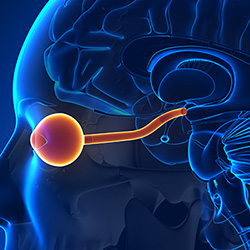
People with photophobia experience pain, tearing, and sometimes headaches especially when they are out in bright light too long.  A common summer example is too much light from the sun plus reflection off water when we are out in a boat.  You just want to close your eye from so much light, and later in the day or evening you may have a headache.

However, light sensitivity may be a chronic condition and therefore a symptom of another problem.

What causes photophobia?

Photosensitive retinal ganglion cells play a key role in light sensitivity.[1. Katz BJ, Digre KB. (2016). Diagnosis, pathophysiology, and treatment of photophobia. Suv Ophthalmol. Jul-Aug;61(4):46-77.] There are at least two (possibly three) distinct neural pathways associated with photophobia: one is a messaging pathway involving the thyroid and calcium, and another is a pituitary gland neurotransmitting pathway.[2. Albiali A, Dilli E. (2018). Photophobia: When Light Hurts, a Review. Curr Neurol Neurosci Rep. Jul 30;18(9):62.]

Recent research points to impaired light processing by the photoreceptors (cones and rods) which create the electrical impulse resulting in image perception, as well as non-image-forming neural pathways.  These light signals are sent to multiple regions of the brain that control not only the senses, but the autonomic nervous system and regulation of emotions.[3. Noseda R, Copenhagen D, Burstein R. (2019). Current understanding of photophobia, visual networks and headaches. Cephalalgia. Nov;39(13):1623-1634.]

Excessive bright light we may encounter during a sunny summer day at the beach can cause eye pain, but photophobia can also be caused by dry eye syndrome, optic nerve swelling,[4. Ibid. Albilai. (2018).] corneal swelling (keratitis) or a scratch on the cornea, iris swelling (iritis), cataracts, conjunctivitis (pink eye), blepharospasm,[5. Ibid. Katz. (2016).]  retinal damage, or post eye surgery.

Aside from eye conditions, photophobia can be caused by migraine headaches,[6. Ibid. Katz. (2016).] tension headaches, cluster headaches, meningitis, brain trauma,[7. Ibid. Albilai. (2018).] and tumors in the brain or pituitary gland, as well as some medications including antibiotics, drugs that help your body get rid of excess fluid, and quinine (for malaria).

What can we do?

If light sensitivity is continuous and doesn’t go away with rest, then you should certainly see your eye doctor, and advise the doctor of your medications and any medical conditions.

In the meantime, always wear UVA/AVB 100% (polarized) protecting dark glasses outdoors which protect your retina from the damaging effects of UV / blue light. Get adequate exercise, drink plenty of water, and pay attention to your diet and nutrients.

Nutritional support

The first line of protection is carotenoids which support the macular pigment that protects the retina from UV and blue light-related damage.[7. Eggersdorfer M, Wyss A. (2018). Carotenoids in human nutrition and health. Arch Biochem Biophys. Aug 15;652:18-26.]

Dr. Grossman has assembled several packages for light sensitivity.  These will be especially helpful during the summer as you swim, sail, boat, hike, or picnic outdoors.

Light Sensitivity Package.  Contains Advanced Eye and Vision Support Formula (whole food, organic, GMO free),  Dr. Grossman’s Meso Plus Formula (with the carotenoids mesozeaxanthin, lutein, zeaxanthin, and astaxanthin), as well as Dr. Grossman’s Bilberry/Ginkgo Formula (wild crafted herbs in tincture form).

Blue Light Protecting/Night Vision Package (2-month supply). This package contains our Advanced Eye and Vision Support Formula, Astaxanthin (a potent antioxidant), and Black Currant Seed Oil (which supplies the fatty acid gamma linolenic acid).

All of these products are available individually.

Footnotes

Keeping Your Optic Nerve Healthy

optic nerveWhat is the optic nerve and what does it do?

The optic nerve is a bundle of nerve fibers that serves as the communication cable between your eyes and your brain. The nerve fibers have a special coating called myelin.

What are the most common eye diseases associated with impaired optic nerve?

Glaucoma is the most common optic nerve disease. Most cases of glaucoma are called “open angle glaucoma” where the intraocular pressure – IOP – is above normal. Normal eye pressure ranges from 12-22 mm/Hg for most people. Higher pressures can lead to damage to the optic nerve over time, resulting primarily in effecting peripheral vision. Glaucoma is often referred to as the “hidden thief” as there typically are no symptoms until the person suddenly realizes that their peripheral vision is reduced. Continue reading “Keeping Your Optic Nerve Healthy”

Do Computer Screens Affect Eyesight?

computer eye strainComputer users are concerned about their vision. When we recently searched online for “vision computer screen” the top four searches were:
      1. Do computer screens affect eyesight?
      2. Can staring at a computer screen cause double vision?
      3. Is computer vision syndrome serious?
      4. How do you get rid of computer vision syndrome?

The answer to the first 3 questions: yes.  This article answers the 4th.

1. Do computer screens affect eyesight?

The short answer is yes, and there are more problems than “only” tired eyes and eye strain. Continue reading “Do Computer Screens Affect Eyesight?”

Back in Stock! Dr. Grossman’s Blood Vessel Control Formula


blood vessels
The structures in the back of the eye are supported by a complex array of capillaries and larger blood vessels. One reason why the body may try to grow new blood vessels (referred to as angiogenesis) is if these blood vessels are at all impaired, reducing the body’s ability to deliver blood, oxygen and essential nutrients to the back of the eyes, as well as effectively eliminate normal waste. Another reason may be lack of available essential nutrients for retinal and optic nerve support possibly due to a poor diet, lack of exercise, digestive issues or inflammatory conditions for example.

When any of the above occurs, over time, the body will try to compensate by growing new blood vessels in the back of the eyes. Unfortunately, the quality of these blood vessels is poor and therefore leak fluids into the retina, which is often treated conventionally with eye injections which may be essential, but no treatments are offered long time to try to address the underlying problem.

Diabetic Retinopathy and Wet Macular Degeneration are two examples of eye conditions that can lead to the growth of unwanted blood vessels. These vessels cause serious damage to vision. Macular Edema can lead to blood vessel leakage, which also harms the eye, particularly if not treated. Anyone who is experiencing symptoms or has been diagnosed with an eye disease should work closely with their eye doctor on restoring their health. Additionally, Dr. Marc Grossman’s Blood Vessel Control Formula can be added as a complementary component to help control unwanted blood vessels growth.

These herbs also have many other health and vision support benefits as well as described below.
Continue reading “Back in Stock! Dr. Grossman’s Blood Vessel Control Formula”

The Blood-Brain Barrier

blood brain barrier
This is the 4th article in our series on the brain, memory, and dementia.  This article discusses the blood-brain barrier which protects the brain.

What is the Blood-Brain Barrier?

The blood-brain barrier prevents toxins and microorganisms from crossing from the blood stream into the tissue of the brain. At the same time, beneficial nutrients are capable of crossing this barrier. Generally, integrity of the blood-brain barrier is important and its compromise contributes to a number of neurodegenerative conditions.

Continue reading “The Blood-Brain Barrier”

Breaking Down Amyloid-Beta Plaque

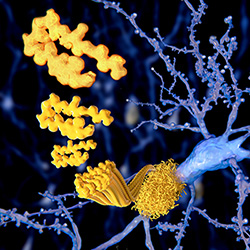
amyloid plaquesAlzheimer’s disease (AD) is a devastating fatal neurological condition that we’ve all heard or read about or have first-hand experience through our family connection. It is characterized by memory loss and abnormal behavior.

Amyloid beta plaque

This article discusses the role of amyloid beta plaque and the possibility of preventing or slowing its development. Formation of this plaque is the first event in the pathology of Alzheimer’s eventually resulting in nerve cell death.[1. Glenner GG. (1983). Alzheimer’s disease. The commonest form of amyloidosis. Arch Pathol Lab Med. Jun; 107(6):281-2.]

Continue reading “Breaking Down Amyloid-Beta Plaque”