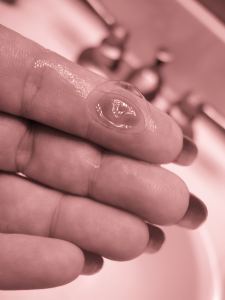
Contact Lenses: Potential Problems With Long-Wearing Silicone Hydrogels

contact lens
image by jdurham

Researchers have found that people who wear silicone hydrogel (SH) contact lenses are likely to suffer corneal staining (mild abrasions of the eye), but that these situations rarely turn into more serious corneal infiltrative events.  Corneal infiltrates are marked by eye discomfort, feeling like there is something in your eye, light sensitivity, and conjunctival hyperemia.

Factors likely to cause these more serious corneal infiltrates include smoking and the presence of bacteria on the lens.  Smoking is a factor in the development of many other eye diseases as well – including everything from dark circles under your eyes to macular degeneration.

Silicone hydrogel lenses are purported to allow more oxygen to the eye and are designed for long term use (up to 3o days in some cases).  SH lenses on the market include:  Ciba Focus Night & Day, Acuvue Oasys, and Bausch and Lomb’s PureVision lenses.

Source: Medscape

Product Recall: Hyland’s Teething Tablets

mother comforting crying baby
Image via womenshealth.gov

After an October 23 Food and Drug Administration warning to consumers, the manufacturer of Hyland’s Teething Tablets, the Standard Homeopathic Company, is recalling the supplement.  The FDA recommends that parents stop administering this product and discard it.

The FDA claims that the homeopathic tablets, intended to help babies with the discomfort and irritability associated with cutting their first teeth, have varying amounts of potentially toxic belladonna.  According to the FDA, they have received “reports of serious adverse events in children taking this product that are consistent with belladonna toxicity. An ongoing FDA inspection at the manufacturer indicates substandard control of the manufacturing operation.”

The FDA recommends that consumers contact their health care professional if their child experiences the following symptoms after taking Hyland’s Teething Tablets: a depressed level of consciousness, seizure, difficulty or slowed breathing,  lethargy, sleepiness, muscle weakness, skin flushing, constipation, difficulty urinating, or agitation.


Source:  https://www.fda.gov/ForConsumers/ConsumerUpdates/ucm230762.htm

According to Hyland’s website, though the FDA does state that adverse events have been reported, the government organization does not claim there is a conclusive link between these symptoms and the intake of these teething tablets.  Hyland’s says “After in-depth analysis, a comprehensive review of the company’s adverse event report log, and more than 85 years of safe usage, the company is confident that Hyland’s Teething Tablets are safe for infants and toddlers.”  Hyland’s will be changing its packaging standards, however, since the FDA’s warning also included a note about the possibility of accidental overdose due to lack of childproof packaging.  For more: https://www.hylands.com/news/hylands-teething-recall.php

Smoking Increases Risk of Alzheimer’s, Cataracts, and Macular Degeneration

no smoking sign
via blog.usa.gov

We recommend that anyone interested in enjoying healthy eyes quit smoking because it has been linked to eye diseases including cataracts and macular degeneration. Here’s another reason to quit smoking: cigarettes increase your chance of developing Alzheimer’s disease by over 150%.

Though researchers are not exactly certain of why smoking can lead to Alzheimer’s and vascular dementia, it may have something to do with the fact that smoking causes inflammation and oxidative stress, both of which are known markers for Alzheimer’s.

The study, published in the Archives of Internal Medicine, followed over 21,000 Californians over three decades.  Source: livescience.com

A non-smoking lifestyle marked by other healthy choices related to diet, exercise, and stress management are the key to eye health and overall health.  Learn more about the Vision Wellness Protocol.

Learn more about how understanding and managing Alzheimer’s naturally.

Warnings Against Decorative, Non-Prescription Contact Lenses

decorative contact lenses
Image courtesy of fda.gov

It’s October and Halloween is around the corner and that means that many people are going to want to do something to change their appearance.  This year, wear a great mask instead of trying out decorative contact lenses.

The Food and Drug Administration has issued many warnings against buying illegitimate over-the-counter contact lenses.  Even non-corrective lenses are monitored by the FDA out of concerns for public health.  According to the FDA, “Unauthorized contact lenses of all types present risks to the eye that include corneal ulcers, corneal abrasion, vision impairment, and blindness.”

The American Optometric Association has issued its own warnings.  They caution consumers that using  contacts that are not proscribed by a licensed medical professional can lead to “conjunctivitis, swelling, allergic reaction and corneal abrasion due to poor lens fit.”

For information on natural treatment options for conjunctivitis, visit our website.

It is possible to see an eye doctor to determine if you can safely wear cosmetic contact lenses and to get a proper prescription.

Processed Red Meat Associated with Metabolic Sydrome, Heart Disease

hotdogs
Image courtesy US Govt.

An estimated 50 million Americans have Metabolic Syndrome, which means they are at increased risk of coronary heart disease and other diseases related to plaque buildups in artery walls.  Per the American Heart Association, those with MetS suffer from: abdominal obesity, blood fat disorders, elevated blood pressure, and insulin resistance or glucose intolerance.

A new study published in the journal Nutrition, Metabolism and Cardiovascular Diseases finds that one doubles his or her risk of developing MetS if they consume high amounts of red meat, especially processed red meat.

The researchers say that this is the first study of its kind to specifically examine the consequences of eating processed red meat.  Processed meats include: hot dogs, bologna, sausage, ham, and other packaged lunch meats.

Source: Foodnavigator-usa.com

Study of Fish Oil Quality and Content

fish oil capsules
Image courtesy of nccam.nih.gov

Independent testing by a White Plains, NY firm, ConsumerLab.com, has found that 7 of 24 fish oil supplements tested exhibited quality problems.  Some products exhibited multiple issues.

  • Three products contained less of the omega 3 fatty acids EPA and/or DHA than claimed,
  • Three product were spoiled (including a children’s supplement)
  • One enteric-coated product released its ingredients too early
  • One supplement for pets exceeded the contamination limit for PCBs.

We recommend fish oil supplements highly because their Omega-3 fatty acids help improve circulation, integrity of blood vessels, proper brain functioning, flexibility and permeability of cell membranes, and helps protect the retina’s photoreceptor cells.  They help to prevent and treat such conditions as glaucoma and macular degeneration.

You can access detailed test results at ConsumerLab.com

Diabetes Drug Can Cause Bladder Cancer According to FDA

capsules and pills
Image courtesy of Iowa.gov

The U.S. Food and Drug Administration is examining a potential link between the diabetes drug Actos or pioglitazone and an increased risk of bladder cancer.  Patients who have taken this medication to help control their type 2 diabetes for more than two years have an elevated risk of developing cancer of the bladder, but the FDA did not announce how great this risk might be.  They have not gone so far as to tell doctors to stop prescribing it or recommending that patients stop taking it.

Learn more about the symptoms and causes of diabetes mellitus and natural diabetes treatment options.

Recycling Medical Instruments: The “Greening” of Ophthalmology

medical technician
Image Courtesy of macombcountymi.gov

European ophthalmologists are jumping on the “green” bandwagon and attempting to develop a program dedicated to the recycling and recovery of surgical instruments.

As single-use surgical instruments grow in popularity, so have environmental concerns as people consider the effect their manufacture and disposal have on the planet.  European fabricator of medical devices, Blink Medical, is working with doctors to help them recycle their equipment.  The company is taking responsibility for the collection, cleaning, and recycling of the instruments at no charge to the physicians.

As the popularity for single-use surgical instruments grows exponentially throughout Europe, concerns have been raised over the impact such devices have on the environment, particularly when it comes to their disposal.

Source: Ocula.info

What’s one way you can make a positive impact on the planet?  Eat organic foods free of the pesticides that can harm our environment and your body.  Consider the many positive health benefits of juicing and get juicing tips at our website. Juicing benefits your eyes and your health in general.

Contact Lens Recall Affects Asian & European Markets

contact lenses
image by Celiece

Johnson & Johnson Vision Care has initiated a voluntary recall of its 1-Day Acuvue TruEye contact lenses made of narafilcon A. According the Associated Press, these lenses were only distributed in Japan and parts of Asia and Europe, according to the AP; 100,000 boxes in total have been recalled.  No consumers in either the U.S. or Canada should be effected (the North American lenses are made of narafilcon B).

The recall is bases on a limited number of user complaints related to a stinging sensation felt when the lenses were placed on the eye.  According to Johnson and Johnson  the problem stems from a malfunctioning manufacturing line in Ireland.

This is the eighth recall of a J & J product in the last year including children’s Tylenol and other cold and pain medications.  The company is currently under investigation by the U.S. Congress.

Source: AP https://www.google.com/hostednews/ap/article/ALeqM5gKNufIGxLdxRyZ8TPAzFIe83oA1gD9HPEJA01

Breast Cancer Drug Can Cause Eye Problems

The breast cancer drug tamoxifen may lead to eye problems in women over age fifty.   An article in Breast Cancer Research and Treatment reported that the drug can cause physical changes to the eye itself, specifically by shrinking the optic cup. The optic cup is the depression in the eye nearest to where the optic nerve exits on its way to the brain.   A previous study had indicated that about 13% of tamoxifen users report vision changes.

Lead study author Alvin Eisner, PhD told Medscape: “Clinicians need to be aware that if patients on tamoxifen are complaining of vision problems, these concerns need to be taken seriously.”

Source: Medscape